Cultural Etiquette in Korea: Restaurants, Subways & Daily Manners
Korean etiquette is easier to use when you read the setting instead of memorizing rigid rules. On public transport, keep noise low and leave priority seating available; in restaurants and cafes, follow the layout, signs, and staff instructions.
What is commonly expected can vary between a subway car, a small cafe, a private home, and a temple. The situations below explain the practical default and when to follow local cues.
Table of Contents
Quick Reference: Do’s and Don’ts in Korea
| Situation | What to Do | What to Avoid |
|---|---|---|
| Public Transit | Keep priority seats available and yield them when needed | Blocking seats intended for passengers with reduced mobility |
| Paying / Tipping | Pay the listed total; use two hands in formal exchanges | Assuming a tip is required |
| Dining Out | Check for a table drawer or call button | Shouting or waving across the dining room |
| Shoe Removal | Remove shoes where signs or raised floors indicate it | Stepping onto an indoor floor area with outdoor shoes |
| Street Trash | Keep waste until you find the correct bin | Leaving cups or packaging on railings and stairs |
1. Seoul Subway Rules: Priority Seats & Escalator Safety
Seoul’s subway is generally quiet, and a few habits help keep shared spaces comfortable and accessible.
For route planning, fares, and transfers, see our Seoul subway guide.
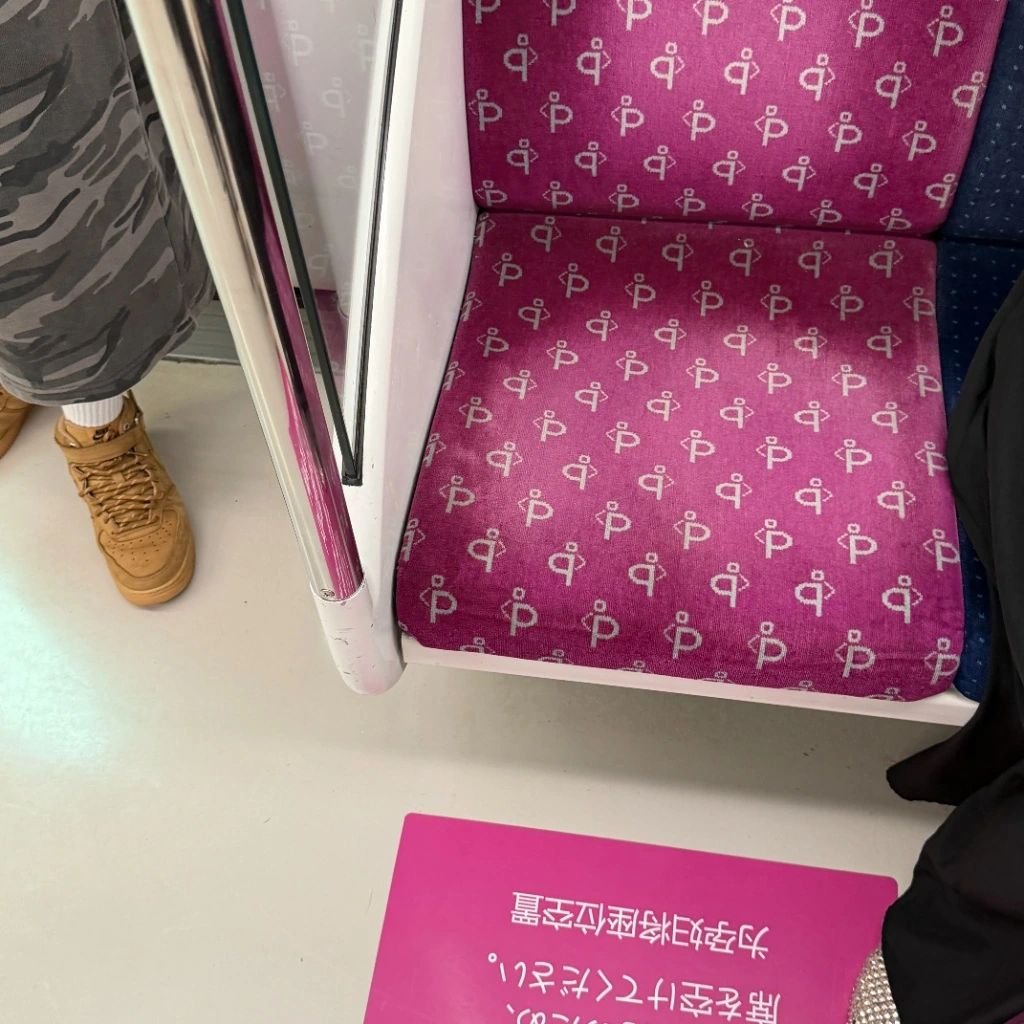
- Pink pregnancy seats (임산부 배려석): These seats are marked with pink covers or floor signs for pregnant passengers. If you are not pregnant, avoid using them and yield immediately when needed.
- Priority seating (교통약자석): Seats at the ends of many train cars are intended for seniors, passengers with disabilities, pregnant passengers, injured travelers, and others with reduced mobility. Leave them available when possible and yield promptly.
- Quiet commutes: Avoid speakerphone calls, videos or games with sound, and loud conversations. Use headphones and keep your phone on silent or vibrate.
- Escalator safety: Follow signs at the station, stand inside the yellow lines, and hold the handrail. Do not walk or run on the escalator.
2. Tipping & Polite Two-Handed Gestures
Routine tipping is generally neither required nor expected in South Korea. If a hotel, tour, or other service has a separate charge or policy, follow the amount shown when you book or pay.
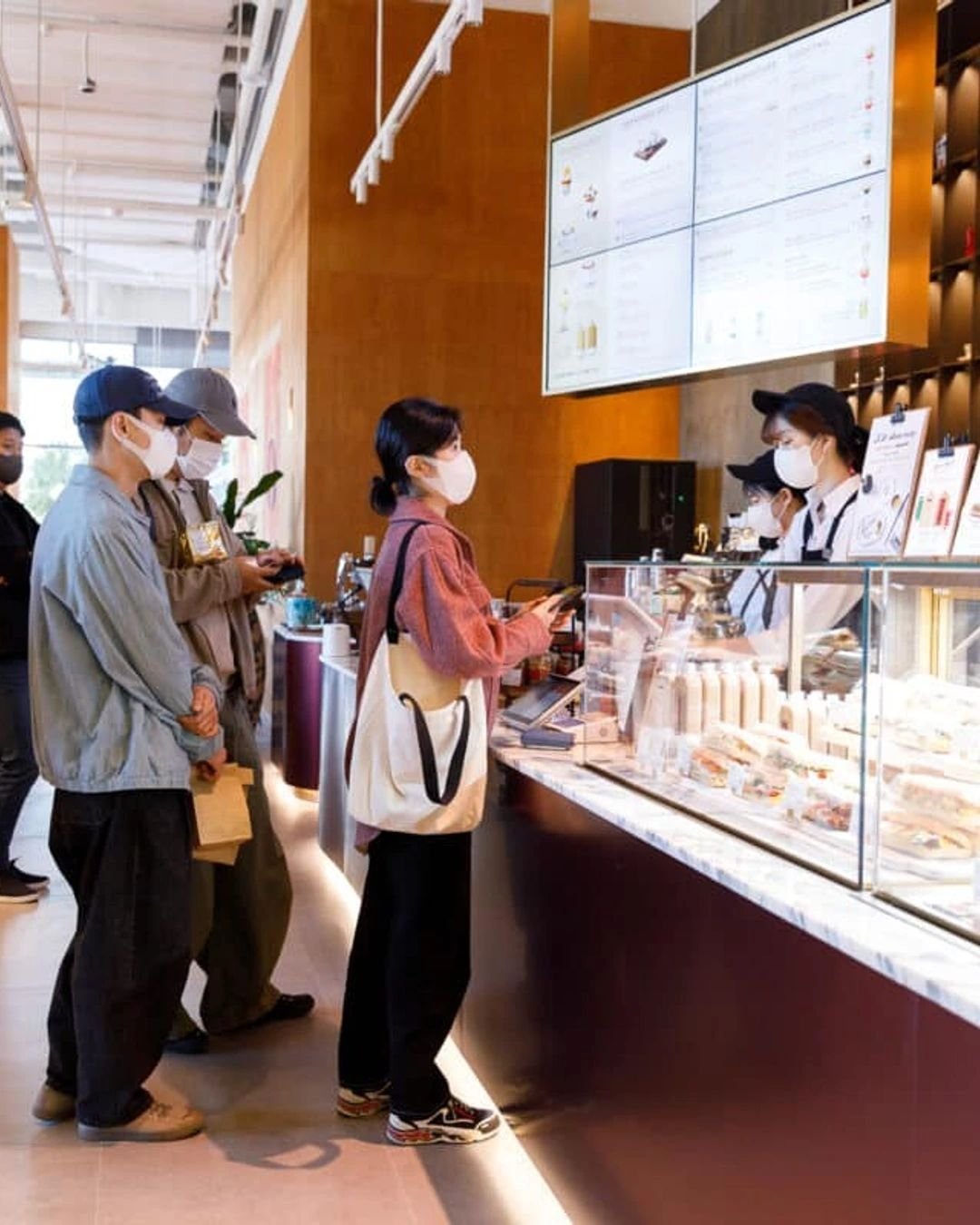
- Pay the displayed total: At restaurants, cafes, and taxis, pay the amount shown on the bill, register, or meter. There is normally no need to add a separate tip.
- Using two hands: In formal situations or when exchanging something with an older person, using both hands—or supporting the giving hand at the wrist—is commonly considered polite. One-handed card payments are normal in many casual shops and cafes, so travelers do not need to turn each small transaction into a formal exchange.
3. Korean Dining Etiquette: Table Drawers, Bells & Drinks
Restaurant layouts vary, but these features are common in casual Korean eateries.
- Finding utensils: If chopsticks, spoons, or napkins are not on the table, check for a drawer under the tabletop.
- Calling a server: Many restaurants have a small call button on the table. If there is no button, say “Jeogiyo” (저기요, “Excuse me”) in a clear but polite voice.
- Water and side dishes: Water and some banchan refills are often self-service in casual restaurants. Look for signs or ask before helping yourself, as the setup varies by restaurant.
- Pouring drinks: At group meals, especially when alcohol is served, people often pour for one another. Receiving a drink with both hands is a polite gesture in a formal or age-conscious setting, but it is not necessary at every casual meal.
4. Public Manners: Cafes, Elevators, Calls & Trash
- Cafes: Ordering, seating, and tray return systems differ. A chain may use a kiosk, pager, and return station, while a small cafe may take orders at the counter and clear tables itself. Follow posted signs rather than assuming one rule applies everywhere.
- Phone calls: Loud calls may be considered disruptive on quiet subway cars, buses, elevators, and in compact cafes. Keep calls brief or move to a less crowded area when possible; the expectation varies by setting.
- Elevators: Let people exit before entering, stand clear of the doors, and avoid blocking the control panel. Holding the door is courteous when practical, but building layouts and crowd flow vary.
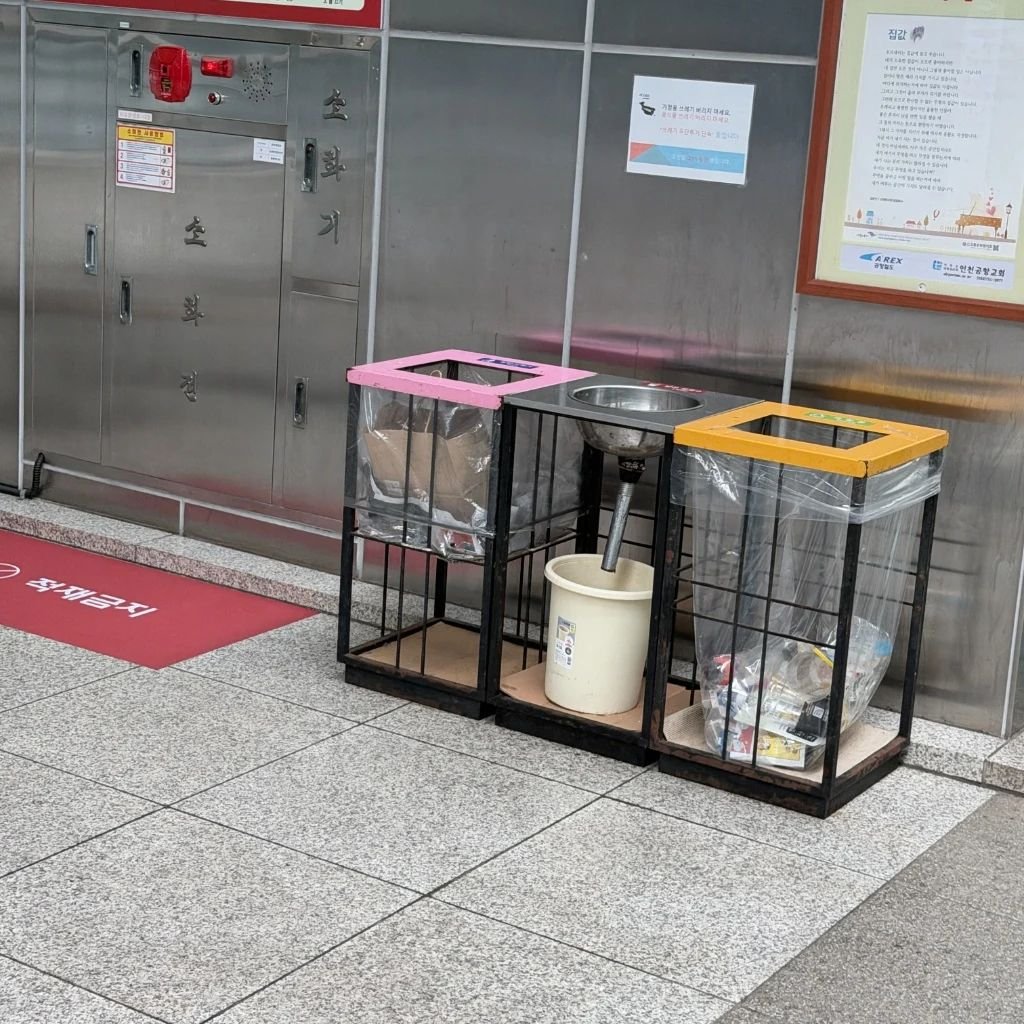
- Finding a trash bin: Public bins can be difficult to find, so keep cups and packaging with you until you reach a suitable bin. Some subway stations provide separate openings for leftover liquid and empty cups; empty drinks first and follow the labels.
5. Homes & Temples: Follow the Host or Posted Signs
- Private homes and floor seating: Removing outdoor shoes is commonly expected before entering a home and in restaurant rooms with a raised floor. Follow the host, signs, shoe rack, or change in floor level.
- Temples: Photography, clothing, and access rules may differ by site and by prayer hall. Speak quietly, avoid interrupting worship, and follow posted restrictions or staff guidance instead of assuming every temple has the same practice.
Frequently Asked Questions (FAQ)
Should I bow when greeting people in Korea?
A slight bow or nod is enough in most everyday travel situations. Pair it with “Annyeonghaseyo” (안녕하세요, “Hello”) or “Gamsahamnida” (감사합니다, “Thank you”), and follow the other person’s lead in more formal settings.
Is it acceptable to blow your nose at the dining table?
Loudly blowing your nose at a shared table may be considered impolite. If possible, dab your nose discreetly or step away from the table for a moment.
Related Travel Guides
Official reference sources: