How to Order at Korean Restaurants 2026: Bells, Water & Banchan
At Korean restaurants, first check whether ordering happens through a table tablet, kiosk, call bell, or a staff member. Water, utensils, and banchan may be self-service or brought to the table, depending on the venue. Look at the table setup and nearby signs before calling staff; there is no single ordering routine used everywhere.
Table of Contents
1. Entering and Ordering: Tablets, Call Bells, and Staff
At a casual restaurant, you may hear “Eoseo oseyo”, a common welcome. Some places let customers choose an open table, while others assign seats. If it is not clear, wait near the entrance until a staff member points you to a table.
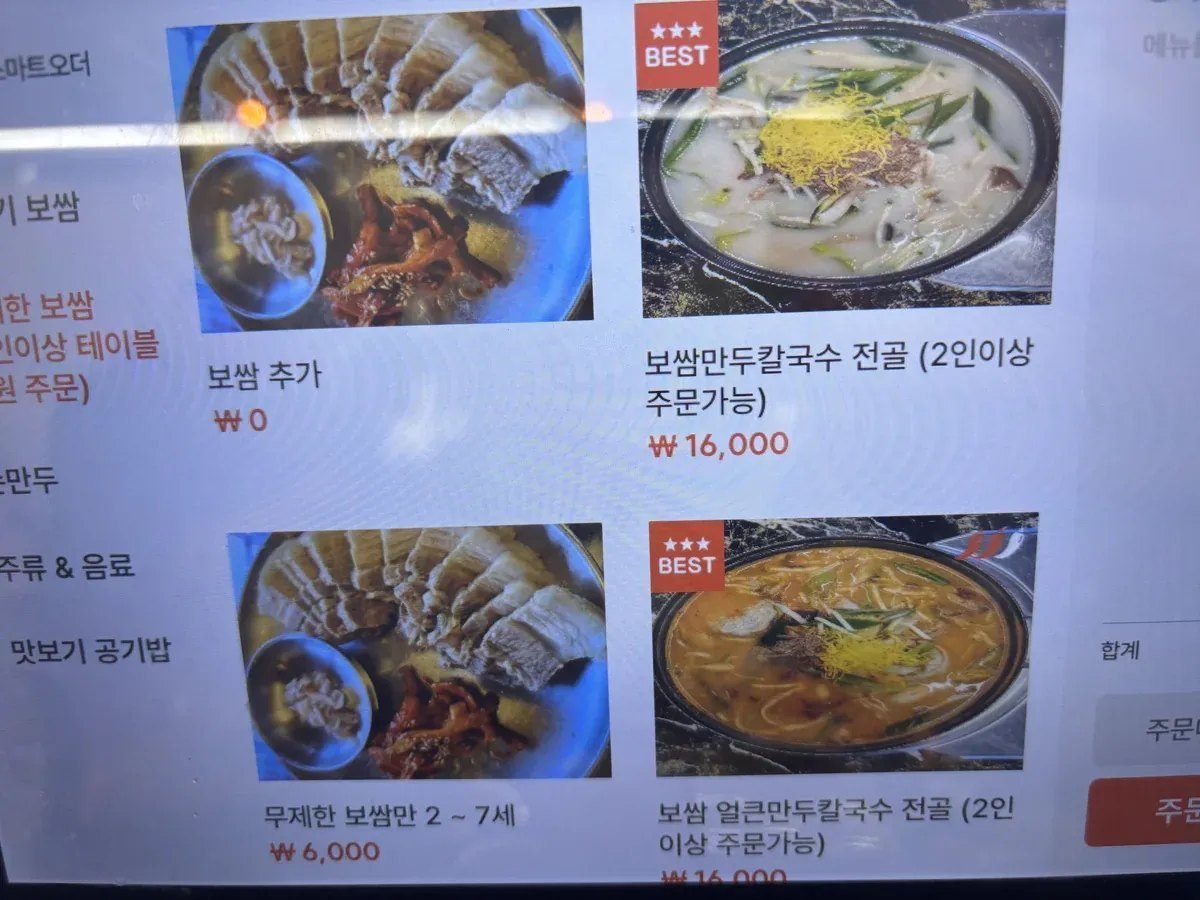
Tabletop ordering tablets: Many newer restaurants use a touchscreen at the table. Look for a language or flag icon; an English menu is available on some systems, but not all. The tablet may show photos, optional add-ons, or spice choices when the restaurant has enabled them.
Call bells: A round call button is common on restaurant tables. Press it once when you are ready to order or need help. If there is no bell, make eye contact, raise your hand slightly, and say “Jeogi-yo” or “Yeogi-yo” to get a staff member’s attention.
2. Banchan: Side Dishes and Refill Etiquette
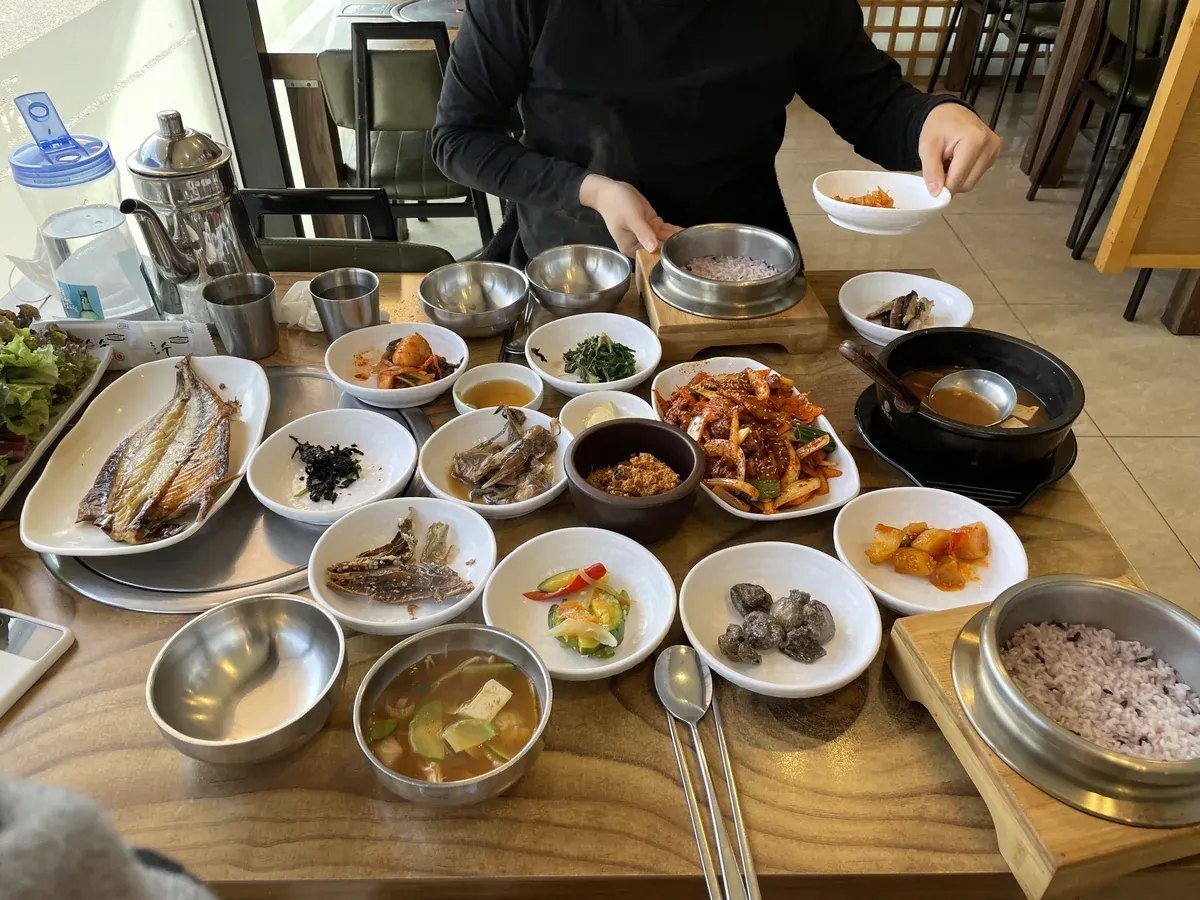
Banchan (반찬) are the small side dishes served with many Korean meals. The selection depends on the restaurant and the main dish.
| Common Banchan | Description | Typical Refill Practice |
|---|---|---|
| Baechu Kimchi | Fermented napa cabbage kimchi | Usually available; ask if unsure |
| Kkakdugi | Cubed radish kimchi | Usually available; ask if unsure |
| Namul | Seasoned vegetables or greens | Varies by restaurant |
| Eomuk Bokkeum | Stir-fried fish cake | Varies by restaurant |
| Ssam Vegetables | Lettuce, perilla leaves, garlic, and dipping sauce | Varies by restaurant or menu |
Basic banchan and water can generally be refilled without an extra charge, but specialty sides or items sold separately may be limited. To ask for more, point to the dish and say “Igeo deo juseyo” (Please give me more of this). Take a small amount at a time, especially at a self-service station.
3. Utensils, Water, and Self-Service Stations
Utensils: If there are no spoons or chopsticks on the table, check the side or underside for a drawer. Some restaurants use a basket or container instead. Drawers usually hold metal spoons, chopsticks, and napkins; wet wipes are not standard everywhere.
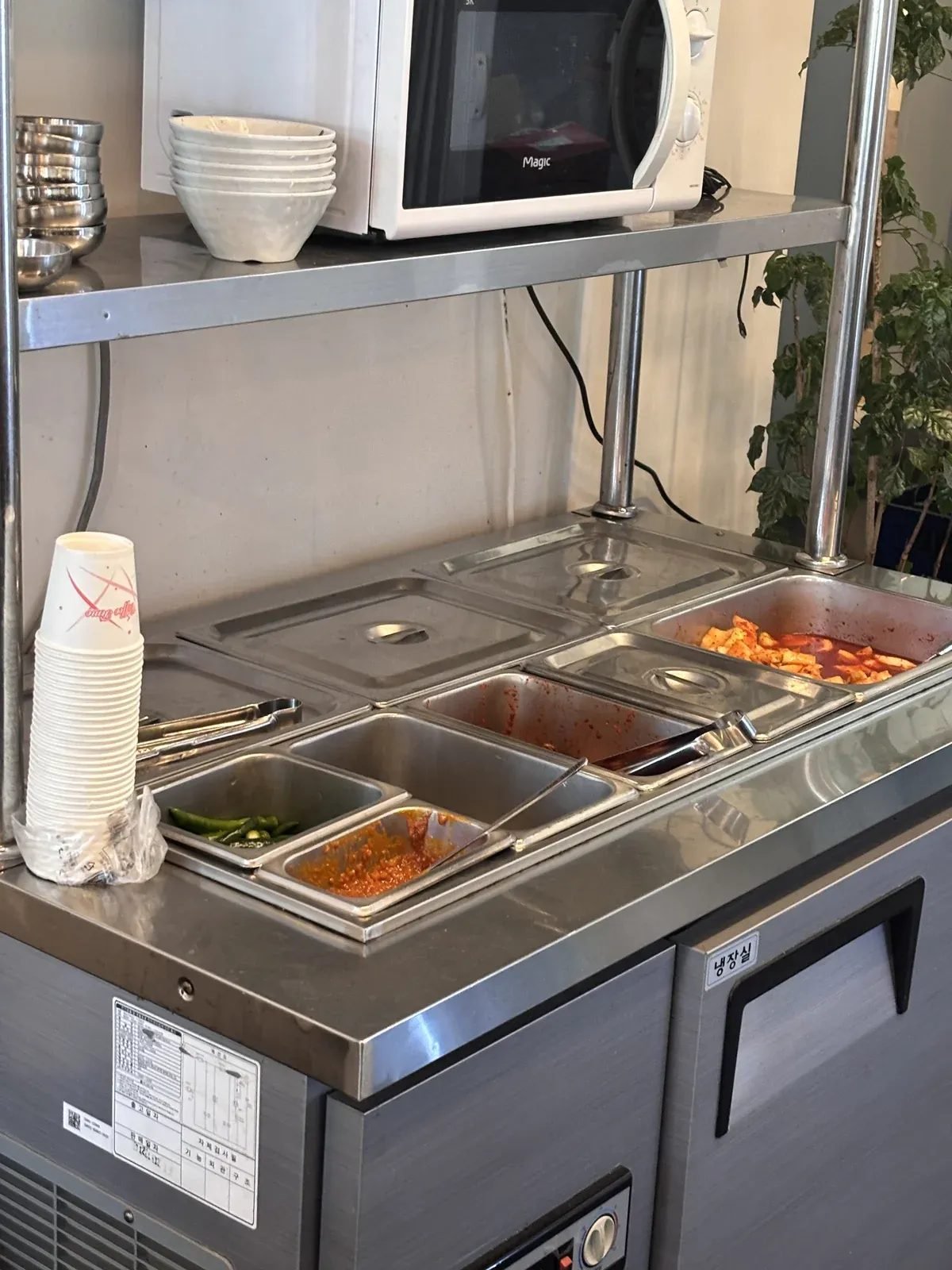
Self-service stations: Restaurants marked 셀프바 may provide a self-service area for selected side dishes, sauces, cups, or water. Refill only the items displayed there, and use a clean serving utensil.
Water: Drinking water is normally provided without charge. It may arrive in a bottle or carafe, or the restaurant may have a water dispenser. A sign reading 물은 셀프 means that water is self-service.
4. Tabletop Burners and Korean BBQ
Stews such as jjigae, hot pots such as jeongol, and Korean BBQ may be cooked or kept warm at the table.
Built-in burners: Staff often light or adjust the burner when the food arrives. At some restaurants, customers can lower the heat themselves. If you are unsure, ask a staff member before touching the controls.
Aprons: BBQ restaurants and places serving red broth often have reusable or disposable aprons. They may be hanging near the tables or available on request. Ask “Apchima juseyo” if you would like one.
5. Paying the Bill and Tipping
Paying at the counter: At many casual restaurants, you pay at the front counter when leaving. Bring the paper bill or table receipt if one was left at your table. Some restaurants instead take payment at the table or through the ordering tablet.
Cards and mobile payments: Payment options differ by restaurant and device. A tabletop terminal may accept some foreign-issued cards, but a card or mobile wallet that works elsewhere can still be declined. Keep a second card or some cash as a backup, and review our cash and card guide for Korea before your trip.
Tipping: Tipping is not normally expected at restaurants in Korea. Pay the amount shown on the bill unless the venue clearly lists a separate service charge or policy.
Frequently Asked Questions (FAQ)
Can solo travelers eat at Korean BBQ restaurants?
Yes, but the minimum order varies. Some BBQ restaurants require at least two portions (2인분 / i-inbun), even for one diner, while others offer single-person sets or have no minimum. Check the menu or ask before ordering.
Are metal chopsticks hard to use?
Korean chopsticks are often flat and made of stainless steel, so they can feel slippery at first. You can ask for a fork (pokeu) or wooden chopsticks (namu-jeotgarak), although not every restaurant keeps both.
What should I do if a dish is too spicy?
Ask “Deol maepge hae juseyo” (Please make it less spicy) when ordering. The kitchen may be able to adjust dishes cooked to order, but premade sauces, soups, and marinades cannot always be changed.
Official reference:
Korea Tourism Organization: Visiting a Korean Restaurant