Seoul to Busan 2026: KTX, Domestic Flight, or Express Bus? Time vs. Cost Comparison
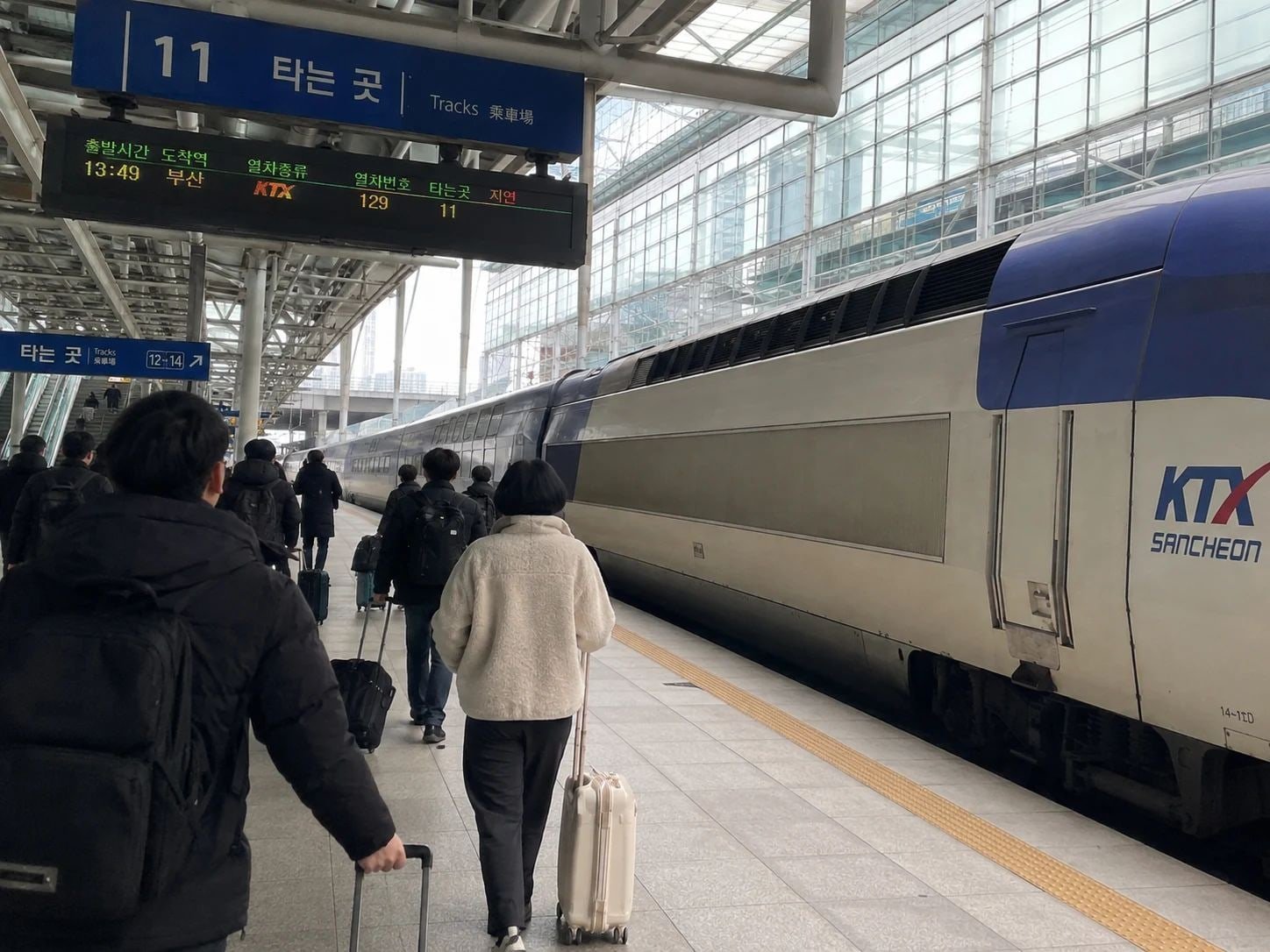
For most trips between central Seoul and the Busan Station area, KTX is the simplest starting point. A flight can make sense if you are already near Gimpo Airport or find a low fare, while an express bus costs less when travel time matters less. Compare the full door-to-door trip—not only the scheduled ride—against your departure neighborhood and Busan hotel.
Affiliate disclosure: This article contains Trip.com affiliate links. If you book through them, Oomphyedit may earn a commission at no extra cost to you.
Table of Contents
Seoul to Busan: Time and Cost at a Glance
| Option | Journey time | Adult one-way fare reference | What to add |
|---|---|---|---|
| KTX: Seoul Station–Busan Station | A little over 2 hours on faster trains; other services take longer. Check the specific departure. | KRW 54,400 standard-class reference fare from September 1, 2026 | Travel to and from the stations; any booking-service fees |
| Nonstop flight: Gimpo (GMP)–Gimhae (PUS) | Typically around 1 hour to 1 hour 20 minutes scheduled airport-to-airport time | Variable: compare the final fare for your travel date, not a route-page “from” price | Airport transfers, check-in and boarding time, and any baggage charges |
| Express bus: Seoul Gyeongbu–Busan | KOBUS lists about 4 hours; traffic can extend the journey | Standard KRW 26,700; Udeung KRW 39,700; Premium KRW 51,600 in the September 5 daytime schedule | Travel to and from terminals; late-night surcharges where applicable |
Last verified: September 24, 2026. KORAIL’s Seoul–Busan reference fare, the September rail changes, the cited KOBUS schedule snapshot, and Korean Air’s domestic check-in cutoff were checked against current operator and government information. The bus amounts shown are the pre-October 1 fares from the September 5 schedule; use KOBUS for departures on or after October 1 because the fare ceiling is changing. Flight prices and schedules remain date-specific, and all figures below are ticket-only rather than complete door-to-door costs.
KTX’s Seoul–Busan reference fare fell from KRW 59,800 to KRW 54,400 on September 1, 2026. The listed bus fares apply to the September 5 schedule; use KOBUS for departures on or after October 1, 2026. See the KORAIL fare announcement and bus fare announcement (Korean).
KTX from Seoul to Busan
KTX takes you from Seoul Station to Busan Station without airport check-in or baggage collection. The timetable varies by departure and stopping pattern, so do not assume every KTX makes the trip in the same time.
Seoul Station is convenient for many visitors staying around Myeongdong, City Hall, and Jongno. In Busan, the station is useful for Nampo and nearby districts, but it is not close to every hotel: Haeundae and Gwangalli still require an onward journey.
When the train is a good fit
- You can reach Seoul Station easily from your accommodation.
- You want to avoid highway traffic and airport procedures.
- You have only a short stay in Busan and want more time there.
- The available train fits your plans better than the bus or flight.
The main drawbacks are ticket cost and availability. Popular departures can sell out, especially around weekends and major holidays. Choose your travel date and check seats before building a timed activity around your arrival.
If you are staying in southern Seoul, compare departures from Suseo as well. Following the September 2026 high-speed rail changes, do not assume every KTX departure uses Seoul Station. This comparison uses Seoul Station–Busan Station; always check the station printed on your ticket.
For booking instructions, seats, and luggage, see our KTX travel guide.
Check Seoul–Busan KTX availability and fares. Select your date and confirm the train is KTX; the route page may also show slower trains. Review the final price and cancellation terms before paying.
Flying from Gimpo to Gimhae
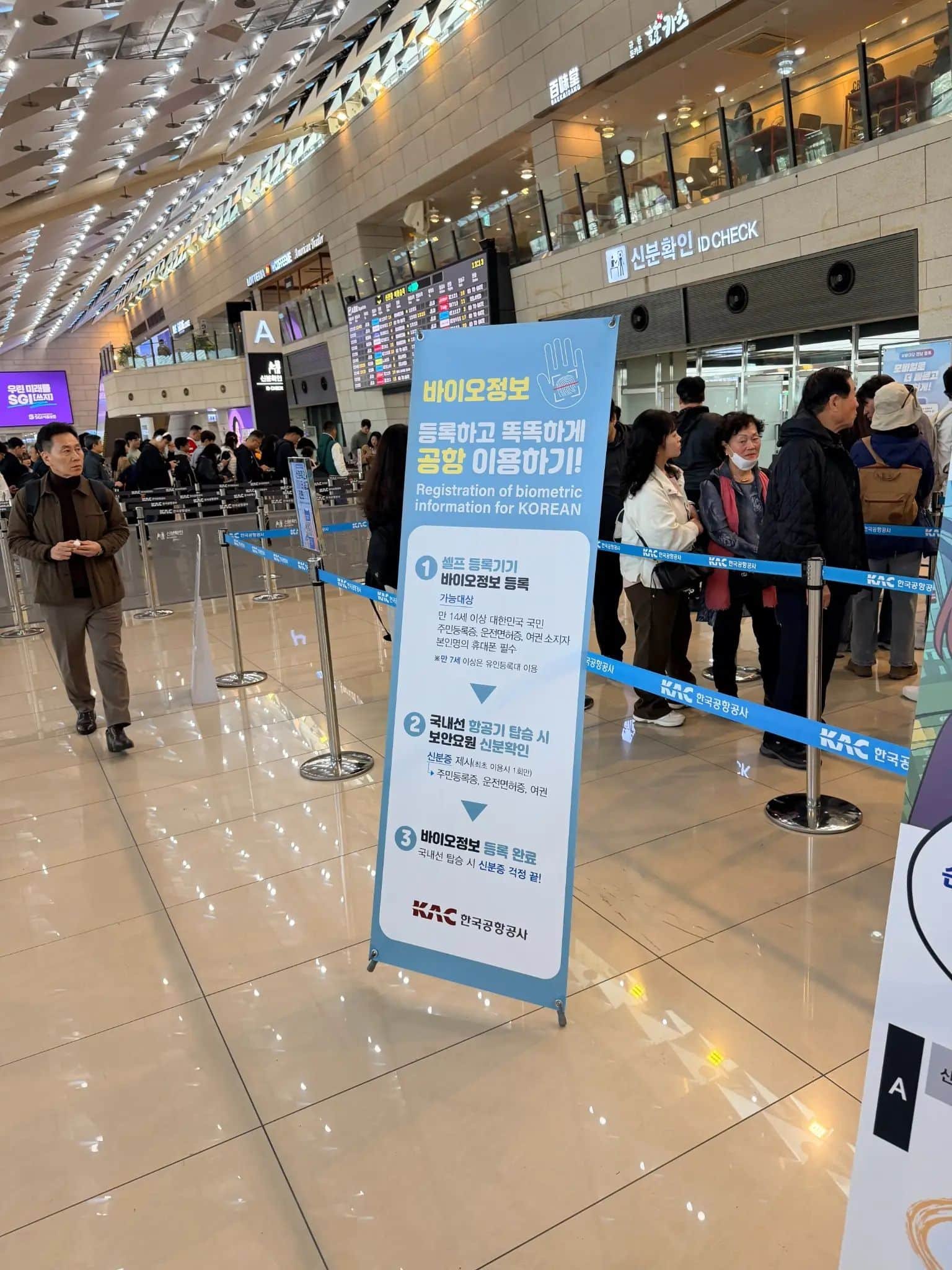
Nonstop flights connect Gimpo Airport (GMP) in Seoul with Gimhae International Airport (PUS), which serves Busan. The scheduled flight duration includes more than just time airborne; it is not the total time you need for the trip.
Add the journey to Gimpo, check-in and security, boarding, baggage collection if needed, and the trip from Gimhae to your hotel. A shorter flight time does not necessarily mean an earlier hotel arrival.
When flying makes sense
- You are already near Gimpo Airport.
- You find a low fare after checking baggage and transfer costs.
- Suitable trains are sold out.
- The flight schedule works better for your arrival plans.
Hongdae has an Airport Railroad connection to Gimpo, so compare both options from there. From accommodation near Seoul Station, the extra journey to the airport may remove much of the flight’s time advantage.
Identification, check-in, and baggage
Bring your original passport and check your airline’s identification, check-in, baggage-drop, and boarding deadlines. For example, Korean Air’s domestic check-in counters close 30 minutes before departure. That is a cutoff, not a recommended airport arrival time; other airlines’ rules may differ. See Korean Air’s domestic boarding guide.
Check the baggage allowance for the exact fare. A low advertised airfare may be less attractive after adding checked luggage or a taxi at either end.
After landing
Gimhae Airport is west of central Busan. You can continue by light rail and subway, taxi, or another available ground service. Check the route to your actual accommodation: Seomyeon, Nampo, Gwangalli, and Haeundae are different journeys.
Compare nonstop flights from Gimpo (GMP) to Gimhae (PUS). Apply the nonstop filter and check the airports, baggage allowance, and final total.
Taking an Express Bus
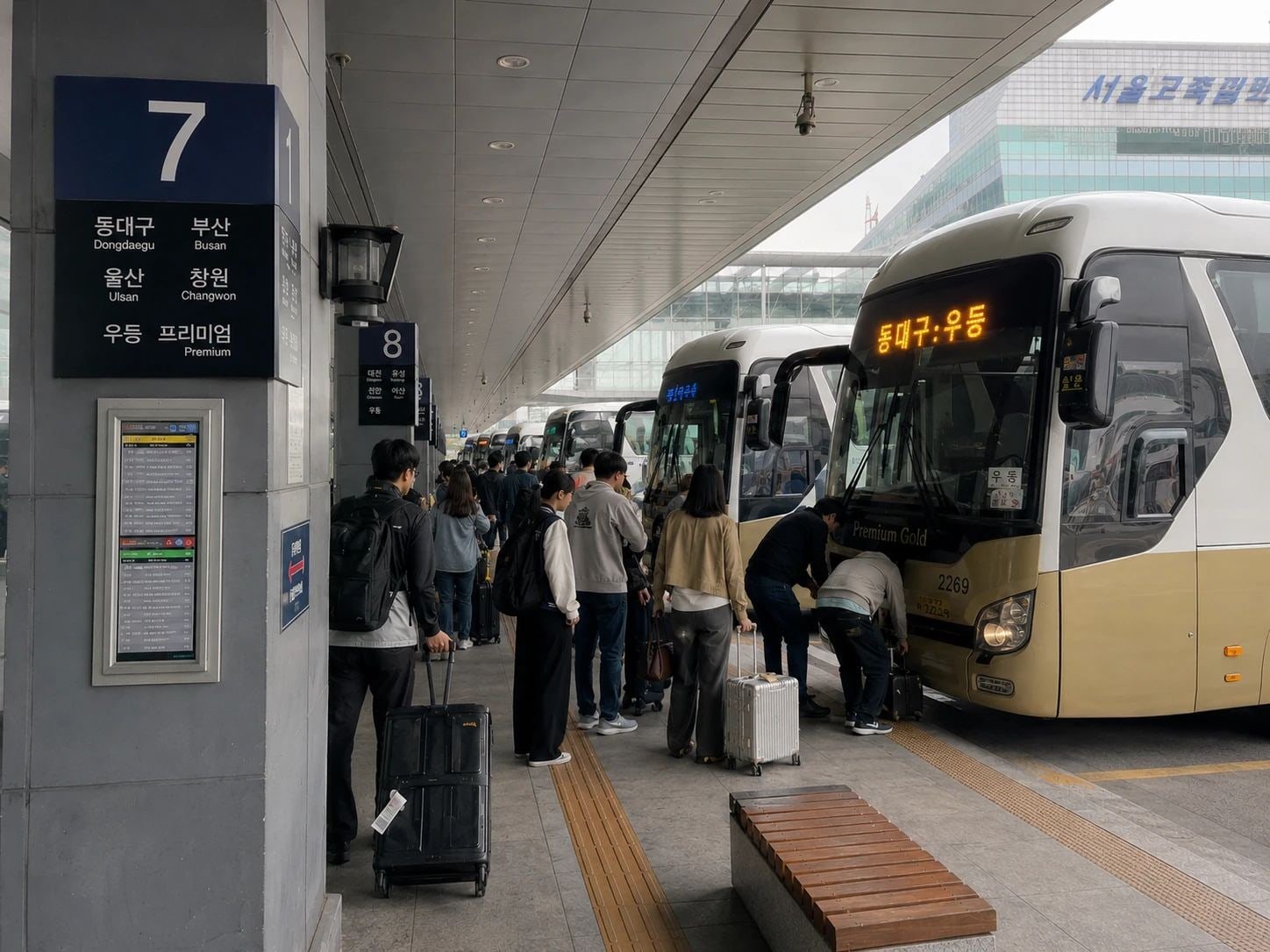
The bus can be a good choice when saving money matters more than arriving quickly. Standard, Udeung, and Premium services have different fares and seat layouts; the lowest fare is not available on every departure.
For the Seoul Gyeongbu–Busan route, KOBUS lists an estimated journey of about four hours. Congestion around Seoul, on the highway, or near Busan can add time. Leave a generous buffer if you have a connection or booking after arrival.
The class makes a large difference to the saving. In the checked daytime schedule, the standard bus was KRW 27,700 less than the KRW 54,400 KTX reference fare. Udeung was KRW 14,700 less, while Premium was only KRW 2,800 less. These differences exclude transfers and do not apply to every departure or future fare change.
Large suitcases usually go in the compartment beneath the bus. Keep documents, medication, and valuables with you. Do not rely on an onboard toilet; check the rest-stop arrangements for your service.
Search KOBUS for the exact departure and arrival terminals. The VISITKOREA bus guide explains booking channels and ticket collection. Do not assume a reservation email is a boarding ticket.
Door-to-Door Time: An Example
Use your hotel addresses when comparing routes. The example below assumes accommodation in Myeongdong and a destination near Busan Station. It is an illustrative planning calculation, not a measured journey or a guaranteed timetable.
| Option | Assumed time components | Illustrative total |
|---|---|---|
| KTX | 20 min to Seoul Station + 25 min station buffer + 2 hr 40 min train + 15 min after arrival | 3 hr 40 min |
| Flight | 60 min to Gimpo + 90 min airport buffer + 70 min scheduled flight + 30 min to leave the airport + 60 min onward travel | 5 hr 10 min |
| Express bus | 45 min to Seoul Express Bus Terminal + 30 min terminal buffer + 4 hr bus + 60 min onward travel | 6 hr 15 min, before extra traffic delays |
Replace each assumption with your route and departure. Airport queues, baggage collection, walking time, and traffic can change the result. A hotel near Gimpo or a destination nearer a different Busan terminal can make another option more convenient. Check current routes in Naver Map before you leave.
Compare the Full Cost
Add three items for each option: the ticket, travel to the departure point, and travel from the arrival point to your accommodation. Include baggage and booking charges where they apply.
For example, a hypothetical KRW 40,000 airfare plus KRW 15,000 in combined ground transport is KRW 55,000 before any baggage charge. This is a calculation example, not a current fare quote. Compare it with the train or bus plus their own local transport costs.
If several people share a taxi, calculate the transfer cost per person. If you use public transport, compare the actual fare and number of transfers. A cheaper ticket may still be worth choosing, but make that decision with the total in front of you.
Traveling with Large Luggage
On KTX, you carry and load your own bags. Check that you can manage them through the station and keep aisles clear; luggage-rack space is shared. A direct station transfer can be convenient, but the train is not automatically easiest for every traveler with a large suitcase.
On a coach, suitcases usually travel below the cabin. Confirm the operator’s limits for multiple or oversized bags. On a flight, check the included weight and size allowance before paying.
For families or anyone who finds stairs difficult, compare the whole route, including lifts, walking distance, and changes of vehicle. Fewer transfers may matter more than the vehicle itself.
Where You Arrive in Busan
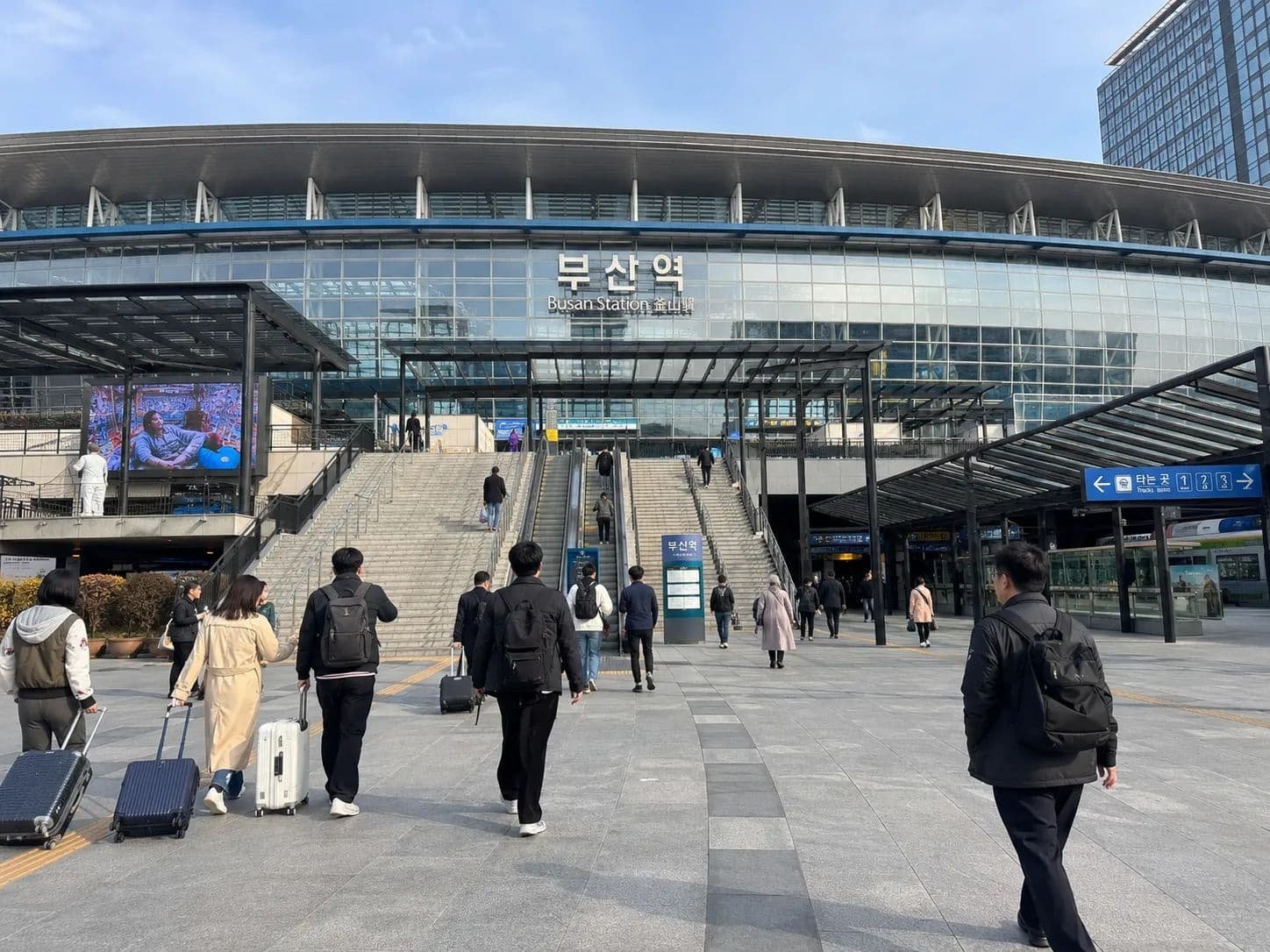
Busan Station
The KTX station connects with Subway Line 1. It is useful for Nampo and nearby sightseeing, but allow extra time for coastal neighborhoods such as Gwangalli and Haeundae.
Gimhae Airport
The airport has light-rail connections into the urban rail network. Check where you need to change lines and whether a taxi is worthwhile for your group and luggage.
Bus terminals
Busan’s main terminal at Nopo and the west Busan terminal at Sasang are different places. Compare the full arrival name shown by the booking service with your hotel location. Do not substitute one terminal for the other when estimating travel time.
Choosing for Your Itinerary
- Myeongdong, City Hall, or Jongno: start by comparing trains from Seoul Station.
- Hongdae: compare the connections to both Seoul Station and Gimpo Airport.
- Near Gimpo: check nonstop flights before traveling back toward central Seoul.
- Southern Seoul: also check high-speed trains from Suseo and the relevant bus terminal.
- A two- or three-day Busan stay: give extra weight to usable time after arrival, not just the ticket price.
- A flexible, budget-focused trip: compare standard bus departures with the final train and flight totals.
Frequently Asked Questions
Seoul to Busan: Is the Train or Flight Better?
For most travelers going from central Seoul to central Busan, KTX is usually the better choice. Although the flight itself is shorter, airport transfers, check-in, security, and baggage collection can make flying slower door to door. Consider flying if you are staying near Gimpo Airport, find a substantially cheaper fare, or your Busan destination is more convenient from Gimhae Airport.
How long does KTX take?
Faster services take a little over two hours. Stopping patterns and routes vary, so check the departure you intend to book rather than treating the fastest time as typical for every train.
What is the cheapest option?
A standard express bus is often worth checking first. Premium and late-night buses can cost much more, while some flight offers may be competitive. Use current totals for the same travel date.
Is the express bus comfortable?
Compare seat layouts. Udeung and Premium coaches generally offer more room than standard coaches, but you still have a long road journey with possible traffic delays.
Official Sources
- KORAIL timetables and fare tables
- KORAIL September 2026 fare and service changes
- KOBUS timetable and fare search
- VISITKOREA express and intercity bus guide
- Korean Air domestic boarding procedures
Related Travel Guides
- SRT vs. KTX station comparison — compare departure stations and decide whether Seoul Station or Suseo fits your route.
- Korail Pass cost guide — check whether several long-distance rail trips make a pass worthwhile.
- Express and intercity bus guide — learn how to book, collect your ticket and find the right terminal.
- 3-day Busan itinerary — plan realistic routes, food stops and where to stay after choosing your transport.