How to Take Express & Intercity Buses in Korea 2026: KOBUS, TxBus & TmoneyGO Guide
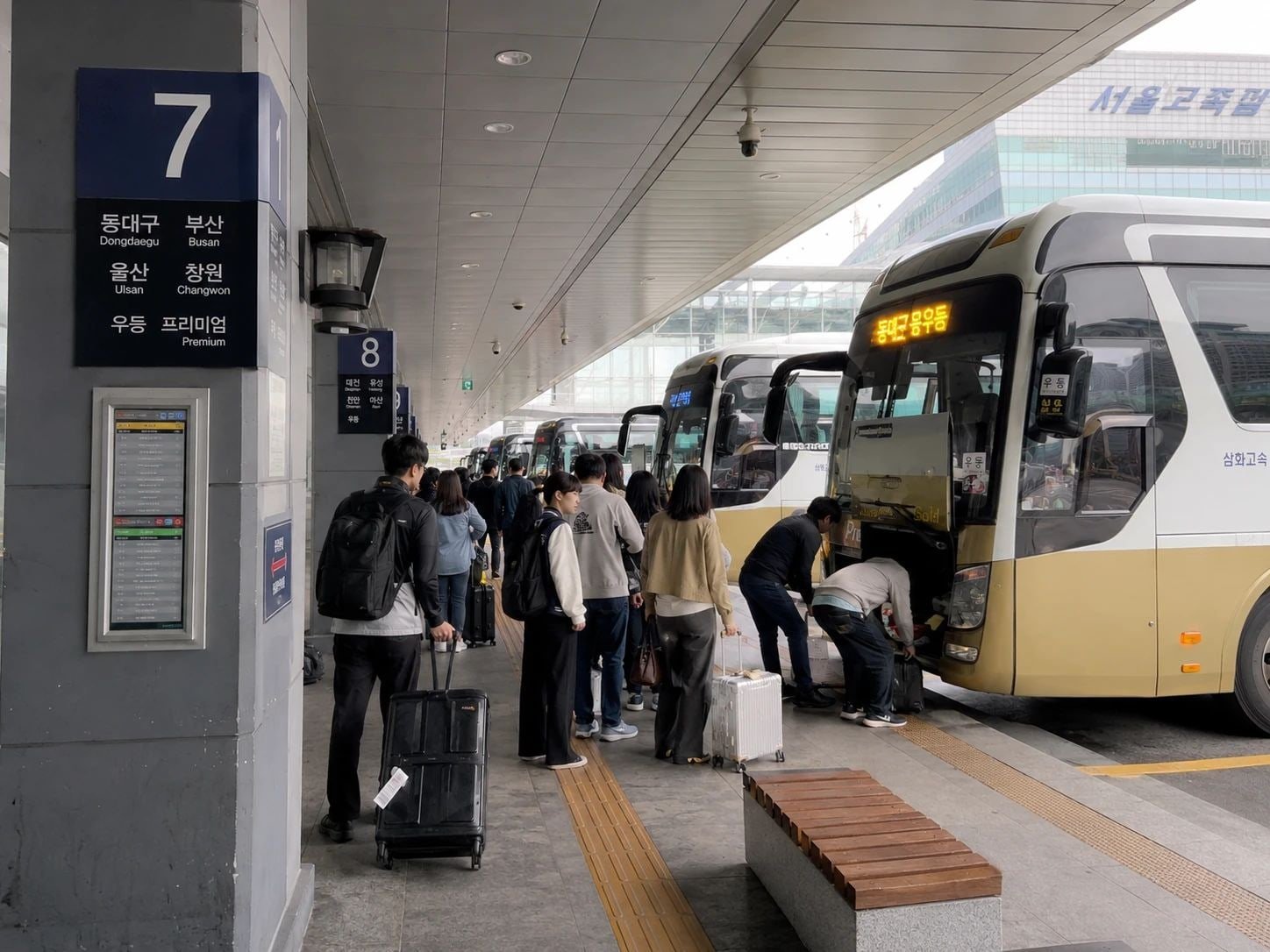
Express and intercity buses in Korea connect major cities and smaller towns that are difficult to reach by train. Before booking, check the exact departure and arrival terminals: express and intercity buses serving the same city may use different locations.
KOBUS covers express bus bookings, TxBus handles many intercity routes, and TmoneyGO offers both in one app.
Last verified: September 24, 2026. Booking-channel roles, ticket collection, cancellation guidance, and the October 2026 fare notice below were checked against KOBUS, TxBus, Tmoney, VISITKOREA, and the Ministry of Land, Infrastructure and Transport. App registration and overseas-card acceptance can vary by user and card issuer.
Table of Contents
Express Bus vs. Intercity Bus in Korea
Express buses (고속버스) usually connect cities on routes with relatively few stops. Intercity buses (시외버스) cover a wider mix of regional destinations and intermediate stops. Some terminals serve both; others are separate.
Search by terminal and destination rather than choosing a bus solely by its category. No single booking service lists every route. If a search returns nothing, try another terminal or an intercity booking service before assuming there is no bus.
| Service | What to use it for | Before you pay |
|---|---|---|
| KOBUS | Express bus routes; English web interface | Check payment options and ticket collection instructions |
| TxBus | Many intercity routes; English web interface | Check whether you must collect a ticket at the terminal |
| TmoneyGO | Express and intercity bookings in one app | Check that you can complete registration and payment |
| Terminal counter or kiosk | In-person purchase or ticket collection | Confirm the terminal, date, time, and seat before paying |
Check the Exact Terminal
Seoul Express Bus Terminal, Central City, Dong Seoul, and Seoul Nambu are not interchangeable. Seoul Express Bus Terminal and Central City are next to each other, but they have separate route groups and boarding areas. Dong Seoul and Seoul Nambu are elsewhere in the city.
Keep the full terminal name from your reservation, including labels such as Seoul Gyeongbu. Search that name in your map app, then check the walking route to the correct building. Our Naver Map English guide explains how to check transit routes and station exits.
Check the arrival terminal as carefully as the departure terminal, including for your return trip. A bus to the right city can still leave you a long way from your hotel.
For an east-coast example, our Seoul to Gangneung and Sokcho route comparison shows how station and terminal choices change by destination.
Using TmoneyGO
TmoneyGO combines express and intercity route searches, seat selection, payment, and supported mobile tickets. Having both services in one app is useful, but it does not guarantee that a visitor can complete every registration or payment step.
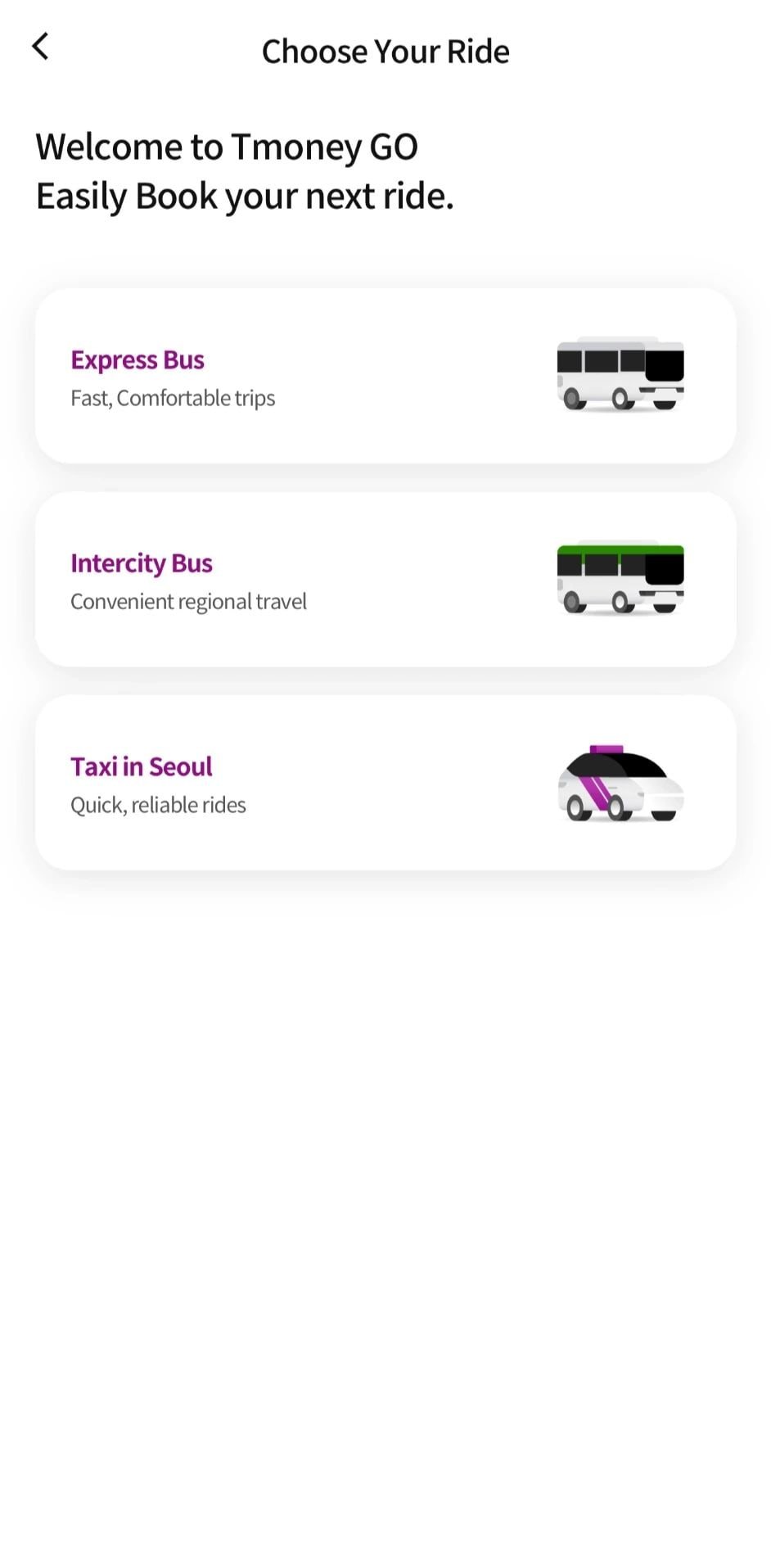
- Choose Express Bus or Intercity Bus.
- Enter the departure terminal, destination, and travel date.
- Compare departure times and bus classes, then select a seat.
- Check the fare and cancellation terms before paying.
- Open the saved reservation and check how to obtain or display the boarding ticket.
Is it suitable for foreign visitors?
Use TmoneyGO if its current sign-up and payment options work for you. English-language availability, phone verification, and overseas-card acceptance are separate issues; a translated screen alone does not confirm that your card will be accepted.
If you cannot complete the booking, try an English web service or buy at the terminal. The Korea Tourism Organization’s bus guide also lists Klook and Hanpass for express buses, and Hanpass for intercity buses. Check route coverage, fees, and ticket instructions on the service you choose.
Booking an Express Bus on KOBUS
KOBUS is an express bus reservation website with an English interface. Look for Ticket Reservation and choose the exact departure and arrival terminals.
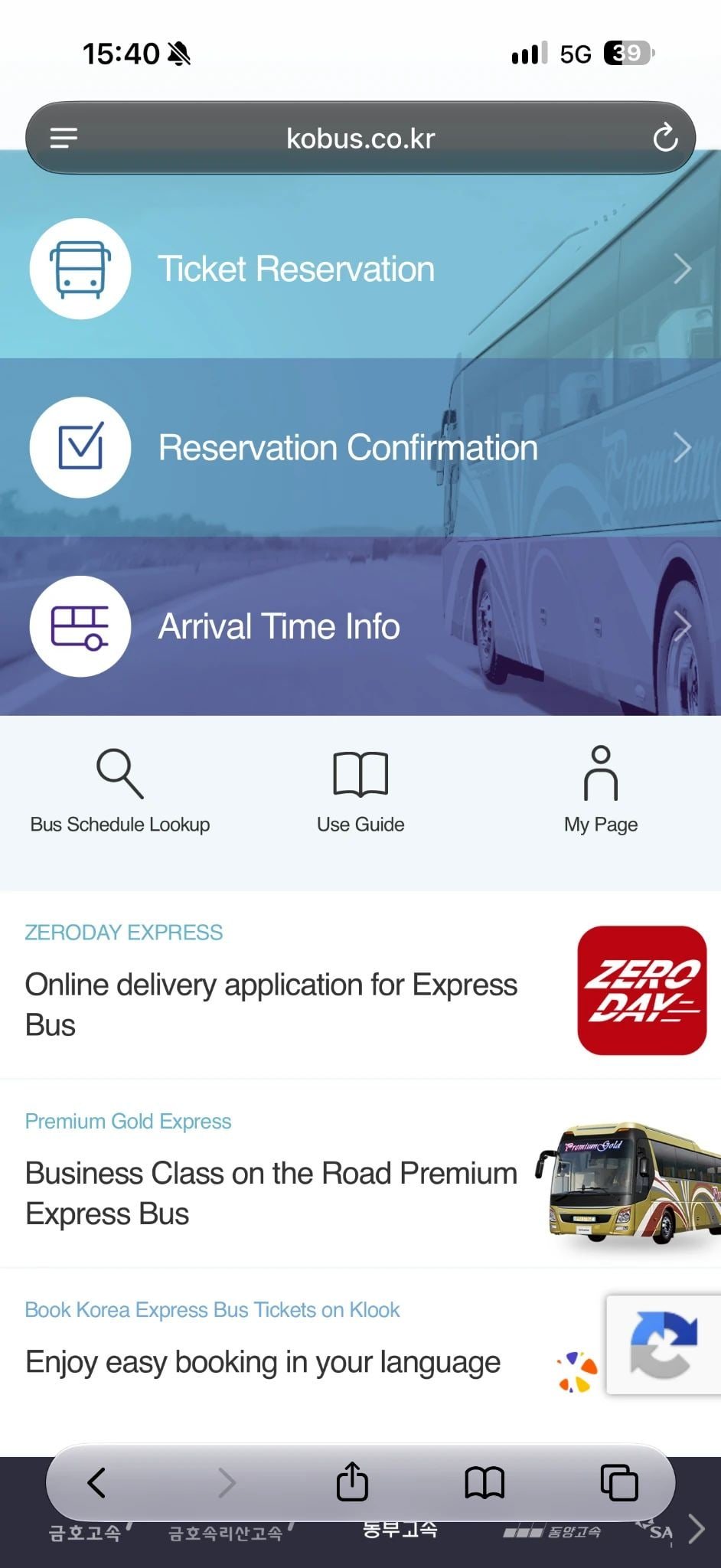
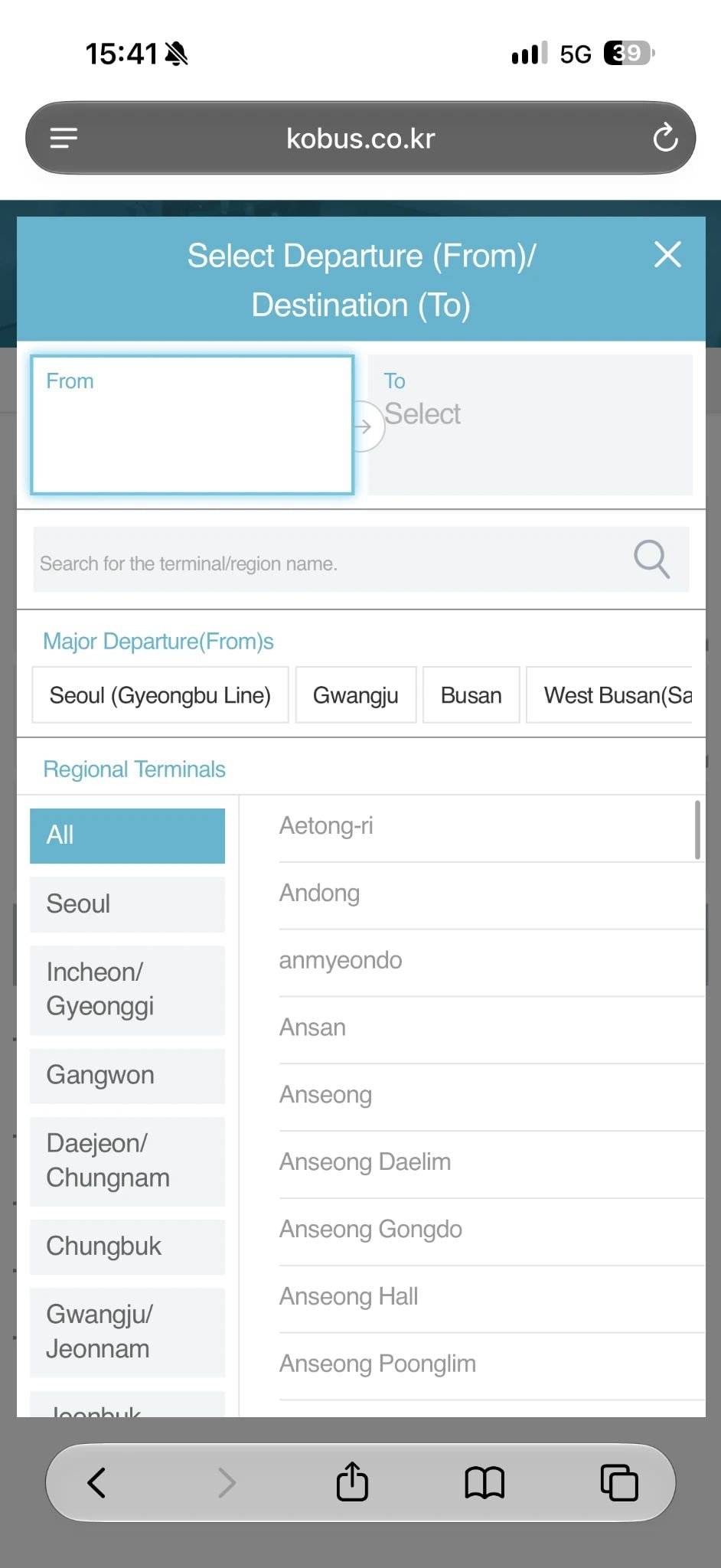
Select your date, departure time, bus class, and seat. Before paying, check the terminal names, adult or child fare, refund conditions, and whether your booking provides a mobile ticket or requires collection.
After payment, open Reservation Confirmation and check that the booking exists. Keep the reservation details and the contact information you entered so you can find it again.
What if the route is missing?
Check TxBus, Bustago, or TmoneyGO for intercity services. Searching a different terminal in the same city may also help. Do not assume that every bus to a city uses the same terminal.
Booking an Intercity Bus on TxBus
The TxBus English site provides Reservation/Ticketing and View/Modify/Cancel. Search your terminals and date, select a departure, and follow the payment instructions for that service.
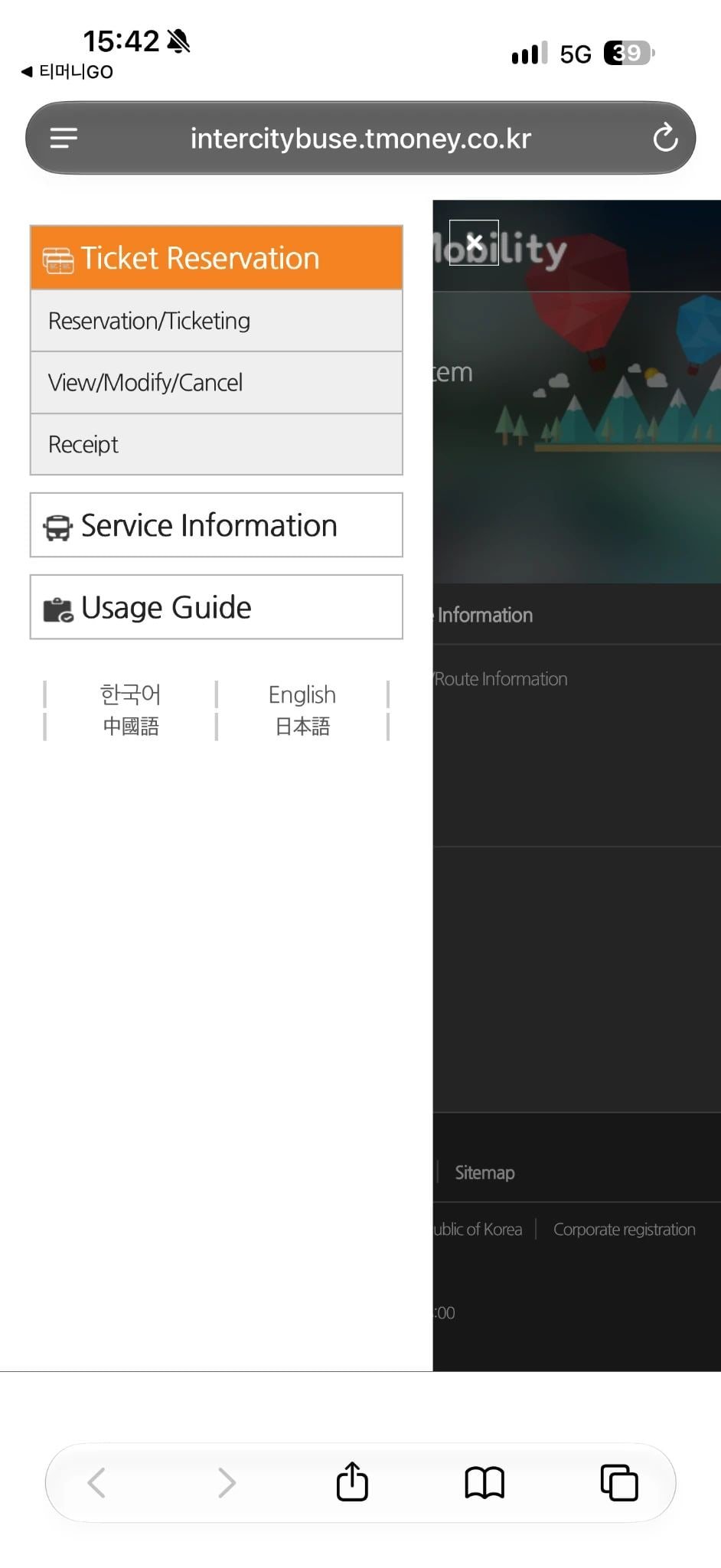
A reservation confirmation is not necessarily a boarding ticket. TxBus’s web guidance instructs passengers to bring the card used for payment when collecting tickets at the terminal counter or a supported kiosk. Check your booking’s collection instructions before going straight to the bus.
Use View/Modify/Cancel to verify the reservation after payment. Keep the booking reference and the details you entered. See the TxBus reservation guide and ticket collection and cancellation guidance.
Some intercity services use smaller terminals or roadside stops. Follow the exact boarding location on your reservation, not just the city name.
Buying a Ticket at the Terminal
Major terminals generally have staffed counters and ticket kiosks. Buying in person is a useful alternative if online payment fails, but seats on your preferred departure may already be sold out.
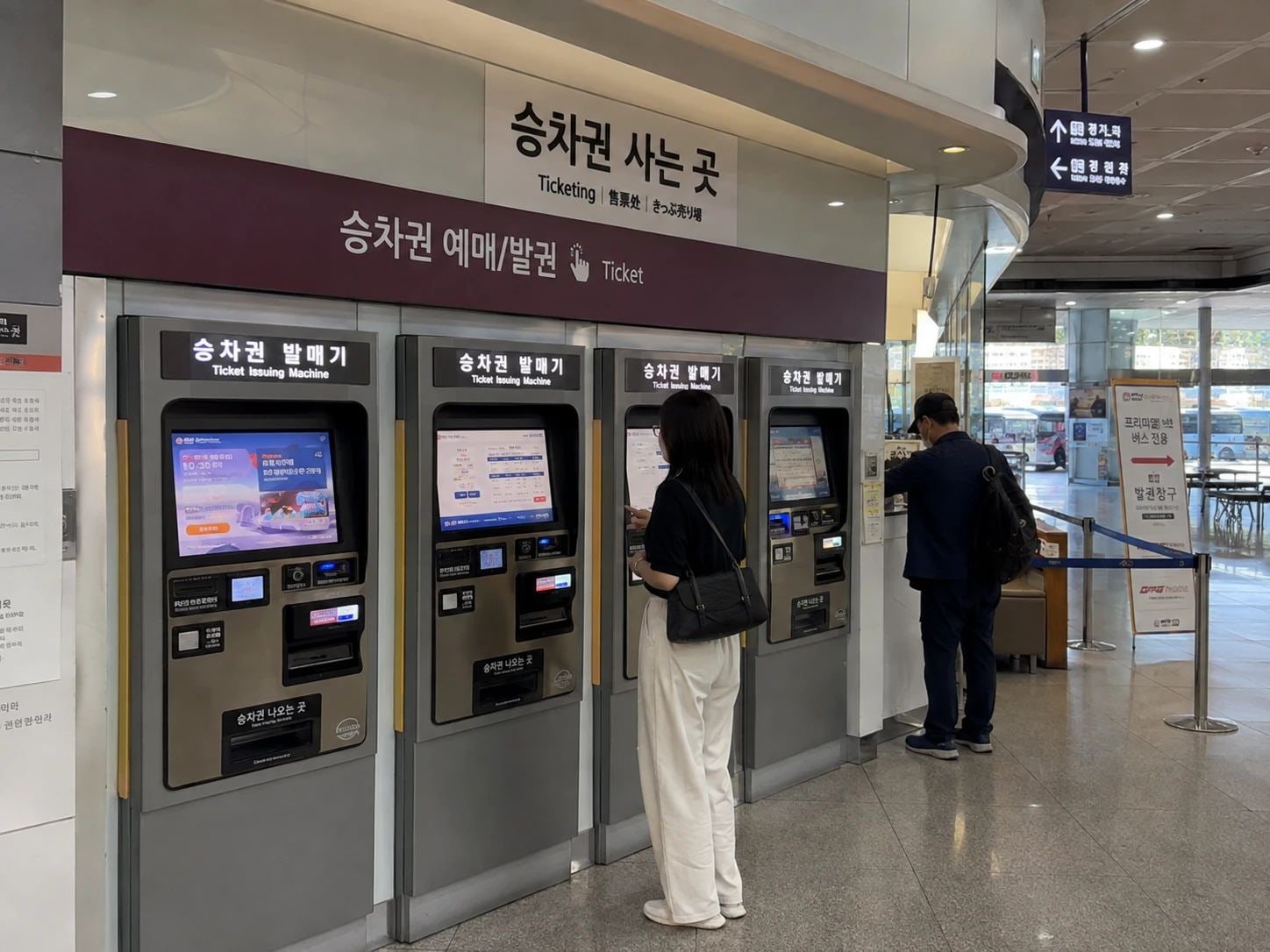
At a kiosk, choose the destination, date, departure time, class, and seat. Language and payment options vary by machine. If a card is rejected or the instructions are unclear, take your destination details to the staffed counter.
Reserve ahead when possible for Friday evenings, weekends, and major holidays. For an unfamiliar terminal, allow around 30 minutes before departure as a practical starting point, and more during busy periods or if you need to buy or collect a ticket.
Reading Your Ticket and Finding the Platform
- Exact departure and arrival terminals
- Date and departure time
- Platform or gate, if shown
- Bus company and class
- Seat number
- Booking reference and ticket format
Check the departure board when you arrive. Match the destination, time, and operator, and ask staff if the platform information differs from your ticket.
For mobile boarding, open the actual ticket or barcode before joining the queue and keep your phone charged. A payment receipt or booking email is not a substitute unless the booking instructions say it can be used to board.
Boarding and Luggage
Aim to be at the platform 10–15 minutes before departure; boarding may start later. This is separate from the time you need to reach the terminal and collect a ticket. Do not plan to arrive at the departure time.
Confirm the destination displayed on the bus, show or scan the required ticket, and sit in your assigned seat. Supported express bus mobile tickets can be scanned directly, while other bookings require a printed ticket. Follow the instructions for your specific reservation.
Large suitcases usually travel in the luggage compartment underneath the coach. Check the operator’s limits if you have several bags, oversized luggage, or sports equipment. Keep your passport, valuables, medication, and anything needed during the ride with you.
Watch which bus and compartment your bag goes into. When you get off, collect it before leaving the platform and check that it is yours.
Toilets and rest stops
Do not count on an onboard toilet. Longer routes commonly stop at a highway service area, but the stop pattern depends on the service. Use the terminal toilet before boarding, and ask the driver how long the stop will be before leaving the bus. Note your bus number and parking position.
Bus Classes and Fares
You may see Standard or Economy, Excellent or Udeung, and Premium. Translations vary between booking services. Compare the seat layout as well as the name: upgraded coaches usually have fewer seats and more room.
Choose the departure time first if you have a connection or appointment. A standard bus at a convenient time may be more useful than a premium service several hours later.
Fares depend on the route, class, and departure time; overnight services can cost more. South Korea’s Ministry of Land, Infrastructure and Transport announced a 9% increase in the maximum permitted fares for both intercity and express buses from October 1, 2026. Actual route prices may vary, so for travel from that date, check the price for your departure rather than using an older fare example. See the transport ministry announcement (Korean).
Same-Day Bookings, Changes, and Cancellations
You can buy a same-day ticket if seats remain and sales are still open for that departure. Booking cutoffs differ by service and channel. Leave yourself an alternative departure rather than relying on the last bus of the day.
Cancel through the service where you booked. Fees depend on how close you are to departure and may differ between weekdays, weekends, and major holidays. TxBus publishes a current cancellation table; KOBUS and TmoneyGO show the conditions for their bookings.
Check the revised booking or cancellation confirmation afterward. Missing a bus does not automatically mean you will receive a refund.
If Your Foreign Card Does Not Work
- Check whether a reservation was created before trying to pay again.
- Look for an international-card option and read any card or verification requirements shown.
- If no booking was made, try another supported card or contact the booking provider.
- Use a visitor-oriented booking service listed by Korea Tourism Organization, or buy at the terminal if seats are available.
If you have a charge but cannot find the reservation, keep the payment details and contact the provider before making a duplicate purchase. Do not enter an invented Korean phone number: you may need the original contact details to retrieve the booking.
Bus or KTX?
A bus can be the more convenient choice when it stops near your destination or serves a town without a useful rail connection. Compare the terminal location and seat class, not just the lowest headline fare.
For a long journey between cities on a high-speed rail line, compare the bus with the train. Our KTX booking and luggage guide explains the train option. Standard buses can save money, while premium or late-night fares may leave a much smaller saving.
For a door-to-door comparison on a long route, see our Seoul to Busan KTX, flight, and express bus comparison.
Common Mistakes to Avoid
- Going to the wrong terminal: use the full name on the ticket.
- Assuming every route is on KOBUS: check intercity services too.
- Arriving at departure time: allow time for ticket collection, walking, and luggage.
- Storing essentials under the bus: keep documents and medication with you.
- Ignoring the return terminal: check each direction separately.
Frequently Asked Questions
Can foreign visitors book buses in Korea?
Yes, but check the payment and verification requirements of the channel you choose. KOBUS and TxBus have English web interfaces; that does not guarantee every overseas card works. Terminal purchase is another option, subject to available seats.
Do I need a Korean phone number?
Requirements depend on the booking service. Check whether it accepts your overseas number and whether identity verification is required. If the form requires details you do not have, use another booking channel or the terminal counter.
Do I need to print my ticket?
Check your reservation. A supported mobile boarding ticket can be scanned, but a web reservation may require ticket collection at the terminal. For TxBus web collection, bring the payment card as instructed.
Can I bring a large suitcase?
Coaches generally have an under-bus luggage compartment. Confirm size and quantity limits with the operator for unusual or multiple large bags.
Is an intercity bus always slower?
No. Compare the actual route and stops, including the journey from the arrival terminal to your destination. A direct intercity bus can be more convenient than a faster service arriving farther away.
Official Sources
- KOBUS express bus reservations
- TxBus reservation guide
- Tmoney express and intercity bus services
- Tmoney mobile express bus ticketing
- VISITKOREA express and intercity bus guide
Related Travel Guides
- KTX Bullet Train Guide — compare the train option and plan your luggage.
- Naver Map English Guide — find the correct terminal and plan the final walk.