Cultural Etiquette in Korea: Restaurants, Subways & Daily Manners
Much of the cultural etiquette in Korea comes down to small things like letting people off the subway first, leaving your shoes at the entrance when asked, or saying thank you after a meal. Some customs are more formal, but an ordinary shopping trip or lunch is usually much more relaxed.
Table of Contents
Everyday situations at a glance
| Where you are | What helps |
|---|---|
| On the subway | Space for people to get off; regular seats if you don’t need priority seating |
| Paying for lunch or coffee | The bill amount, without an expected tip |
| Handing something to someone | Both hands as a polite gesture, especially with someone older or in a formal setting |
| At a restaurant | A call bell or a polite “저기요” when you need staff |
| At a home or a floor-seating area | Shoes left at the marked entrance |
| With an empty takeaway cup | A suitable bin or the shop’s return point, rather than assuming every bin accepts it |
Making room on the subway
I wait for people to get off before boarding, then move my backpack to the front. When it’s on my back, people trying to get past keep bumping into it. In front, it’s easier to see where my bag is and keep it out of their way.
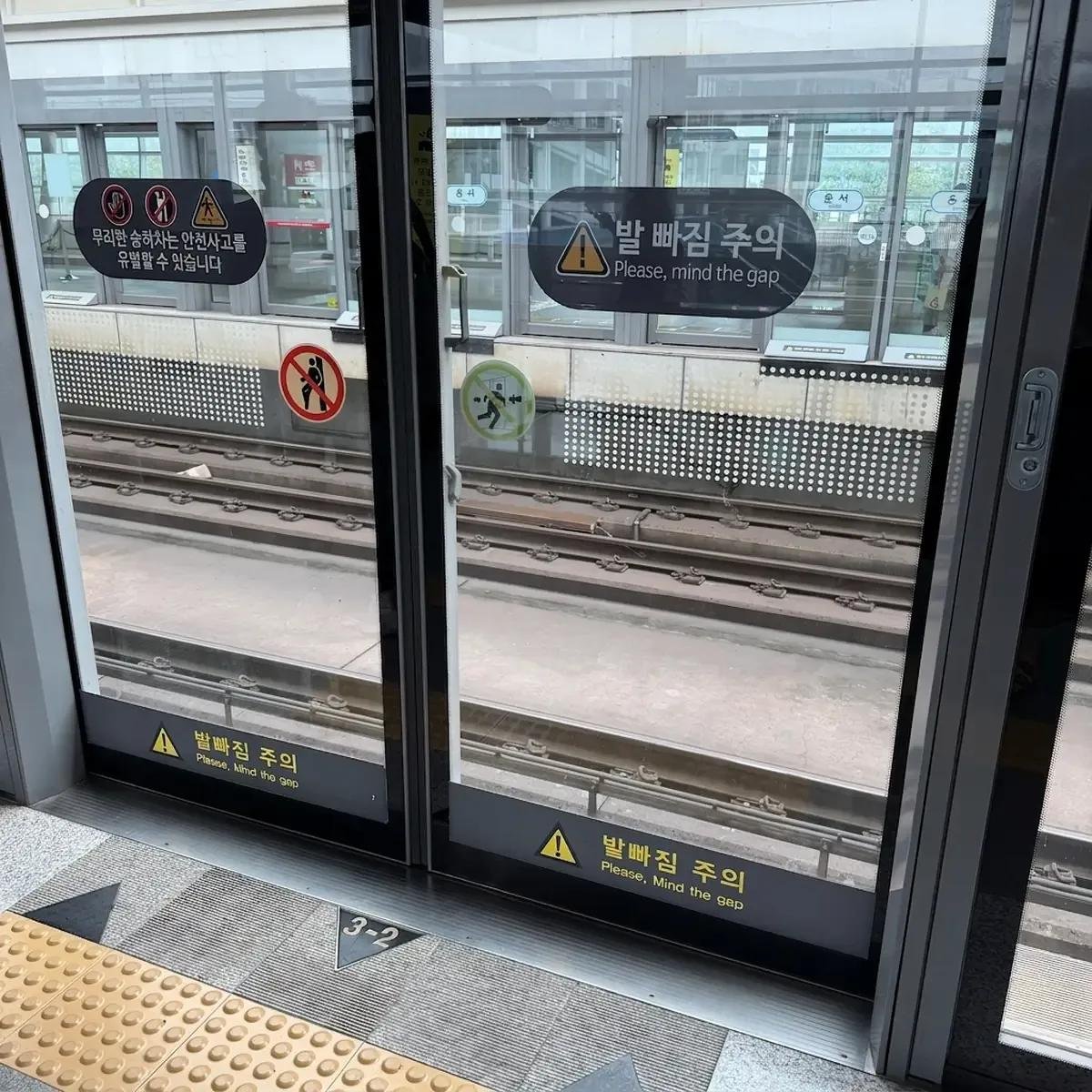
Pink seats are for pregnant passengers, including people whose pregnancy isn’t visible. The marked priority seats near the ends of a car serve people who need them, such as older passengers and people with disabilities or injuries. Visit Seoul’s transport guide recommends leaving priority seats available. A regular seat is a simpler choice when you don’t need one.
Someone may need a priority seat even if you can’t tell just by looking at them.
Quiet conversations are normal, too. On a crowded train, I’d keep my voice low and use headphones for videos.
With a suitcase on an escalator
The AREX sign in this photo says, “Please hold your baggage.” It shows a suitcase slipping down the steps toward other passengers.
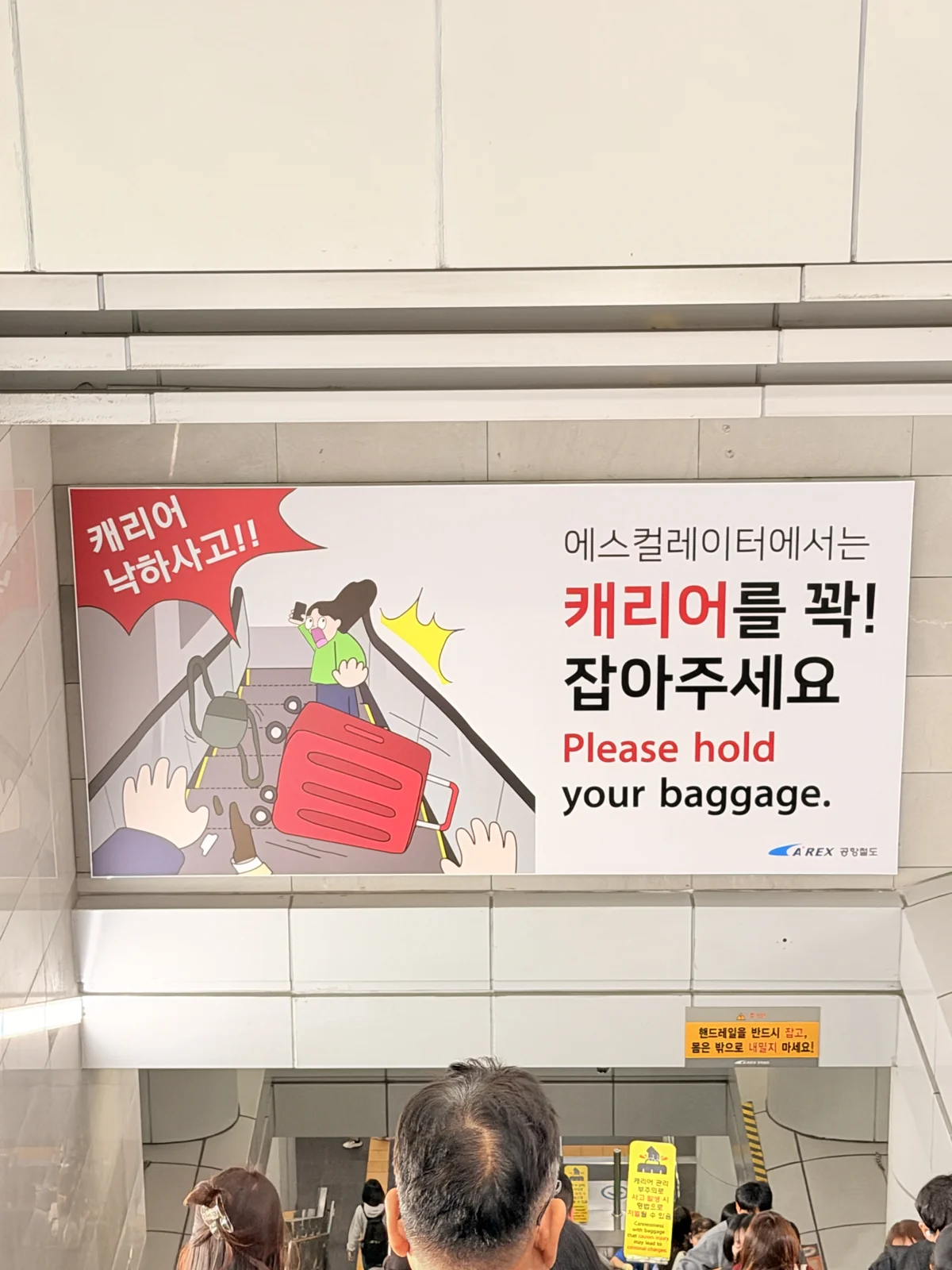
Keeping hold of the suitcase handle helps stop it from rolling away. If managing the bag and holding the handrail feels awkward, an elevator may be easier.
You may see people walking up one side of an escalator. The Ministry of the Interior and Safety’s September 2026 guidance recommends holding the handrail, standing within the safety lines, and not walking or running.
Is tipping expected?
For an ordinary restaurant or café visit, the bill is enough. The Korea Tourism Organization says tipping is neither required nor expected. That’s different from saying nobody ever accepts a tip.
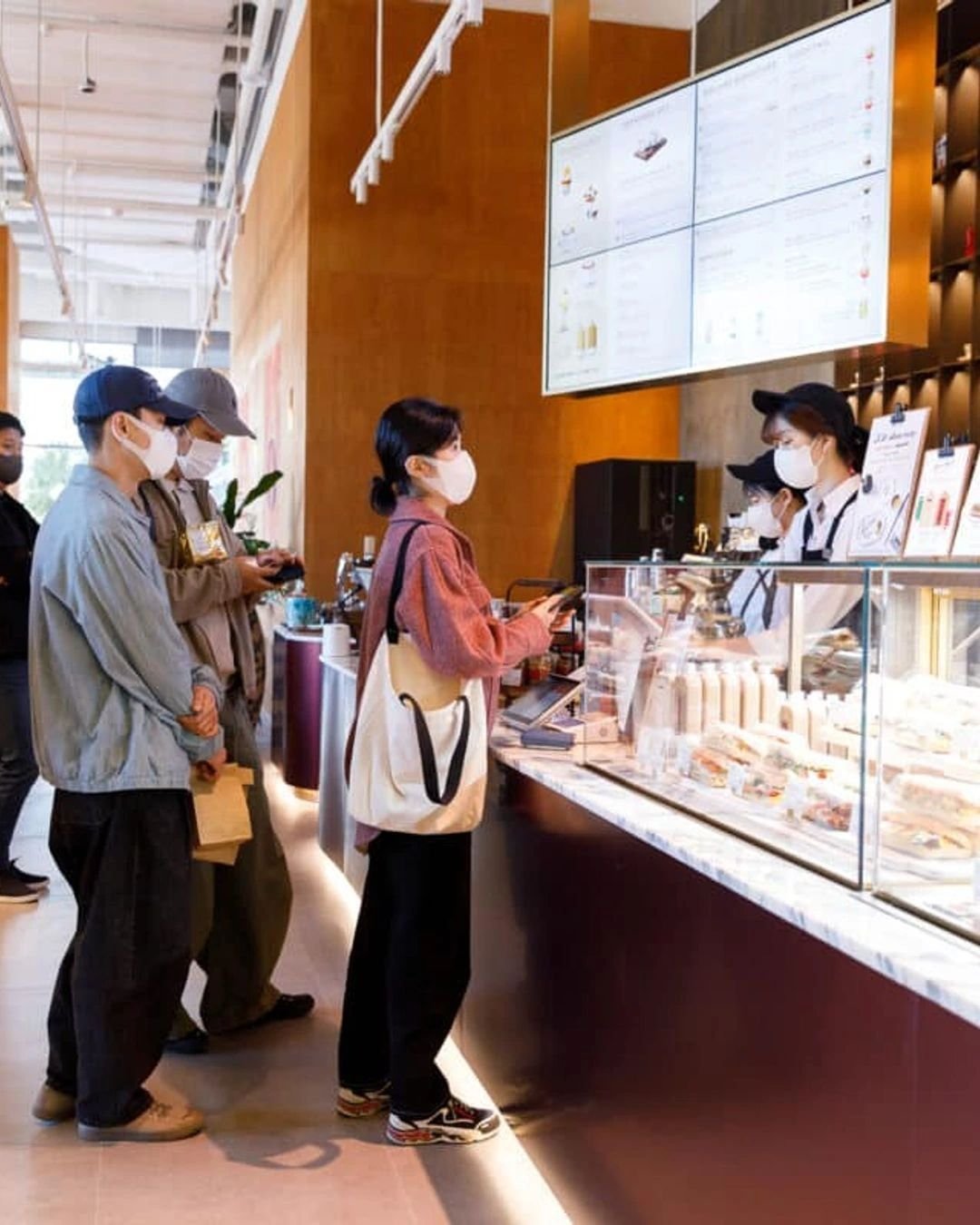
A listed service charge is already part of the bill; you don’t need to calculate it as a separate tip. If you’re unsure what a charge covers, it’s fine to ask the staff.
For foreign cards, cash, and what to do when a card is declined, our cash vs. card guide covers the practical details.
Do I need to use both hands when paying?
In everyday shops, I don’t use both hands for every payment. These days, I often insert my card into the terminal myself, so I’m not passing it to anyone.
When you do hand something directly to another person, both hands are a polite touch, especially with someone older or in a formal setting. Holding the item in one hand and lightly supporting that wrist with the other works too. Visit Seoul includes this gesture in its etiquette tips.
At a restaurant, asking for help is normal
A table bell is there for customers to use. Where there isn’t one, I raise a hand and say “저기요” (jeogiyo, excuse me) to get someone’s attention. A staff member may be taking another order, so the response won’t always be immediate.
Utensils may be in a drawer at the side of the table, and a “셀프” sign means that something is self-service. For water or side-dish refills, the setup varies by restaurant. Our Korean restaurant ordering guide walks through calling staff, finding utensils, and getting refills.
With a Korean host or older dining companions, waiting for them to begin is a polite option. Receiving a drink with both hands is another familiar gesture in a more formal meal. Meals with friends can be more relaxed; the setting and who you’re eating with make a difference. Korea.net’s table-manners guide also notes that many households eat casually.
Between bites, chopsticks usually rest on the table or a chopstick rest, rather than standing upright in the rice. If you need to blow your nose during a meal, stepping away from the table is a considerate option.
Where do shoes come off?
Shoes usually come off in a home or an indoor area designed for sitting on the floor. A shoe rack, a line of footwear, or an instruction at the entrance gives you the cue. This doesn’t mean every shop, café, or restaurant is a shoes-off space.
If you’re not sure, “신발 벗어야 해요?” (Sinbal beoseoya haeyo?) means “Should I take my shoes off?” At a guesthouse, the host can let you know which areas are shoes-off.
With takeaway cups, the bin’s label matters
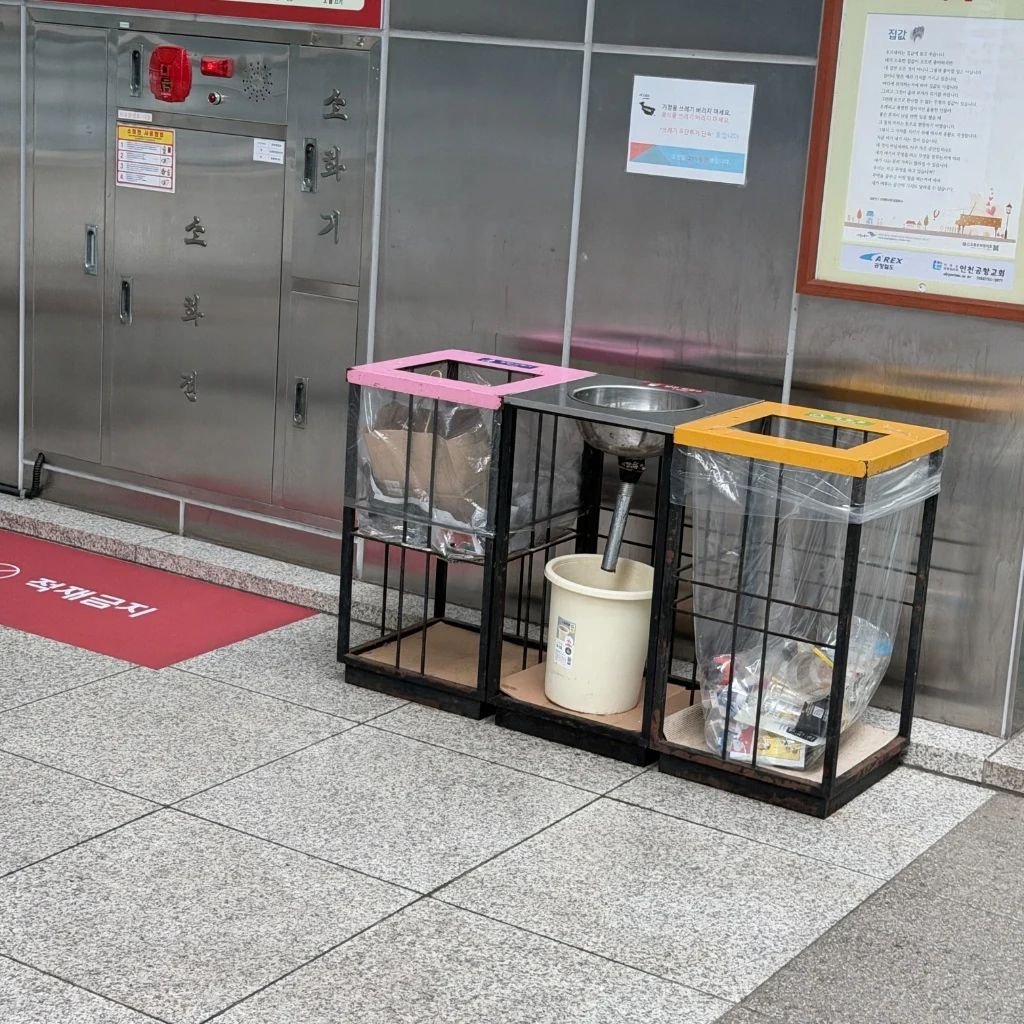
After a coffee stop, finding a suitable bin can take longer than you expect. A café return point is useful for a cup from that shop. Elsewhere, the labels show which materials a bin accepts; a bin inside a station or convenience store may not accept trash brought in from elsewhere.
With a takeaway cup, you may end up carrying it a little farther to find the right bin. Our guide to throwing away trash in Korea explains where cups and leftover drinks go.
A few everyday greetings
“안녕하세요” (annyeonghaseyo, hello) with a slight nod is a simple way to greet someone in a shop or at your hotel. The everyday bow is often just a short nod, as Visit Seoul’s etiquette guide explains.
When I leave a restaurant, I often say “잘 먹었습니다” (jal meogeosseumnida, thank you for the meal) or “맛있게 먹었습니다” (masitge meogeosseumnida, I enjoyed the meal). Getting out of a taxi, I might say “좋은 하루 보내세요” (joeun haru bonaeseyo, have a nice day).
In a shop, I usually say “감사합니다” (gamsahamnida, thank you), sometimes followed by “많이 파세요” (mani paseyo). It’s a friendly way to wish the shopkeeper good business. These are phrases I use in daily life, but a simple “감사합니다” works well on its own, too.
And if you’ve accidentally walked in with your shoes on or stood in someone’s way, a quick “죄송합니다” (joesonghamnida, sorry) and a step back will usually do.
Sources
- Visit Seoul — Everyday etiquette and greetings
- Visit Seoul — Priority seats, backpacks, and boarding
- Korea Tourism Organization — Restaurants and tipping
- Ministry of the Interior and Safety — Escalator safety, September 23, 2026
- Korea.net — Table manners
Information checked October 25, 2026. House rules and the setting can change what’s expected.