Laundry in Korea for Travelers: Coin Laundromats, Dryers & What to Check First
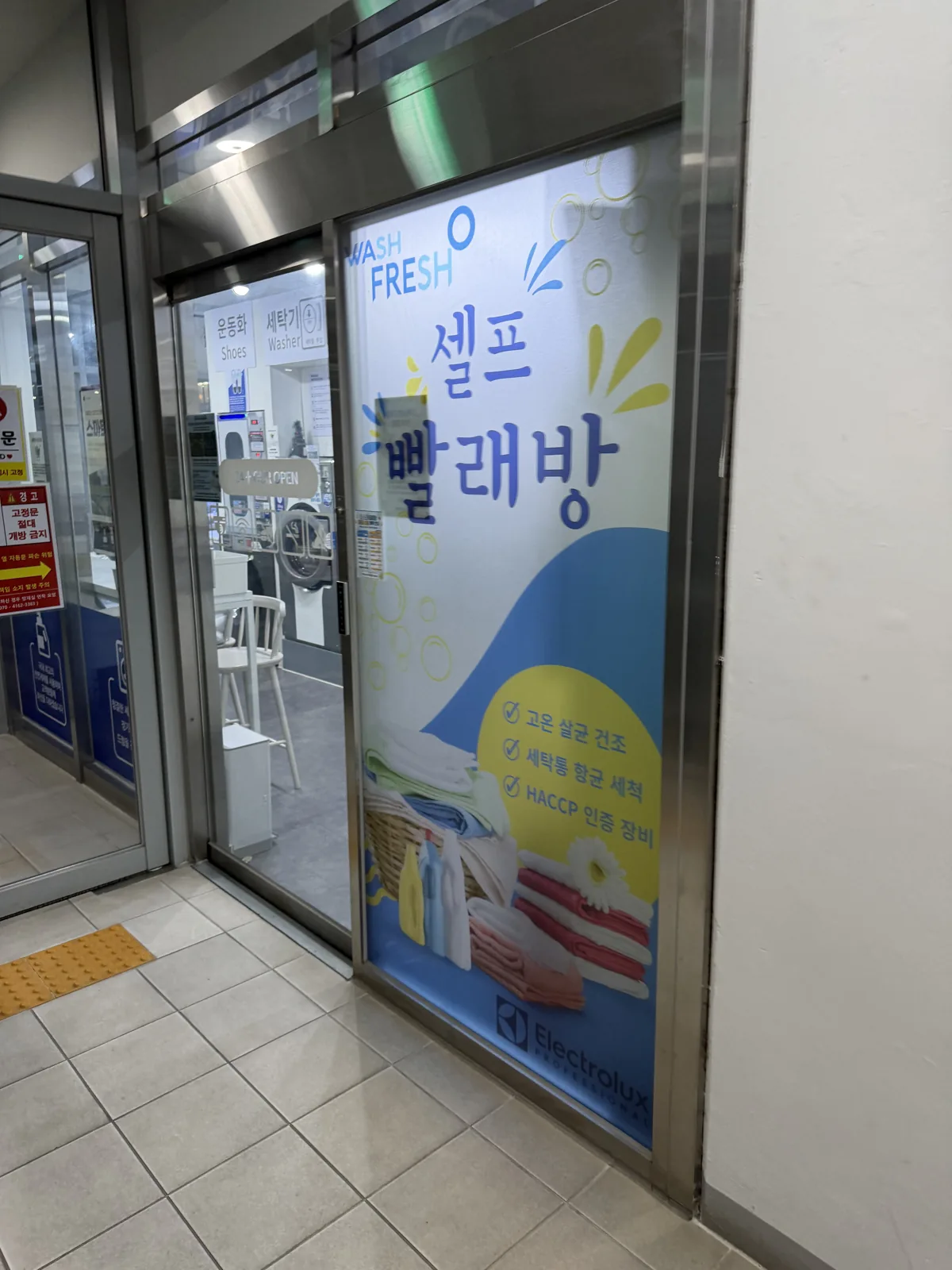
If you need to do laundry in Korea mid-trip, a 셀프빨래방 (self-service laundromat) is usually straightforward once you check two things before loading the washer: does this machine add detergent automatically, and how does this shop take payment?
The answers can differ from one shop to the next, so a quick look at the instructions is worth it before you put your clothes in.
Before you load the washer
What to check What you need to know Detergent Does the machine add it, or do you need your own? Payment Can you pay directly, or do you need a shop-specific laundry card? Drying Is there a separate dryer and a separate charge? Clothes Can everything in your bag be tumble-dried?
Laundry in Korea: What to Search on the Map
You can search for:
- 셀프빨래방
- 코인세탁
- 빨래방
- coin laundry
Naver Map and Kakao Map usually give better local results than searching only in English. If you have not set it up yet, our Naver Map English Guide shows how to search Korean places and navigate in English.
Does the washer add detergent for you?
Some machines add detergent and fabric softener during the wash. At other shops, you may need to buy detergent or bring your own.
Look for wording such as:
- 세제 자동투입 = detergent automatically dispensed
- 세제 / 섬유유연제 = detergent / fabric softener
- 별도구매 = purchase separately
If you cannot tell, look for a vending machine or instruction board near the washers.
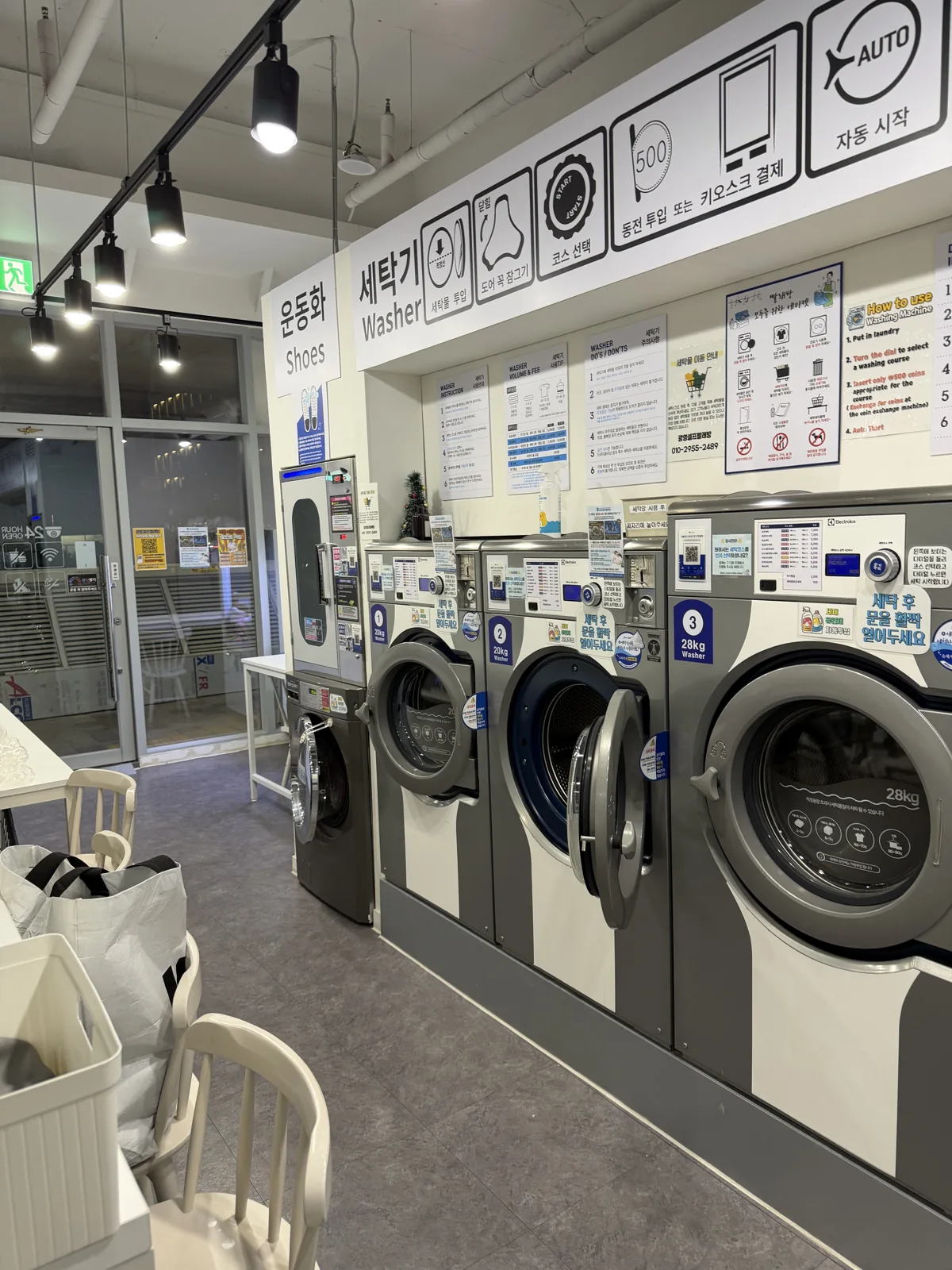
The sign above these washers shows the steps in order. Load the washer, close the door, choose a cycle, and pay with ₩500 coins or at the kiosk. The sign shows the washer starting automatically after payment.
Oomphy tip
If the washer adds detergent automatically, there is usually no need to add your own.
Washing and drying are often separate
Many self-service laundromats have separate washers and dryers. With that setup, you move the clothes to a dryer after washing.
The 건조기 (dryer) will have its own load limit, heat settings and price. Drying may cost extra, so the washer’s price may not cover the whole laundry run.
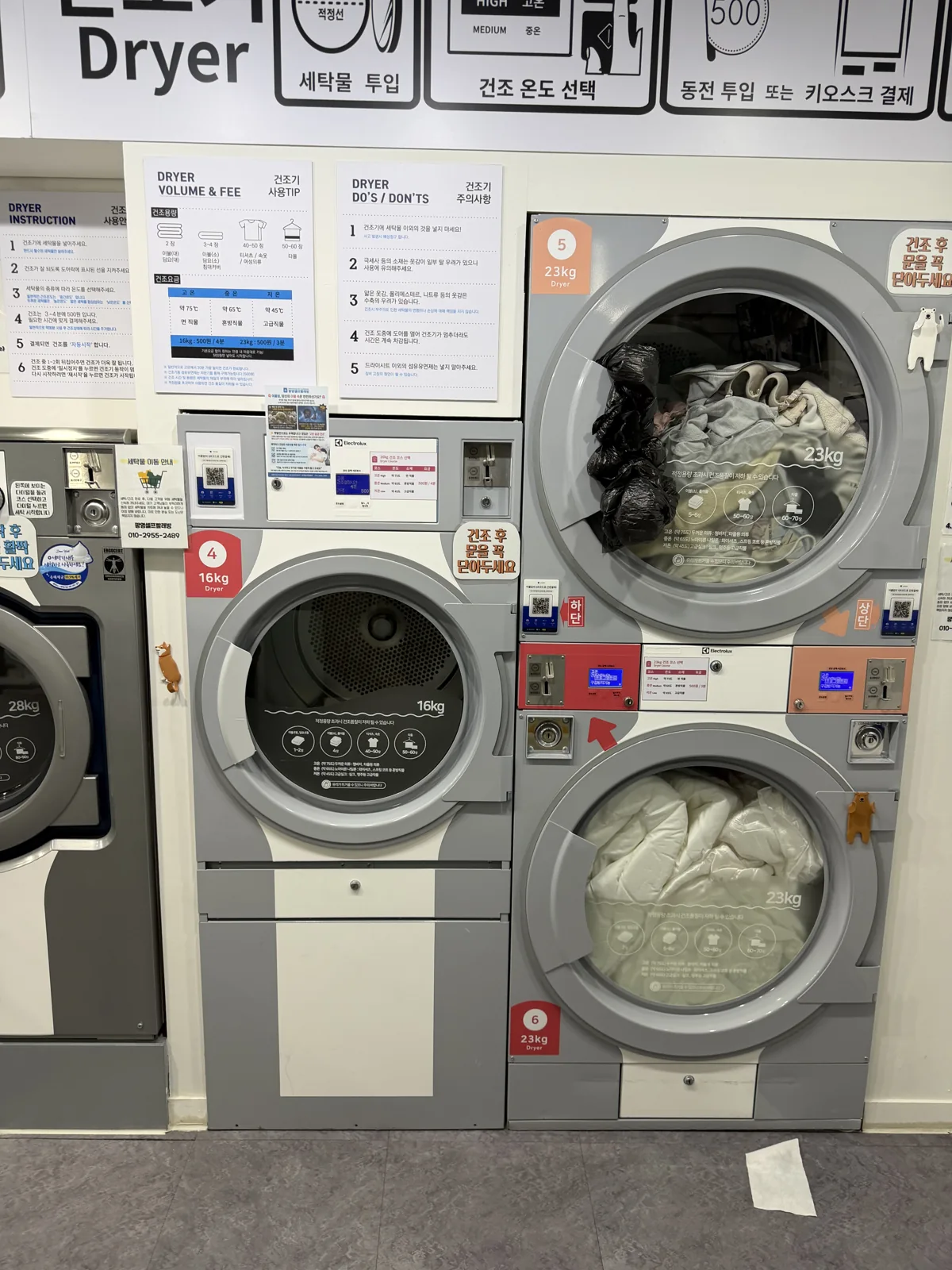
A dryer-cost example from our photo
The sign in our dryer photo lists ₩500 for 4 minutes in the 16 kg dryer, or ₩500 for 3 minutes in the 23 kg dryer. At those posted rates, 32 minutes in the 16 kg dryer costs ₩4,000; 30 minutes in the 23 kg dryer costs ₩5,000.
Use these figures as a worked example, then check the current price on your machine. Washing and any extra drying cost more. The whole visit also includes the wash cycle, loading and transfer time; the photo does not establish that total. The dryer sign says the timer keeps counting down even if opening the door pauses the machine.
Payment varies by shop
Some shops take coins or bills; others use a kiosk or a prepaid laundry card. With a laundry card, you load money onto the shop’s card, then use that card at the machine.
For example, KLC’s LPS500 kiosk lets customers get a laundry card and add money using bills or supported card payments. Its product page does not confirm whether cards issued outside Korea are accepted. Before putting money onto a laundry card, check that you can use it to start the machine you need.
If your bank card is declined, check for a charge before trying again. A marked coin or cash option may give you another way to pay. If none works, it is easier to try another shop while your clothes are still in your bag. Our Cash vs. Card in South Korea guide covers other everyday payment options.
Thick clothes may need more drying time
Towels, jeans and hoodies can still feel damp after a short cycle. Start with a setting that suits the care labels, then check the thicker parts before adding more time.
You may see 이불 (bedding) on a machine or program. That label helps you find an option for bulky items, but the load limit and your clothes’ care labels still matter.
Anything marked “do not tumble dry” is better left out of the dryer. A drying rack back at your accommodation may be a better option for those pieces.
Hotel laundry vs. self-service laundry
Your accommodation may already have a guest laundry room or offer a laundry service. It is worth asking before carrying a bag of clothes to a separate shop. With a laundry service, you hand over your clothes and pick them up later, so the price and return time matter, especially if you are checking out soon.
At Hotel URI& in Gangnam, the guest laundry charges ₩3,000 for a 40-minute wash and ₩3,000 for a 40-minute dry. Plan on ₩6,000 and 80 minutes of machine time for both, plus any wait and time to move your clothes. You can buy detergent separately at the front desk.
Staying in an Airbnb or serviced apartment
If your room has a washing machine, check:
- whether detergent is provided
- where the drying rack is
- whether there is a dryer
- quiet-hour rules
- whether the washer is also a combo dryer
If the buttons are only in Korean, camera translation can help you find the wash and drying settings before you start.
Useful Korean labels
| Korean | Meaning |
|---|---|
| 세탁 | Wash |
| 헹굼 | Rinse |
| 탈수 | Spin |
| 건조 | Dry |
| 표준 | Standard cycle |
| 온수 | Warm or hot water |
| 찬물 | Cold water |
| 시작 | Start |
| 일시정지 | Pause |
| 세제 | Detergent |
| 섬유유연제 | Fabric softener |
You can save this table to keep the words handy at the machine.
What to bring
For a laundry run during your trip, I’d take a clothes bag, a physical card, a little cash and a phone with camera translation.
If the machine stops or your clothes are locked inside
At an unattended shop, the wall or kiosk may list:
- a phone number
- a KakaoTalk contact
- an emergency/help button
- staff or service hours
A photo of the machine number, error message and payment screen will help the operator understand what happened. If you paid but the cycle did not start, include that detail when you contact them.
Our Trip Essentials page has more help with payments, maps and emergency information.
Laundry facilities and operator information
KLC’s WashEnjoy page describes automatic detergent and fabric-softener dispensing, and its LPS500 page explains one laundry-card payment system. These are examples from that operator, not instructions for every laundromat or for the shop in our photos.
The accommodation listings below give examples of properties with laundry facilities. For prices, hours and machine instructions, check with the property itself.
- VISITKOREA — Urban Place Gangnam: coin laundry facility example
- VISITKOREA — Hotel PJ: coin laundry room example
- VISITKOREA — Felix by STX: coin laundromat and in-room washing facilities
KLC detergent and kiosk information checked October 31, 2026. Accommodation references last checked September 28, 2026.
Image credits
- Photo: OOMPHY collection.