Seoul Subway Transfers: Door Numbers, Directions & Wrong-Way Fixes
Seoul subway transfers are usually straightforward once you know how to read line colors, station numbers, platform directions, and car-door markers.
For fares, transit cards, and basic riding steps, see our Seoul subway guide.
Table of Contents
Seoul Subway Transfers: Lines, Colors, and Numbers
| Subway Line | Distinctive Color | Key Tourist Destinations |
|---|---|---|
| Line 1 | Dark Blue | Seoul Station, City Hall, Dongdaemun, Noryangjin |
| Line 2 (Circle) | Green | Hongdae, Gangnam, Seongsu, Dongdaemun History & Culture Park |
| Line 3 | Orange | Gyeongbokgung Palace, Anguk for Insadong, Express Bus Terminal |
| Line 4 | Light Blue | Myeong-dong, Dongdaemun, National Museum of Korea |
| Line 5 | Purple | Gwanghwamun, Yeouido, Gimpo Airport |
| Line 9 | Gold | Gimpo Airport, Yeouido, Sinnonhyeon, Bongeunsa |
1. Use Line Colors and Station Numbers
Each line has a distinctive color. Most stations on Seoul’s numbered lines also use a three-digit station code, such as 239 for Hongik University Station on Line 2. Transfer stations have a separate code for each line.
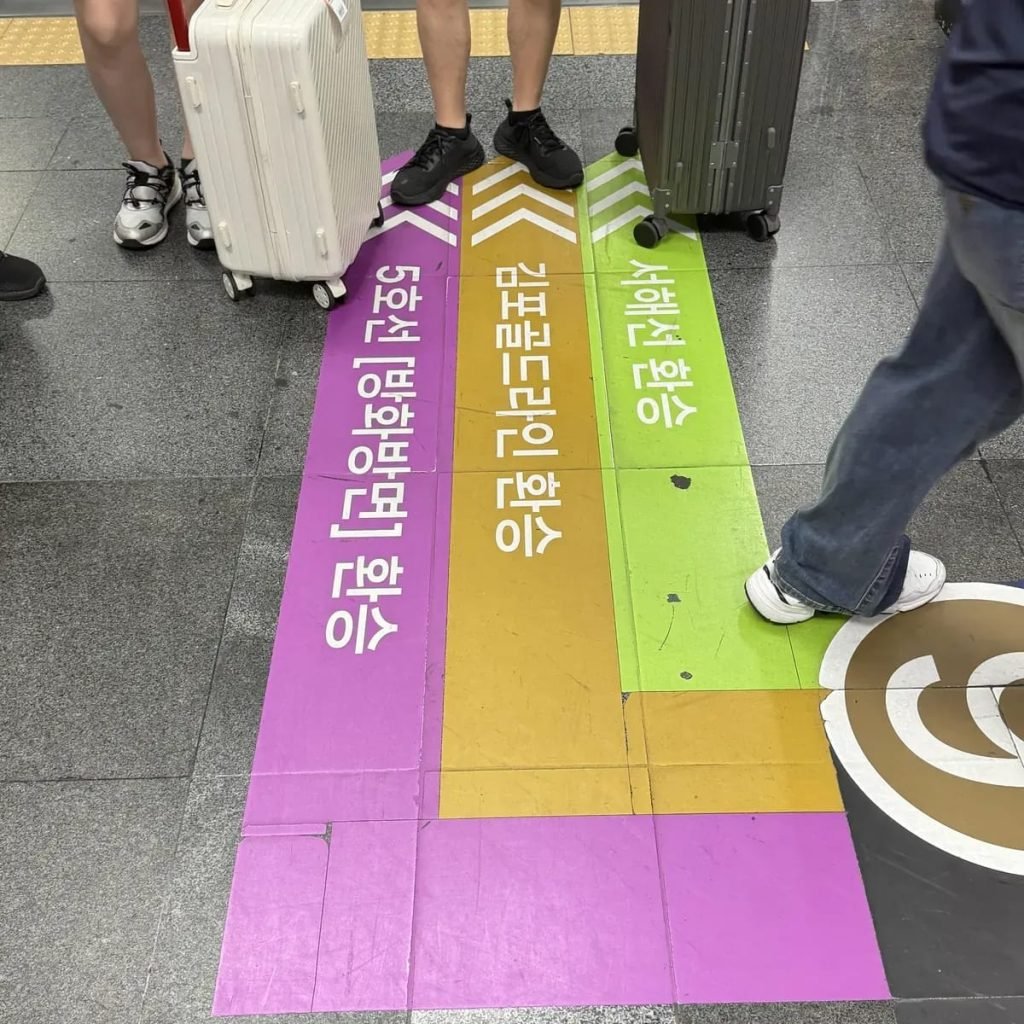
Inside busy stations, use both overhead signs and colored transfer markings:
- Check the line number, color, and terminal station shown on directional signs.
- Where colored paths are marked on the floor, follow the arrows for your connecting line.
2. How to Navigate Large Transfer Stations
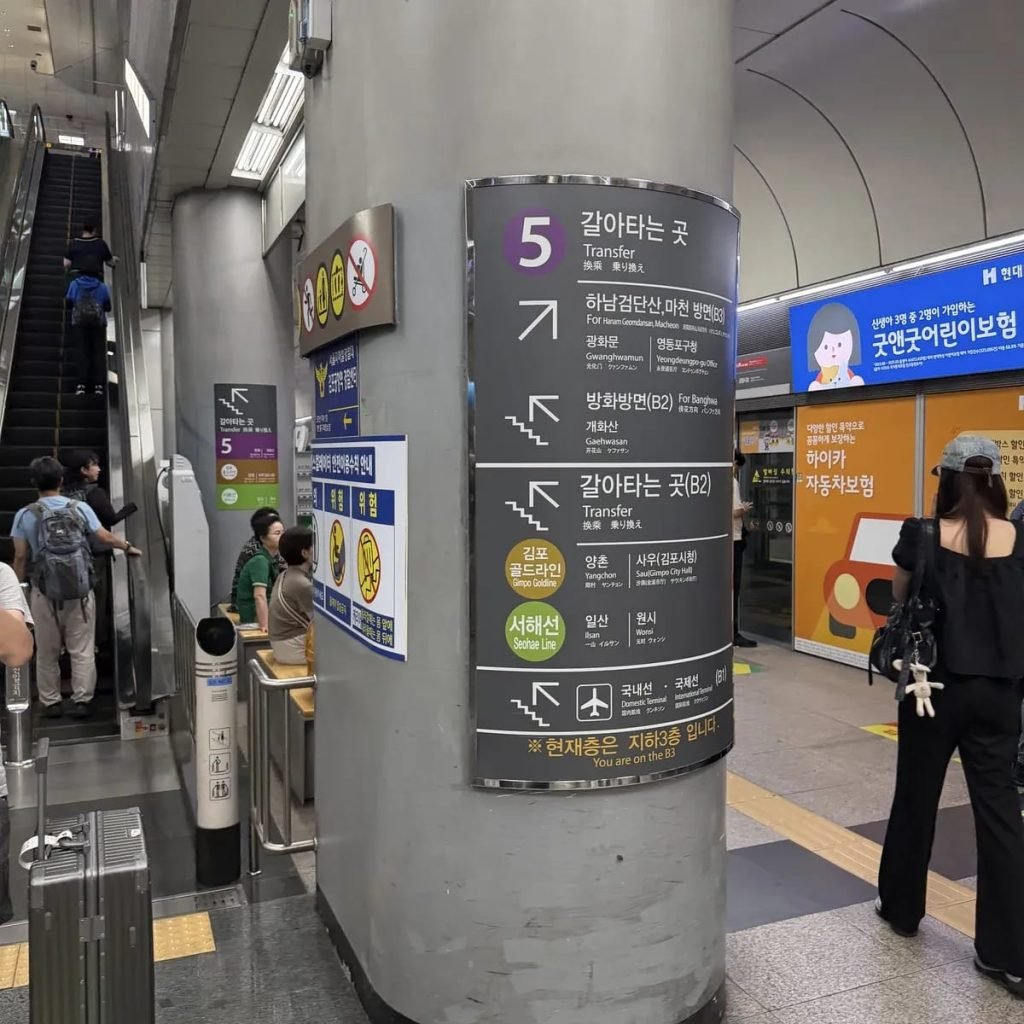
Large interchanges such as Gimpo Airport, Seoul Station, and Wangsimni connect several subway and railway lines. Some transfers involve long corridors or changes between multiple underground levels.
- Check overhead and pillar signs: At large stations, these signs may show platform levels such as B1, B2, and B3 as well as the connecting line and direction.
- Use the English labels: Most essential station signs include English. Some digital displays and announcements also include Chinese and Japanese.
- Choose the right exit: Check your destination’s numbered exit in Naver Map before going up to street level.
3. Plan Transfers with Luggage
Long corridors, stairs, and crowded platforms can make a short transfer feel much longer when you have a suitcase. Plan for a little more time than the route app suggests.
- Use elevators when needed: Elevator routes may differ from the fastest staircase or escalator route, so follow accessibility signs rather than only the shortest-transfer marker.
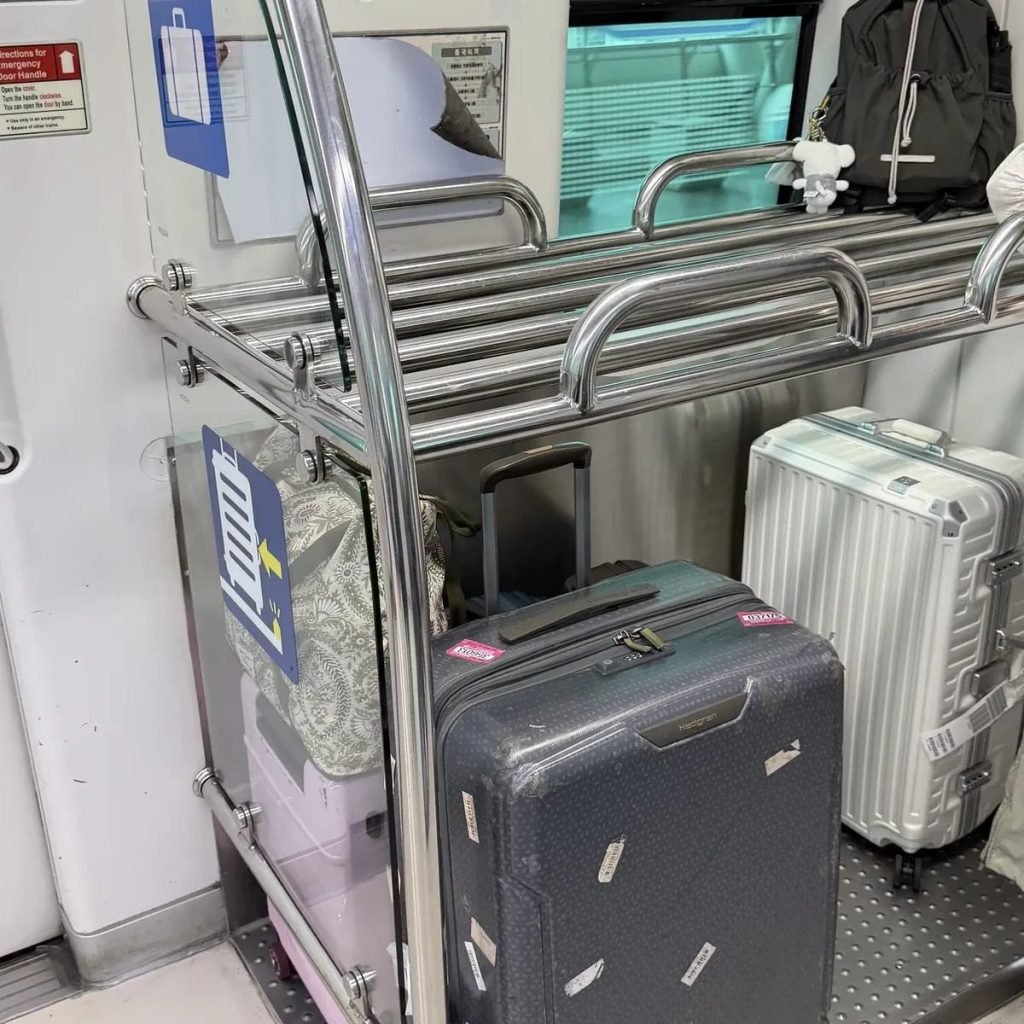
- Keep luggage close: Ordinary Seoul Metro trains usually do not have luggage racks. Keep suitcases clear of doors and transfer corridors.
- Compare the whole route: A route with one longer train ride and an easier transfer may be more comfortable than the fastest option. The Incheon Airport transportation guide compares AREX with buses and taxis.
4. Where to Find Mild-AC Cars
In summer, designated mild-AC cars are kept about 1°C warmer than standard cars. Seoul Metro lists the following locations:
Last verified: September 23, 2026, against Seoul Metropolitan Government guidance published May 28, 2026.
| Metro Line | Mild-AC Car Numbers |
|---|---|
| Lines 1, 3, and 4 | Cars 4 and 7 |
| Lines 5, 6, and 7 | Cars 4 and 5 |
| Line 8 | Cars 3 and 4 |
| Line 2 | No designated mild-AC cars |
Look for Mild AC Car or 약냉방차 signs on platform screen doors or inside trains. For Line 9 and other independently operated lines, check current platform or operator notices.
5. Keep Your Route App Open During Transfers
Large stations may have several corridors for the same connecting line. Keep Naver Map, KakaoMetro, or another subway app open until you reach the correct platform and confirm the next station.
- Check the recommended car and door number before boarding the first train.
- Use station signs as the final authority if the app and a temporary platform notice differ.
- Mobile data is usually more reliable than public Wi-Fi while moving through long transfer corridors.
6. Use Car and Door Numbers for Faster Transfers
Seoul subway platforms are long, and walking from one end of a train to a transfer corridor can take several minutes.
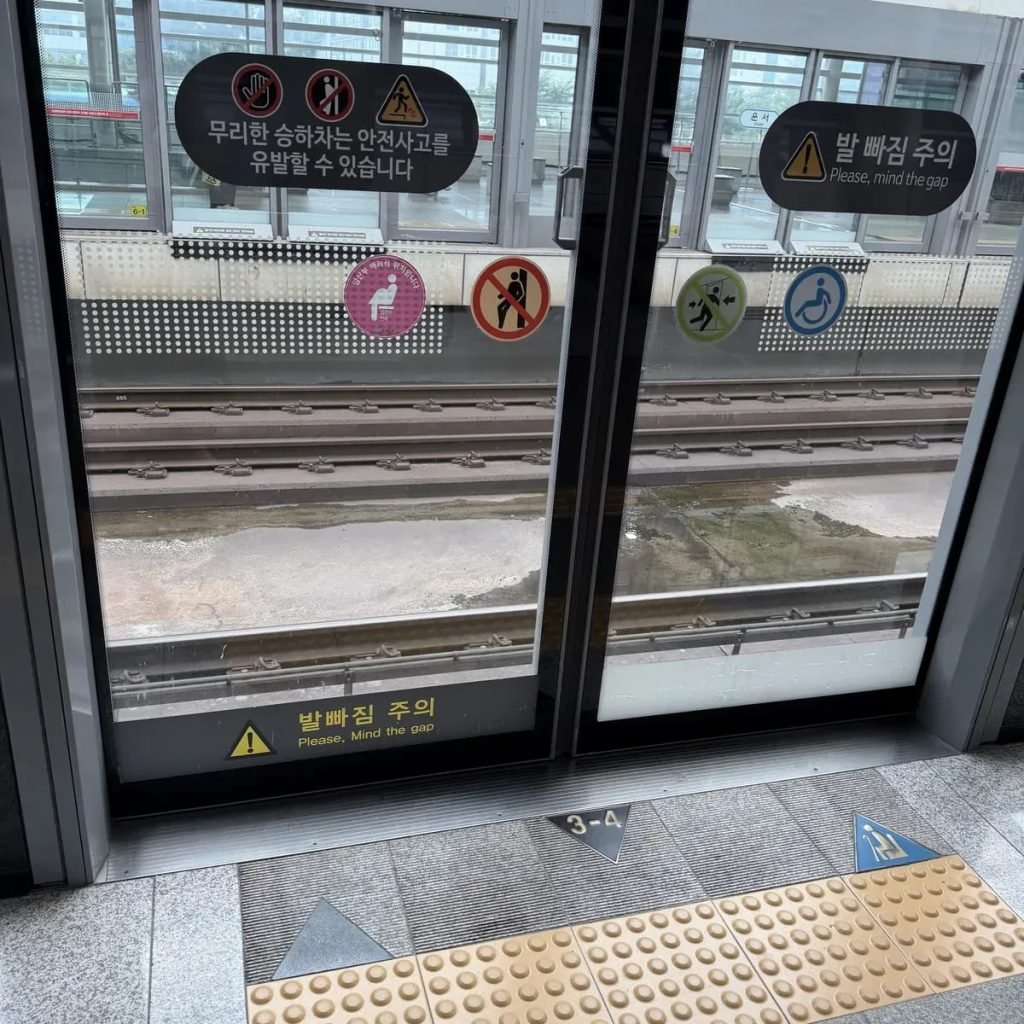
- Find the platform marker: Screen doors and platform floor edges often show a car and door number. For example, 3-4 means Car 3, Door 4.
- Check Naver Map: Some routes show a recommended fast-transfer car and door number. Boarding near that marker usually puts you closer to the transfer route at the destination station, although it may not be directly beside an elevator or staircase.
7. What to Do If You Enter the Wrong Side
Entering through the wrong turnstile or reaching a platform for the opposite direction is a common mistake.
- 15-minute re-entry: At participating Seoul subway stations, you can tap out and re-enter the same station within 15 minutes without paying another base fare. The re-entry is treated as a transfer, not as an unlimited free exit. The rule covers all sections of Lines 2, 5, 8, and 9, the Ui-Sinseol Line, and the Sillim Line, plus designated sections of Lines 1, 3, 4, 6, and 7. Station coverage varies, so check posted guidance or ask staff when in doubt. Last verified: September 23, 2026; the official section list is dated October 7, 2023.
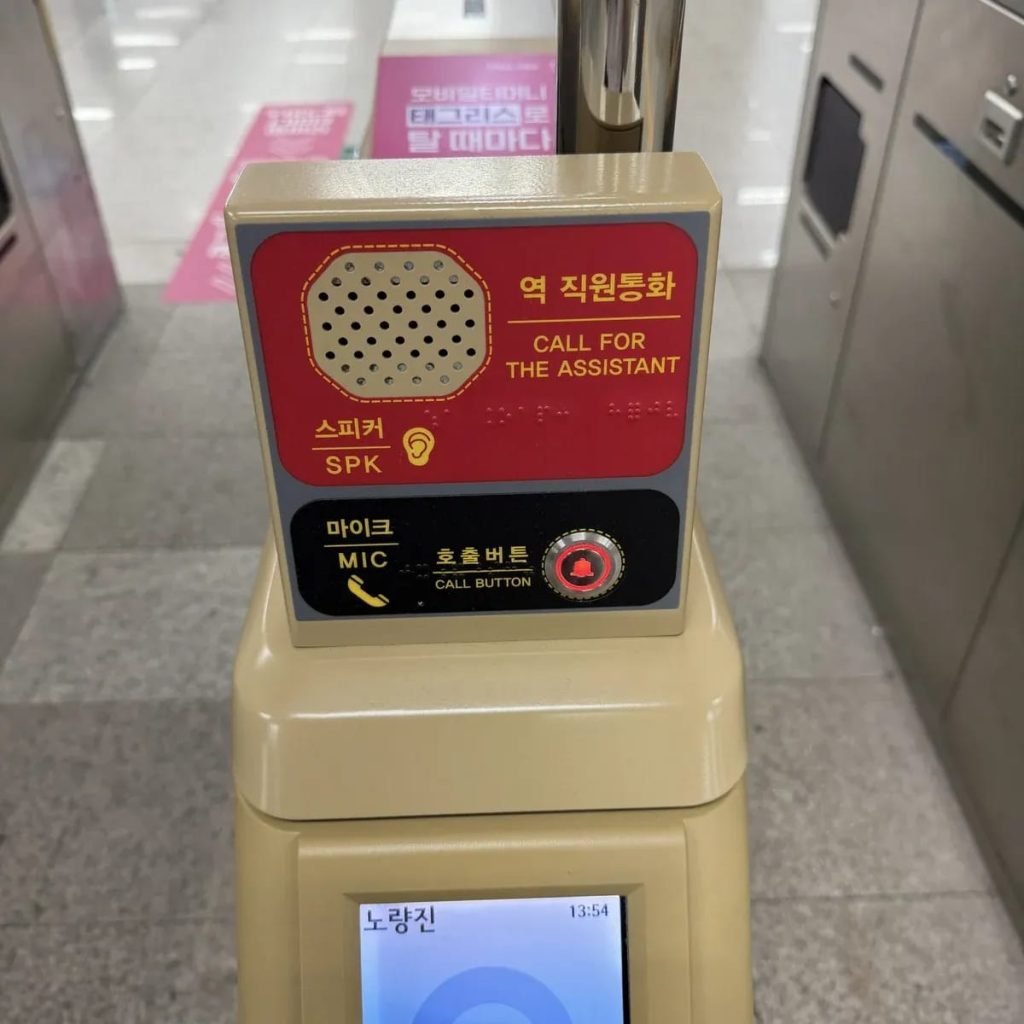
- Ask before using an assistance gate: If you have oversized luggage or cannot reach the correct platform without leaving the paid area, press the station-assistance button and explain the situation. Follow the attendant’s instructions; a fare adjustment may be required.
Frequently Asked Questions
How much time should I allow for a subway transfer?
Simple transfers may take only a few minutes, but major interchanges can require a 10-minute or longer walk. Allow extra time when carrying luggage, using elevators, or connecting near the last train.
How do I know which direction to take after transferring?
Match the connecting line’s color and number, then check the terminal station and the name of the next station on the platform sign. The destination station alone may not tell you which side is correct.
Do I need to tap my card when transferring between lines?
In most transfer corridors, you follow the connecting signs without tapping out. At special transfer gates, including gates for some independently operated lines, tap whenever the reader instructs you to. An eligible transfer normally does not begin a new base fare, although some lines, such as the Shinbundang Line, may add a surcharge. For card options and current fares, see the Korea transit card guide.
Related Travel Guides
Official reference sources: