Korea Transit Cards Compared 2026: T-money vs. Climate Card vs. WOWPASS
Affiliate disclosure: This post may contain affiliate links. If you purchase or book through them, we may earn a small commission at no additional cost to you.
Compare T-money, Seoul’s short-term Climate Card, and WOWPASS by price, coverage, top-up method, and trip style to choose the right card for your route.
October 2026 status: The 30-day prepaid Climate Card can no longer be recharged. The resident-only Climate Pass began on September 1, while short-term visitor passes for 1, 2, 3, 5, and 7 days remain available. This guide focuses on those short-term passes.
Last verified: October 1, 2026. Prices, coverage, and payment methods can change; check the official links at the end of this guide before travel.
For most visitors, choosing a Korea transit card comes down to where they are going and how often they expect to ride. T-money is the flexible pay-as-you-go option, the short-term Seoul Climate Card offers unlimited rides within its coverage area, and WOWPASS combines prepaid card payments with a separate T-money function.
Quick choice:
- Choose T-money for straightforward pay-per-ride transit across Korea.
- Choose a short-term Climate Card when most rides are inside its Seoul coverage area and the pass costs less than your expected fares.
- Choose WOWPASS if you want a Korean prepaid payment card with a separate built-in T-money balance.
Table of Contents
Korea Transit Card Options Compared
| Feature | T-money Card | Seoul Climate Card (Short-Term) | WOWPASS |
|---|---|---|---|
| Card Cost | About ₩3,000 for a standard card; special designs may cost more | ₩3,000 for a physical card, plus the selected pass | ₩6,000 standard price; the official pre-book price was ₩5,500 when checked on October 1, 2026 |
| Pass/Fare Type | Pay per ride | Flat-rate unlimited rides | Pay per ride through a separate T-money balance |
| Coverage Area | Widely accepted on public transit across Korea | Seoul-licensed buses and designated subway sections; major exclusions apply | T-money transit coverage, plus prepaid card payments |
| Typical Fare or Pass Price | Seoul subway adult base fare: ₩1,550 | 1-Day: ₩5,000 / 2-Day: ₩8,000 / 3-Day: ₩10,000 / 5-Day: ₩15,000 / 7-Day: ₩20,000 | Seoul subway adult base fare: ₩1,550 |
| Top-Up Method | Usually Korean won cash for a standard physical card | Korean won cash or an international card at supported machines | Payment balance: cash in 16 currencies, supported international cards, or e-wallets; T-money balance is separate |
| Buy at Incheon Airport | Yes—at airport convenience stores or machines; the Tmoney Travel Card is also sold at the airport bus ticket counter | No—physical cards are sold at designated locations in Seoul | Yes—official reservation and pickup options are available at Incheon Airport T1 and T2 |
| AREX Use | All-Stop train: pay per ride; AREX Express requires a separate ticket | All-Stop train: you may exit at T1 or T2 after boarding in the covered area, but cannot board at the airport; AREX Express is excluded | Same as T-money through the separate transit balance; AREX Express requires a separate ticket |
| Shopping Use | Convenience stores and other participating merchants | No | Most merchants that accept Korean-issued cards, with some exceptions |
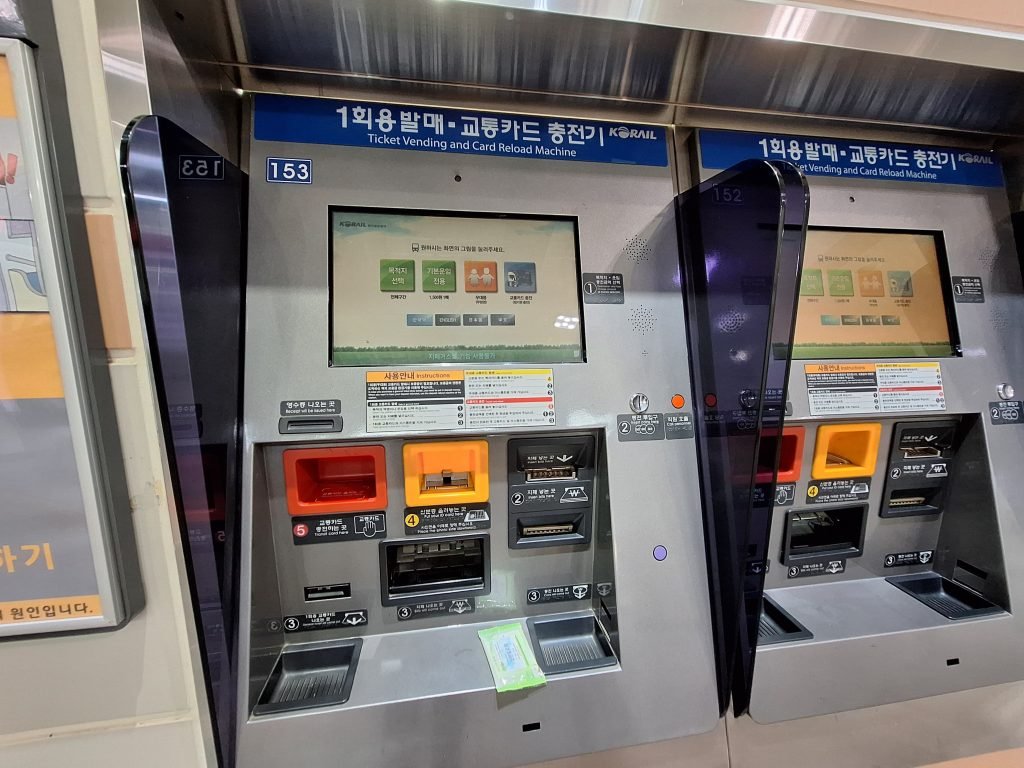
T-money: Flexible Pay-as-You-Go Travel
T-money is a rechargeable transit card accepted on public transportation in Seoul and many other parts of Korea. It also supports transfer discounts between eligible subway and bus trips. For fares, transfers, and station exits, see our Seoul subway guide.
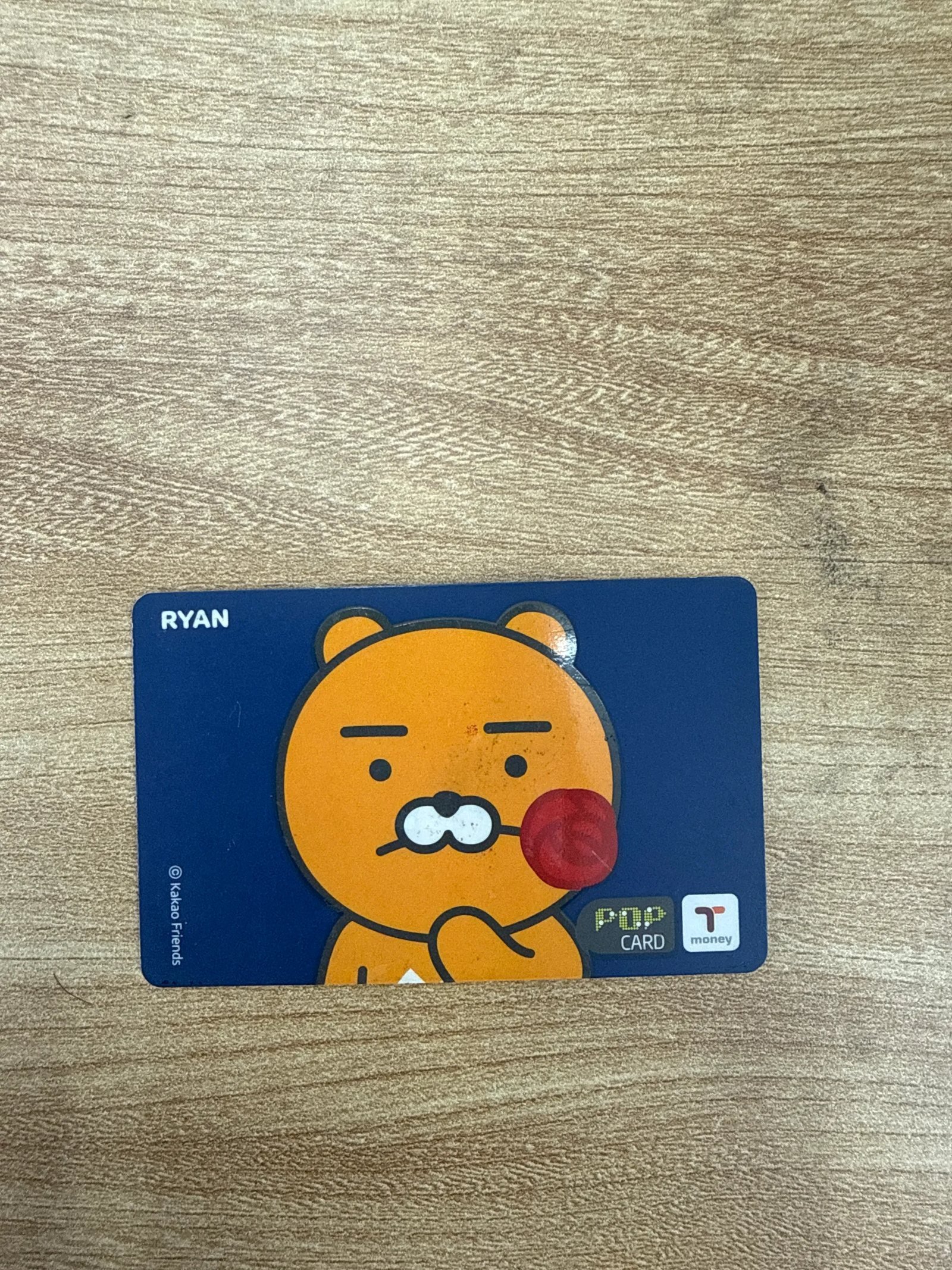
- Good fit for: Travelers visiting more than one Korean city, or anyone who prefers paying per ride instead of buying a time-limited pass.
- Advantages:
- Accepted on subways, city buses, many taxis, convenience stores, and other participating merchants in many parts of Korea.
- No fixed travel period, so you can add only the balance you expect to use.
- Limitation: Standard physical T-money cards are usually recharged with Korean won cash at subway machines or convenience store counters.
Seoul Climate Card: Unlimited Short-Term Travel
The short-term Seoul Climate Card is a flat-rate pass managed by the Seoul Metropolitan Government. It provides unlimited rides within the designated service area for 1, 2, 3, 5, or 7 days.
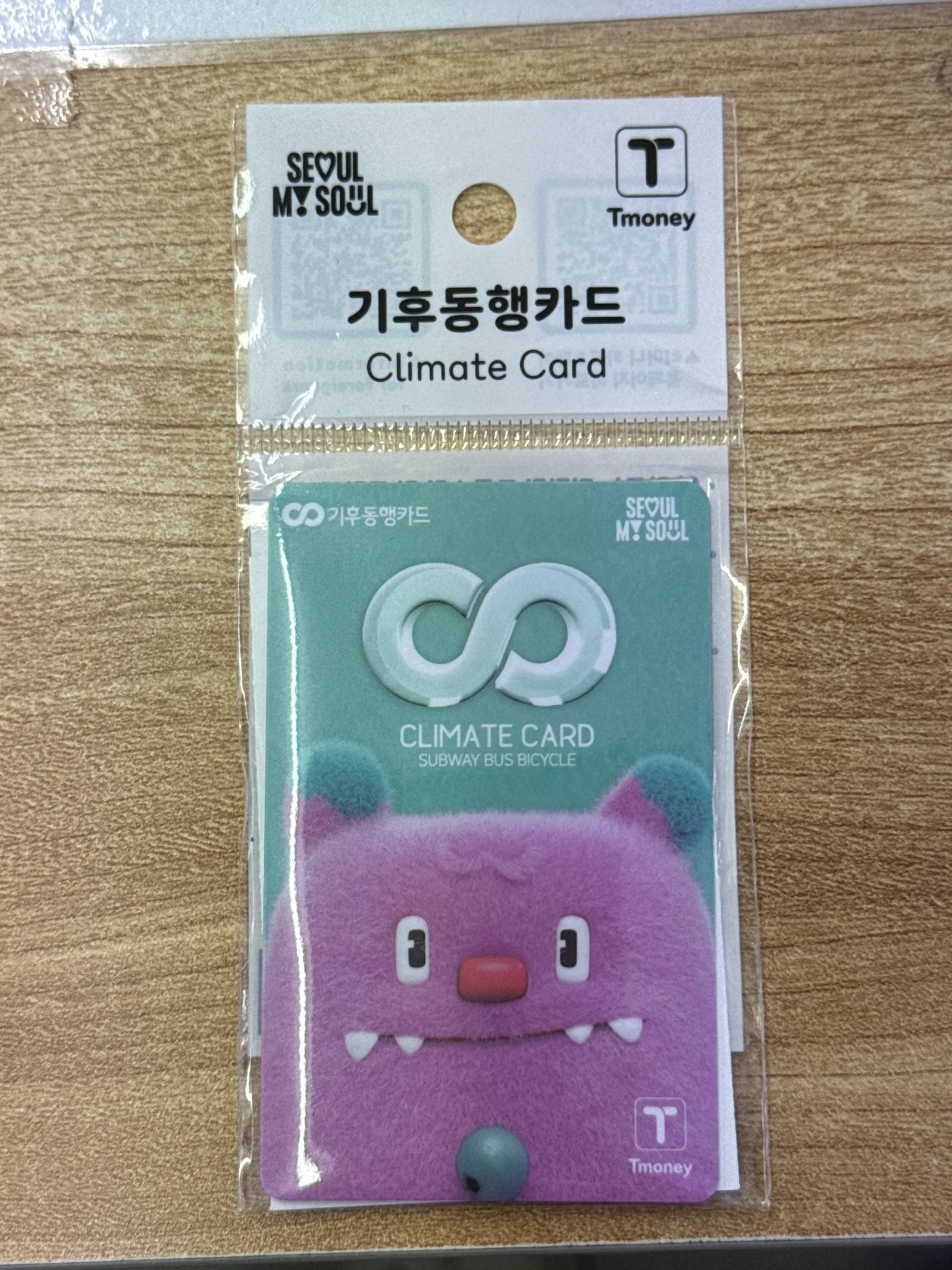
- Short-term pass pricing:
- 1-Day Pass: ₩5,000
- 2-Day Pass: ₩8,000
- 3-Day Pass: ₩10,000
- 5-Day Pass: ₩15,000
- 7-Day Pass: ₩20,000
- Good fit for: Visitors staying mainly within the service area who expect to make several separate paid journeys each day.
- Important limitations:
- The pass covers Seoul-licensed buses and designated subway sections, but it excludes the Sinbundang Line, intercity and airport buses, and the AREX Express.
- Short-term passes remain available after the 30-day prepaid Climate Card ended. Check the official Climate Card guide for your exact stations before travel.
- Short-term passes start on the day they are charged, so they cannot be purchased in advance for a later activation date.
Is the Climate Card Worth It? Compare Your Trip Costs
The table below uses the Seoul subway adult transit-card base fare of ₩1,550 per journey. It shows the minimum total number of separately charged journeys at that fare needed for each pass to cost less than pay-as-you-go T-money.
Count journeys across the full pass period, not rides per day or individual transfers. An eligible subway-to-bus transfer does not mean paying another full base fare; distance-based charges may still apply.
| Pass | Pass Price | Minimum Journeys: Pass Only | Minimum Journeys: Pass + New ₩3,000 Card |
|---|---|---|---|
| 1 day | Pass price: ₩5,000 | 4 journeys Pass only |
6 journeys Including a new card |
| 2 days | Pass price: ₩8,000 | 6 journeys Pass only |
8 journeys Including a new card |
| 3 days | Pass price: ₩10,000 | 7 journeys Pass only |
9 journeys Including a new card |
| 5 days | Pass price: ₩15,000 | 10 journeys Pass only |
12 journeys Including a new card |
| 7 days | Pass price: ₩20,000 | 13 journeys Pass only |
15 journeys Including a new card |
Card costs: This comparison assumes you already have a T-money card. The pass-only column excludes the cost of a Climate Card; the final column includes a new physical Climate Card. If you need to buy both cards, include each card’s purchase price in your comparison. Any card-processing fees are excluded.
For example, ten separate ₩1,550 journeys over five days cost ₩15,500 with T-money. A ₩15,000 five-day pass saves ₩500 if you already have a Climate Card, but buying a new card brings the total to ₩18,000—₩2,500 more than those T-money fares.
Use your actual planned fares before choosing. Distance charges, discounted fares, and journeys outside the pass coverage can change the result; frequent transfers alone do not guarantee savings.
Incheon Airport rule to know: While you can arrive at Incheon Airport Terminal 1 or 2 from Seoul on the AREX All-Stop train using a Climate Card, you cannot board (start your trip) at Incheon Airport using the Climate Card. The airport stations are outside the Seoul transit network for boarding. On arrival day, use T-money for the AREX All-Stop train, or buy a separate ticket for AREX Express. Short-term Climate Card passes activate on the day they are charged.
WOWPASS: Prepaid Payments and Transit
WOWPASS is a travel card that combines a prepaid payment card for international travelers with a built-in physical T-money transit chip.
Travelers who want to reserve the card before departure can book a WOWPASS card. Check the pickup location and voucher conditions before payment.
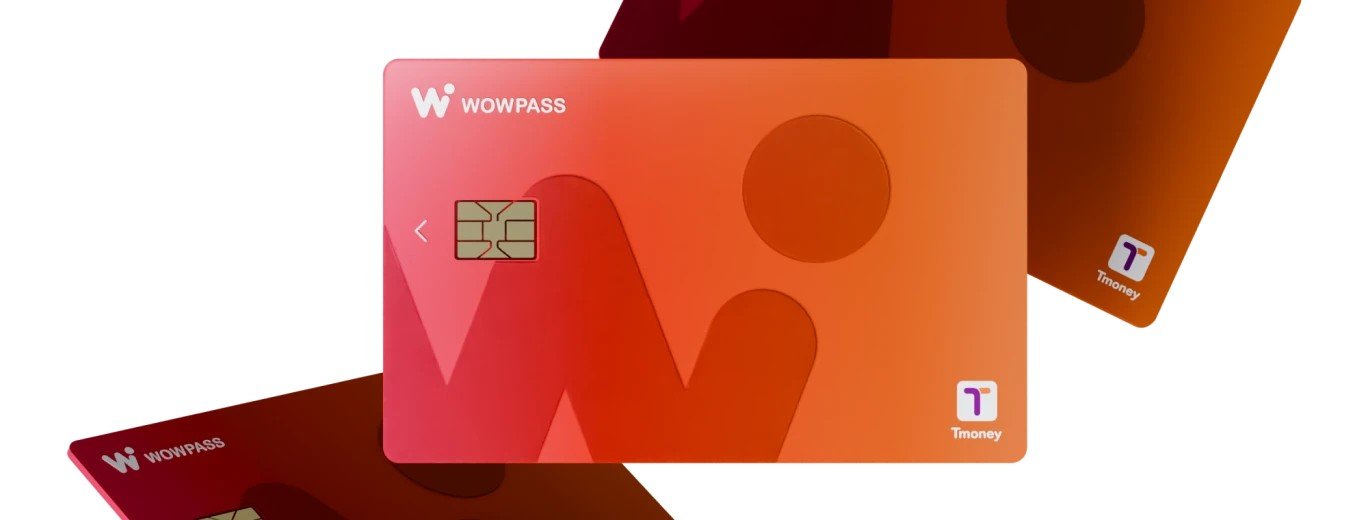
- Good fit for: Travelers who want one physical card for everyday payments and transit while managing the two balances separately.
- Advantages:
- Flexible top-ups: WOWPASS supports cash top-ups in 16 currencies as well as supported international cards and e-wallets.
- Broad card acceptance: The payment balance works at most Korean merchants that accept Korean-issued cards, although some market stalls and cash-only businesses are exceptions.
- Important: The shopping balance and the T-money transit balance are separate. Money added for shopping is not automatically added to the transit side, so check both balances in the WOWPASS app.
How to Top Up Each Card
- T-money: Standard physical-card top-ups usually require Korean won cash at subway machines or convenience stores.
- Climate Card: Supported vending machines currently accept internationally issued cards for purchasing Climate Cards and recharging short-term passes. Seoul states that international-card purchases and recharges carry an average service fee of about 3.7%.
- WOWPASS: Add money to the prepaid payment balance with cash in 16 supported currencies, supported international cards, or supported e-wallets. The T-money transit balance is separate; check and top it up independently in the WOWPASS app.
- Keep some Korean won: A small cash reserve is useful for T-money top-ups and businesses that do not accept cards. See the guide to using cash and cards in Korea for a practical breakdown.
- If a top-up fails: If a foreign-issued card is rejected, check that you are using an international-card-enabled machine instead of repeatedly retrying the same kiosk. Seoul’s current public-transportation guide notes that card payment is available only on select reload devices. Use Korean-won cash where accepted, or ask the station service center which nearby machine can handle the transaction. For a standard T-money card, a subway station or participating convenience store is the simplest cash fallback.
- Tap out correctly: Tap when getting off a bus and at subway exit gates so eligible transfer discounts are calculated correctly.
Discount Fares for Children and Youth (Ages 6–18)
Registered child and youth transit cards qualify for reduced Seoul subway base fares:
- Children (Ages 6–12): Seoul subway transit-card base fare: ₩550.
- Youth (Ages 13–18): Seoul subway transit-card base fare: ₩900.
- Under 6 Years: Travel free of charge on Seoul transit when accompanied by a fare-paying guardian (up to 3 children per adult).
- How to register: Buy a standard physical T-money card at a convenience store (GS25, CU, 7-Eleven) or subway service center. Hand the card to the cashier or staff along with the child’s passport (for proof of date of birth) and request “Child/Youth Discount Registration” (Eorini / Cheongsonyeon Hal-in). Without registration, the card charges full adult fare.
Which Transit Card Should You Choose?
Choose by Trip Style
- Consider the Climate Card if your planned journeys are within its coverage area and their total pay-as-you-go fares exceed the pass price plus any card purchase cost.
- Consider T-money for pay-as-you-go local transit in Seoul and other Korean cities, the AREX All-Stop train, or taxis that accept it. AREX Express requires a separate ticket; a T-money tap does not replace that ticket.
- Consider WOWPASS if you want a Korean prepaid payment card with a built-in T-money function and are comfortable managing the payment and transit balances separately.
- Choose the Climate Card if: You will stay mostly within its current coverage area and expect to make frequent separate subway and Seoul-bus journeys during a 1- to 7-day period.
- Choose WOWPASS if: You want one physical card for shopping and transit and are comfortable managing separate payment and T-money balances.
- Choose T-money if: You plan to travel outside Seoul, already use an overseas card with low or no foreign-transaction fees, or want a simple pay-as-you-go transit card.
Frequently Asked Questions
Can I add T-money or Climate Card to Apple Wallet (Apple Pay)?
Yes, for prepaid T-money. Compatible iPhone and Apple Watch models can add a prepaid T-money card to Apple Wallet and use it on T-money transit. However, Apple states that purchasing or topping up T-money inside Wallet requires a South Korea-issued credit or debit card. Travelers without a compatible Korean payment method may find a physical T-money card simpler. Climate Card itself cannot be added to Apple Wallet. See the official Tmoney guide and Apple setup requirements.
Can foreign tourists use Android smartphones as a mobile transit card?
Mobile Tmoney availability on Android depends on the device, SIM or mobile account, identity verification, and supported top-up method. Short-term visitors should not assume their phone will complete setup; confirm the current requirements in the app before relying on it. A physical T-money card is the simplest fallback if setup or payment verification fails.
How does WOWPASS compare to NAMANE Card?
Both WOWPASS and NAMANE are prepaid Korean debit cards with integrated transit chips. The main difference lies in their network and kiosk availability: WOWPASS uses the standard T-money network and operates multi-currency cash exchange kiosks located at major airport terminals, subways, and tourist hotels. NAMANE uses the Rail+ transit network and is best known for letting travelers print custom photos onto the card face via self-service kiosks. Check current kiosk locations, issuance fees, and top-up methods for both cards before choosing.
Can I use the Seoul Climate Card to travel to Incheon Airport?
Short-term Climate Card passes can be used from the covered Seoul section to Incheon Airport Terminal 1 or 2 on the AREX All-Stop train. You cannot begin a Climate Card journey at the airport stations, and the non-stop AREX Express is not included. Check the official coverage page before travel. For other options, see the Incheon Airport to Seoul transportation guide.
Can I use T-money and WOWPASS together?
You can carry both, but most travelers do not need to. WOWPASS already includes a separate T-money transit function; the payment balance and transit balance must still be managed separately.
Do I need a Korean bank account?
No. Visitors can buy and use standard physical T-money cards, WOWPASS, and short-term Climate Card passes without a Korean bank account. Available reload methods differ by card.
Can several people use one transit card?
Each subway passenger needs a separate card at the turnstiles. On some buses, one card can be used to pay for several passengers if you tell the driver the number of riders before tapping, but transfer discounts have additional conditions. Separate cards are simpler for travelers who plan to transfer.
Does a T-money card expire?
A standard T-money card does not have a fixed expiration date. Under Tmoney’s terms, the five-year limitation period is counted from the most recent top-up or use, so topping up or using the card starts a new five-year period. The terms also state that the remaining balance on a physical card can still be used or refunded when the card is presented. In other words, the physical card does not automatically expire five years after purchase, and you can keep it for a future trip.
What happens to leftover money on my transit card?
Refund rules depend on the card type, remaining balance, and refund location. Check the current T-money or WOWPASS instructions before departure instead of assuming every convenience store can process the same refund.
Related Travel Guides
Official reference sources: