What to Eat in Korea If You Don’t Like Spicy Food
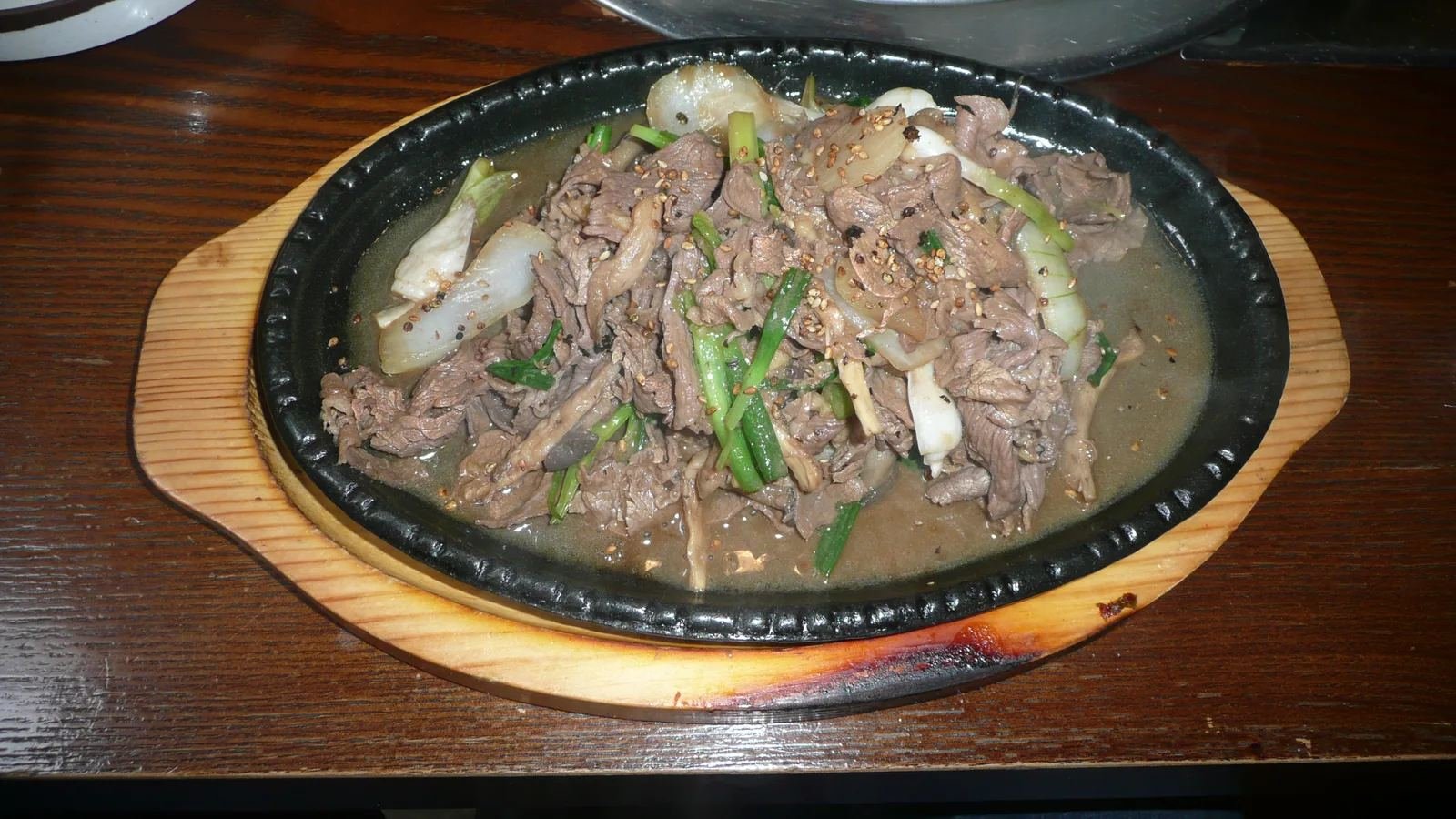
Bulgogi, seolleongtang, samgyetang, and plain grilled pork belly are good places to start if you don’t like spicy food. There are noodle dishes and quick lunches to choose from too, so you can try plenty of Korean food without having to ask for a milder version of every meal.
Sometimes the heat comes from what’s added to the dish. A mild soup might arrive with chili paste stirred in, while grilled meat may come with spicy kimchi or dipping sauce on the side. It helps to know which parts are already seasoned and which you can leave out.
On this page
Non-spicy Korean food: what to order first
Here are a few dishes to look for, depending on what you feel like eating. Recipes vary, so the last column points out the seasonings worth asking about.
| What sounds good? | Menu name | What to expect | Ask about |
|---|---|---|---|
| Beef and rice | Bulgogi · 소불고기 | Sweet, savory, thinly sliced beef | Soy-based seasoning; any added chilies |
| A mild bowl of soup | Seolleongtang · 설렁탕 | Milky beef-bone broth with sliced meat | Chili paste added before serving |
| Chicken soup | Samgyetang · 삼계탕 | Whole young chicken, rice, garlic and ginseng | Any special spicy version |
| Warm noodles | Kalguksu · 칼국수 | Soft wheat noodles in chicken or seafood broth | Fresh chilies and spicy toppings |
| Dumplings | Gogi mandu · 고기만두 | Meat-and-vegetable filling | Kimchi or chili in the filling |
| A quick takeaway meal | Gimbap · 김밥 | Seaweed rice rolls with several fillings | Spicy fillings, especially chili or kimchi |
| Rich, saucy noodles | Jjajangmyeon · 짜장면 | Thick black-bean sauce, often with pork and onion | Spicy versions and added chili powder |
| Dinner at a grill | Plain samgyeopsal · 삼겹살 | Pork belly browned at the table | Marinade, dipping sauces and spicy sides |
Sweet and savory beef: bulgogi
Beef bulgogi is a good choice when you’re hungry for a full meal with rice. The thin slices are easy to eat, and the sweet, savory soy-based marinade gives the meat plenty of flavor without chili.
Look for 소불고기, meaning beef bulgogi, and confirm the seasoning if there are several versions. 고추장불고기 has gochujang, or chili paste, in its name. Pork bulgogi can also have a red, spicy marinade, so “bulgogi” on its own doesn’t tell you enough.
For lunch on your own, a bulgogi rice bowl or an individual meal is convenient. A pan meant for sharing may have a minimum order, so it’s worth asking whether the price is per person or for the whole dish.
A warm soup: seolleongtang or samgyetang
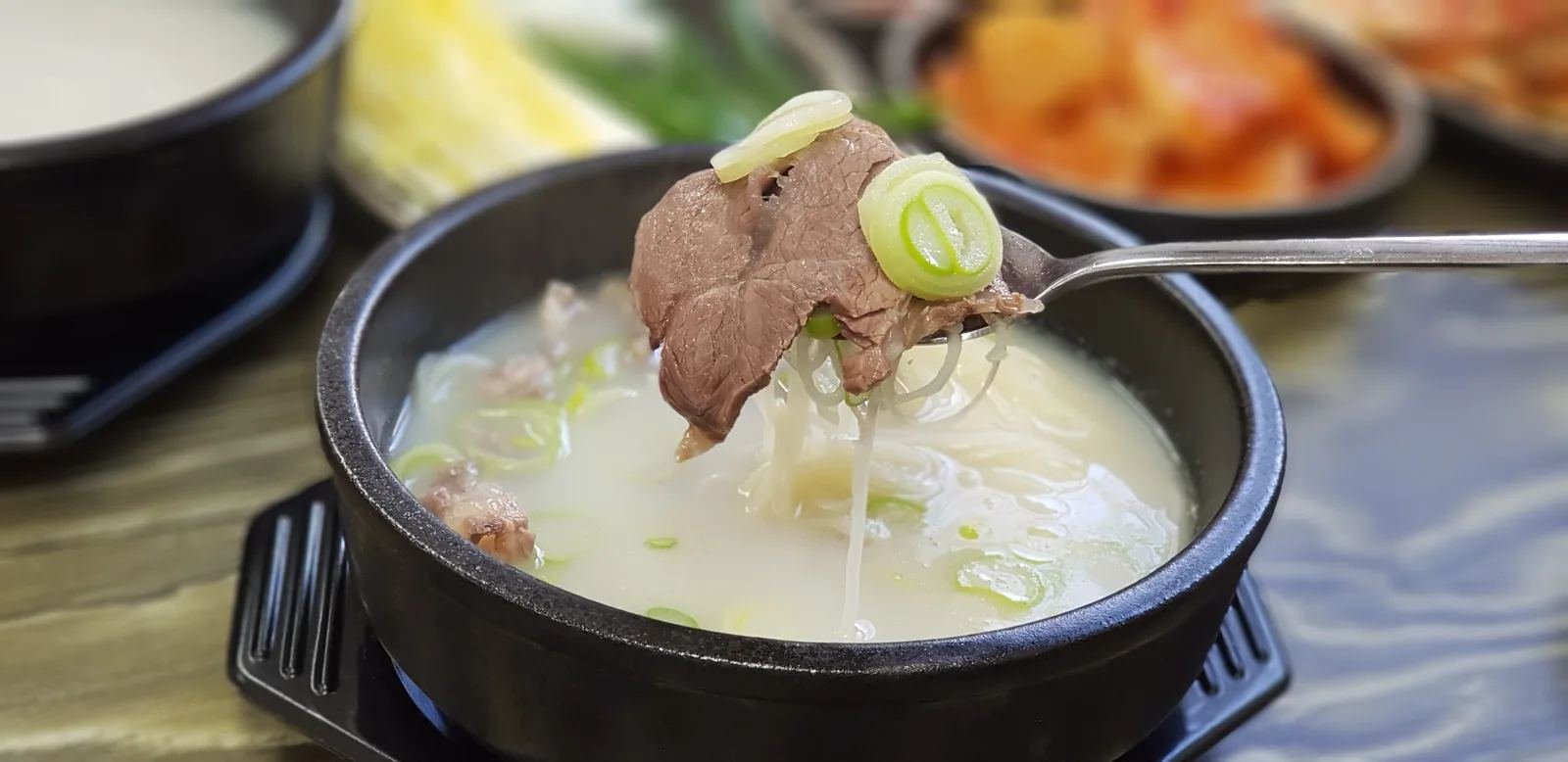
Seolleongtang (설렁탕) has a milky beef-bone broth with a mild, savory flavor. It’s a good choice when you feel like a warm, simple meal without a sweet sauce. If salt, pepper, and green onions are on the table, taste the soup before adding anything. A red seasoning paste is optional when served separately, so it can stay out of your bowl.
In central Seoul, Imun Seolnongtang in Jongno is one place to try it. Its Korean name is 이문설농탕; the spelling on the sign differs slightly from the usual dish name.
If you’d rather have chicken, samgyetang (삼계탕) comes with a young whole chicken, sticky rice, garlic, ginseng, and jujube. The meat is soft and served on the bone, while the ginseng gives the broth a distinct earthy taste. There’s no chili in the standard recipe, though it’s worth asking about the seasoning if you order a special version.
At either meal, kimchi served alongside the soup can stay on its own plate. You don’t need to stir it into the broth.
Soft noodles: kalguksu
For a warm noodle lunch, kalguksu has soft, knife-cut wheat noodles in a broth made with ingredients such as chicken, anchovies, or clams. A clam version has a more noticeable seafood flavor. If you’d prefer chicken, look for a chicken-broth version instead.
Kalguksu can still come with fresh chili, chili powder, or a spicy topping. If even a little heat bothers you, ask whether those can be left out when you order. Once chili has cooked in the broth, picking out the slices won’t take the heat away.
Dumplings and gimbap for a quick lunch
Meat dumplings
Gogi mandu (고기만두) are a better starting point than kimchi dumplings when you want to avoid chili. Steamed ones have soft wrappers, while pan-fried ones give you a browned, crisp base. A plate works well as a snack or something to share beside noodles.
Steaming doesn’t tell you what’s inside: the filling may still contain kimchi. An assorted plate may mix meat and kimchi dumplings, so you may prefer to order just the meat ones. The dipping sauce may have chili in it too.
Gimbap
Gimbap is handy for a quick takeaway meal, with rice and several fillings rolled in seaweed and cut into slices. A basic roll or one with plenty of egg is worth asking about when you’d like something smaller than a bowl of noodles.
There are many variations, including rolls filled with spicy anchovies. 매운 means spicy, 고추 means chili pepper, and 김치 means kimchi. Those words can help you narrow down a menu, but a roll without them in the name still needs a quick ingredient check.
Black-bean noodles: jjajangmyeon
Regular jjajangmyeon is worth trying if you like thick noodles and a rich sauce. The dark color comes from the black-bean sauce; it doesn’t mean the dish is spicy. Pork and onion are common ingredients, so check before ordering if you’re vegetarian.
Order the regular 짜장면, then leave any chili powder on the table. A special “spicy jjajang” is a different choice. At a Korean-Chinese restaurant, regular jjajangmyeon is usually a better choice for avoiding chili than jjamppong, the spicy seafood noodle soup.
Korean barbecue with the seasoning on the side
Plain samgyeopsal (삼겹살) lets you enjoy the browned edges and richness of pork belly without a marinade. A little salt or sesame oil can be enough for dipping.
With the meat kept plain, you can choose which sauces and sides to add to each bite. Ssamjang, the thick dipping paste, can have chili in it, and scallion salad may come in a spicy dressing. A lettuce wrap with pork and a little salt works well on its own.

For solo travelers, the bigger practical question may be the minimum meat order. Our solo Korean barbecue guide explains what to look for before taking a seat.
What about bibimbap, cold noodles, and fried chicken?
Bibimbap can work when the chili paste comes separately and the toppings haven’t already been seasoned with chili. Ask before it’s mixed or served with gochujang on top.
For cold noodles, look for the difference between mul naengmyeon in broth and bibim naengmyeon with spicy seasoning. Some broth versions come with chili paste added, so ask whether it can be left out. Mustard can also give the bowl a sharp kick.
For fried chicken, 후라이드 means the plain fried style and is a useful place to start. The seasoning still depends on the recipe. Even a sweet or soy-based sauce may contain chili, so the name or color alone won’t tell you how spicy it is.
How to ask for food without chili
A short explanation is often more useful than trying to judge what someone else means by “a little spicy.”
| What you want to say | Korean to show the staff |
|---|---|
| I can’t eat spicy food. | 매운 음식을 못 먹어요. |
| Is this spicy? | 이거 매워요? |
| Could you leave out the chili peppers, chili powder, and chili paste? | 고추, 고춧가루, 고추장은 빼 주실 수 있나요? |
| Could I have the sauce separately? | 소스는 따로 주실 수 있나요? |
| Which dish isn’t spicy? | 안 매운 메뉴가 뭐예요? |
The first phrase is pronounced roughly mae-un eum-shi-geul mot meo-geo-yo. Showing the Korean text is just as useful if you’d rather not say it aloud.
덜 맵게 해 주세요 means “Please make it less spicy.” That can help when you’re comfortable with some heat, but the dish may still contain chili. If you want to avoid chili, say so directly and ask whether it’s already in the broth, filling, or marinade.
Staff may say 안 매워요 (“It isn’t spicy”), 조금 매워요 (“It’s a little spicy”), or 빼기 어려워요 (“It’s difficult to leave out”). If the seasoning can’t be changed, you could ask which other dishes aren’t spicy. Sauces and fillings are sometimes prepared ahead, so the staff may be able to suggest something that suits you better.
For the rest of the meal—ordering tablets, call buttons, water, and side dishes—our Korean restaurant ordering guide covers the everyday details.
Before heading out, save two or three Korean dish names from the table. You’ll have a few options to search for near your hotel or next stop, so you can choose what sounds good when you’re hungry.
Dish descriptions and official references checked October 29, 2026. Recipes and requests to leave out ingredients depend on the restaurant.
Photo sources
- Bulgogi: Brücke-Osteuropa, Bulgogi in Seoul, CC0 1.0. Resized and converted to JPG.
- Seolleongtang: 이동원, Seolleongtang, CC0 1.0. Resized and converted to JPG. This illustrates the dish and is not a photo of Imun Seolnongtang.
- Barbecue side dishes and sauces: Photo: OOMPHY collection. Cropped, resized, and converted to JPG.