Korean Breakfast Guide for Travelers: Gukbap, Toast, Bakeries, Convenience Stores & Early Hours
Use this Korean breakfast guide to pick a stop that fits your morning. A convenience store is often the easiest option before the nearby restaurants open. For something hot to take with you, Korean toast is a good choice once the shops open. On a slower morning, a bowl of gukbap gives you a warm, filling meal before you head out.
Even familiar chains have different opening times and seating from branch to branch. The listing for the shop near your hotel will be more useful than the chain’s general website when you’re planning an early start.
On this page
Pick breakfast by time and appetite
| Choice | Best when | What to look for | Time to allow | Solo-friendly? |
|---|---|---|---|---|
| Convenience store | You are leaving very early or catching a train | Triangle gimbap, a sandwich, boiled eggs, yogurt or milk, and coffee | About 5–10 minutes | Yes; seating depends on the branch |
| Korean toast | You want something hot and portable without a long stop | Egg-and-cabbage toast, ham and cheese, or a heartier potato or chicken filling | About 10–20 minutes, plus any queue | Yes; many shops are takeout-first |
| Bakery | You want coffee, a lighter meal, or an easy group option | Savory bread, a sandwich, salad, or simple bread with coffee | About 10–30 minutes | Yes; check whether the branch has seats |
| Gukbap or another soup meal | You want a hot, filling breakfast and have time to sit down | Pork, beef, blood-sausage, bean-sprout, or other local soup-and-rice styles | About 25–45 minutes | Usually; check for any minimum-order notice |
The times above are rough planning estimates; allow extra time for queues. For a tour, airport bus, or KTX departure, it’s worth having a nearby backup. A map listing may be out of date, holiday hours can change, and restaurants may stop taking orders before closing—even at a place usually listed as open 24 hours.
Gukbap: the warm, filling breakfast
Gukbap is soup served with rice, and the kind you’ll find depends on the city and the shop. Busan is well known for dwaeji gukbap, made with pork. Other menus might offer beef, sundae (Korean blood sausage), or bean-sprout soup. Seolleongtang and gomtang are also good options when you’d like a mild beef soup with rice.
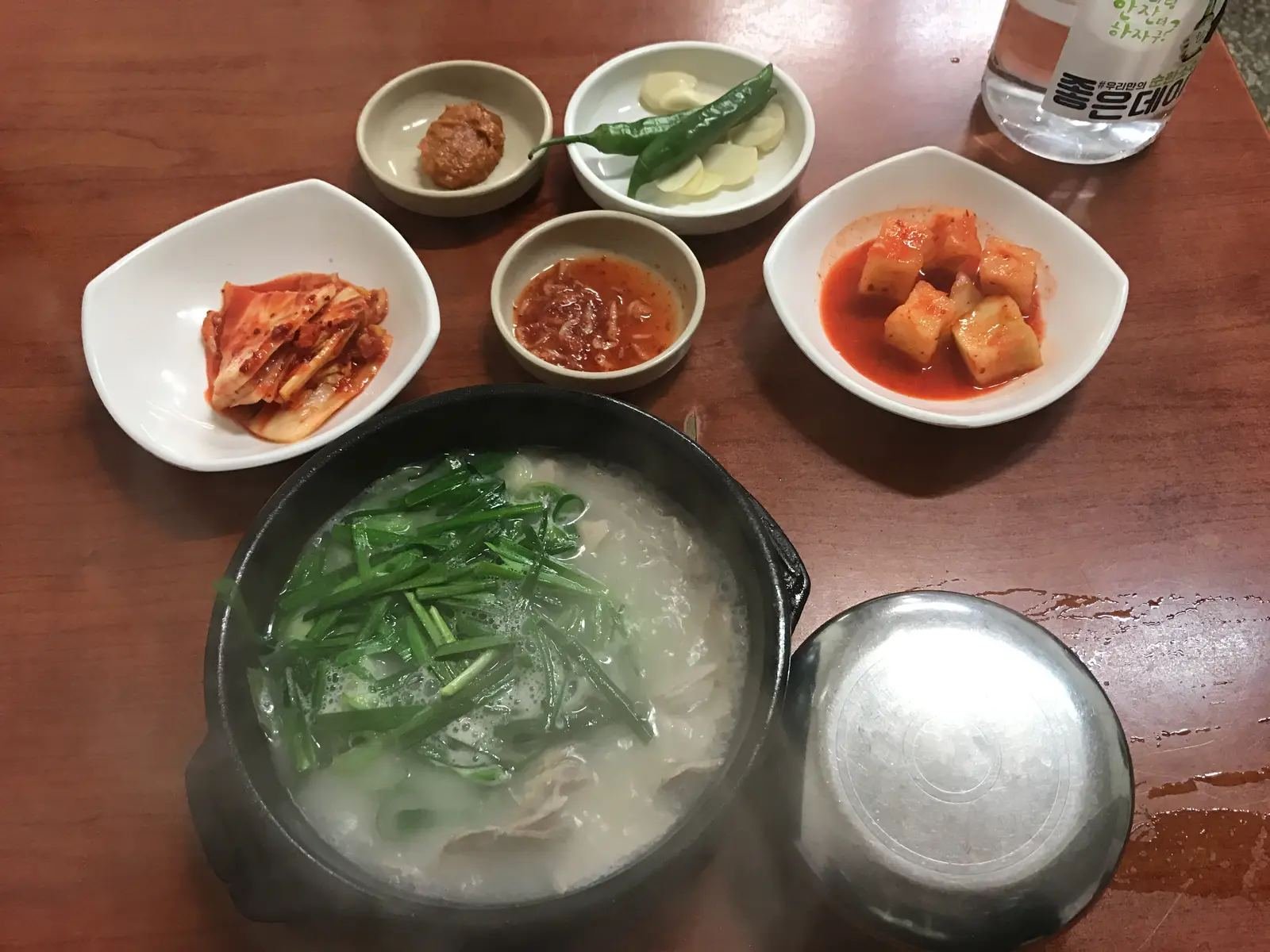
The name on the menu helps you tell what kind of soup to expect:
- Dwaeji gukbap (돼지국밥): pork and rice soup; often mild until you add seasoning.
- Sundae gukbap (순대국밥): soup with Korean blood sausage and usually other pork cuts. It has a richer flavor, with pieces of sausage alongside the pork.
- Kongnamul gukbap (콩나물국밥): bean-sprout soup and rice; lighter, with a clean, warming broth.
- Seolleongtang or gomtang: not always labeled gukbap, but useful when you want a mild beef soup with rice.
At many shops, salt, chopped green onion, chili seasoning, or salted shrimp is left on the table so each person can adjust the bowl. Taste the broth first. A spoonful of red seasoning can turn a mild bowl spicy fast, and you can always add more.
Gukbap is usually comfortable for one person because each diner gets an individual bowl. The meal often comes with kimchi or kkakdugi, but side dishes and refill rules vary. If the shop uses a kiosk, the language button may be on the first screen; if there is no English menu, showing the Korean dish name is often enough. For the usual call bell, water, side-dish, and payment flow, see the Korean restaurant ordering guide.
Korean toast: fast, hot, and sweet-savory
Korean street toast is a griddled sandwich built around an egg patty, usually with shredded cabbage and a sweet-savory sauce. Ham, cheese, potato, bacon, chicken, or shrimp can turn it into a more substantial meal. It’s a filling sandwich you can take with you when there’s no time for a sit-down breakfast.

Egg or ham-and-cheese toast is an easy place to start. Potato or fried fillings make a heavier breakfast. The current Isaac Toast menu shows both simple egg-and-cheese combinations and more filling options, but availability and prices still depend on the branch.
Street-toast stalls and chain stores do not share one opening time. A stall near an office district may be useful in the morning, while a branch inside a mall may follow the mall schedule. Some have a few stools; others mostly serve takeout.
Bakeries: easiest for mixed appetites
A Korean bakery is useful when one person wants coffee, another wants a sandwich, and someone else only wants a small bun. Chains such as Paris Baguette offer sweet and savory bread, sandwiches, salads, coffee, and other quick meals. Neighborhood bakeries may have a smaller selection.

At many branches, you pick up a tray and tongs, choose the wrapped or uncovered bread, then pay at the counter. Sandwiches, salads, and drinks may be in a refrigerator rather than beside the bread. Seating, reheating, and restrooms are branch-specific.
If you’ll be walking around a museum or palace all morning, a sandwich, an egg item, or sausage bread may keep you going longer than a cream-filled bun on its own. Right at opening, some trays may still be empty while the day’s bread is being baked. Use the bakery's official store information or the current place listing for the branch you plan to visit.
Convenience stores: the reliable early fallback
CU, GS25, 7-Eleven, and emart24 branches make an early breakfast easy, but stock is local and changes through the day. The refrigerated shelf is a good place to start. You might find plenty of sandwiches and triangle gimbap at one branch and very little left at another.

For an easy breakfast, pair a main item with eggs, yogurt, or milk. A few combinations to look for:
- triangle gimbap + boiled eggs + water or unsweetened tea
- sandwich + yogurt or milk
- gimbap roll + coffee
- porridge or another microwave meal when a hot option matters
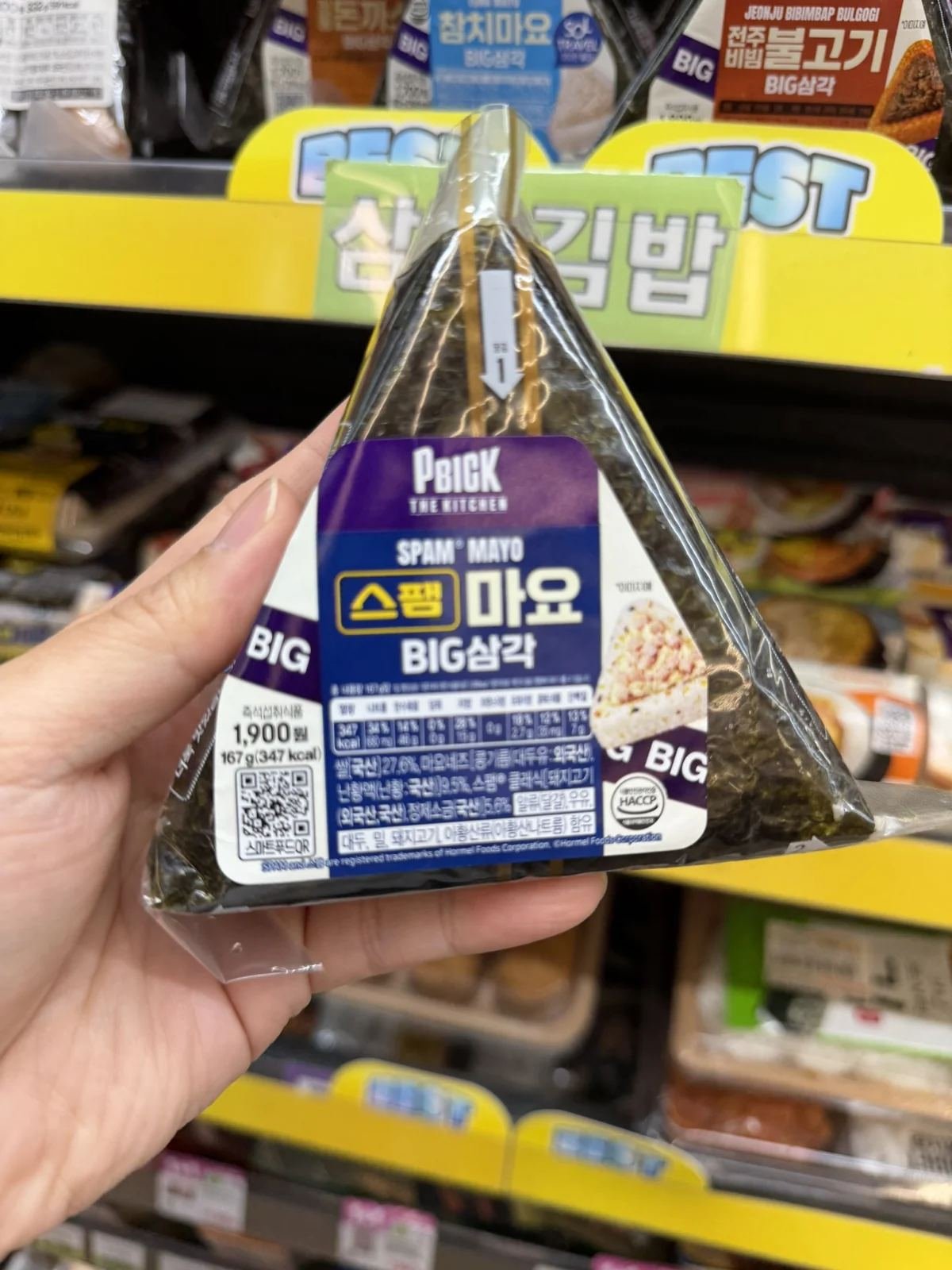
The package tells you whether an item needs heating; where it sits on the shelf does not. Follow the microwave directions and remove any packet or lid section the label tells you to remove. If the instructions are only in Korean, use a translation app before heating rather than guessing.
Some stores have a counter or small table; others have nowhere to eat. If you’re taking the subway, finish your food before boarding. A hot cup or soup is awkward when you are hurrying through a station. If you’re catching a train, a wrapped sandwich or gimbap is easier than anything with broth.
A store finder can help you locate a nearby branch, but inventory can change between deliveries. It’s worth having another option in mind.
For a fuller look at the main chains, package labels, heating, and meal combinations, continue with the Korean convenience-store food guide.
What works for your morning?
Leaving before your first choice opens: go to the nearest convenience store with a good refrigerated shelf. Buy something wrapped and easy to carry, then keep the restaurant or bakery for another morning.
Leaving after shops begin opening: compare one toast shop and one bakery near your route. Toast gives you a hot sandwich to take with you; a bakery gives a group more choices and may have seating.
You have a slow morning: search for the exact soup dish you want, then check today's opening time, regular closing day, and last order. Save one nearby alternative. The restaurant break-time and last-order guide explains why a lit, unlocked restaurant may still not be taking orders.
If place information is only in Korean, the Naver Map English guide walks through searching by Korean name and checking the detailed listing.
Sources
- Isaac Toast official menu — current toast categories and examples; checked October 29, 2026 KST.
- Paris Baguette official site — current product categories and store information entry point; checked October 29, 2026 KST.
- CU official store finder (Korean), CU product/service site — branch lookup, ready-to-eat categories, and services; checked October 29, 2026 KST.
- VISITKOREA: Busan pork soup, sundae and rice soup, bean sprout and rice soup, ox bone soup, and street toast — dish descriptions; checked October 29, 2026 KST.