Noryangjin Fish Market Step-by-Step: Picking Seafood, Table Fees & Avoiding Overcharging
At Noryangjin Fish Market, you can choose seafood from the tanks and displays, then have it prepared at a restaurant in the market. That's the appeal: a fish sliced for hoe, a crab steamed for the table, or shellfish cooked while you settle in upstairs.
The bill comes in two parts. You pay the stall for the seafood, then the restaurant for the table and cooking, plus anything else you order. Ask about both before the seafood is prepared. It takes a few extra minutes and makes the meal much easier to enjoy.
I'd walk along a row of stalls before choosing. Compare what's on offer, decide whether you want raw fish or cooked seafood, and start with one main item. You don't have to buy a large mixed platter to try the market.
On this page
Before visiting Noryangjin Fish Market
| Detail | What to know |
|---|---|
| Address and map name | 674 Nodeul-ro, Dongjak-gu, Seoul · 노량진수산시장 |
| Subway | Noryangjin Station, Lines 1 and 9 |
| From Line 1 | Exit 9, then about 150 meters straight ahead |
| From Line 9 | Exit 7, about 70 meters, then the underpass |
| When to go | Late morning to early evening is convenient for browsing and a meal; individual businesses keep different hours |
| Time to allow | Plan 1–2 hours to browse, or longer if you're eating |
| Just looking? | You can browse without buying seafood |
| What you'll see | Fish tanks, shellfish displays, and seafood stalls; restaurants are on 2F and 5F |
| How the bill works | Pay for seafood at the stall, then table, cooking, and extras at the restaurant |
| Budget | Ask for both totals before ordering; species, weight, and cooking method change the price |
| Payment | Check card acceptance with both businesses and keep both receipts |
The market is open much longer than a normal grocery store, but “the market is open 24 hours” does not mean every stall and restaurant is open all night. The official schedule lists high-grade seafood sales as 24 hours, general seafood from 1:30 a.m. to 10 p.m., shellfish from 1 a.m. to 10 p.m., and several other categories on their own schedules. Restaurant hours are set by individual businesses.
For a first visit, late morning is a comfortable starting point. You can browse the tanks, compare a few stalls, and stay for lunch. The overnight auction is a working wholesale operation, so it isn't the same experience as shopping for a meal.
If Korean place names are slowing you down, save the market's Korean name — 노량진수산시장 — before leaving. Our Naver Map guide shows how to search and save the route.
You'll pay the stall and the restaurant separately
You buy the seafood at a stall, then pay a restaurant to prepare it and serve the meal. Table settings, cooking, stew, rice, and drinks can all be separate charges, so the fish price alone won't tell you what lunch costs.
The seller may suggest a restaurant and take you upstairs. Before agreeing, ask for its table and cooking fees. Keep a receipt from the stall and another from the restaurant so you can follow both parts of the bill.
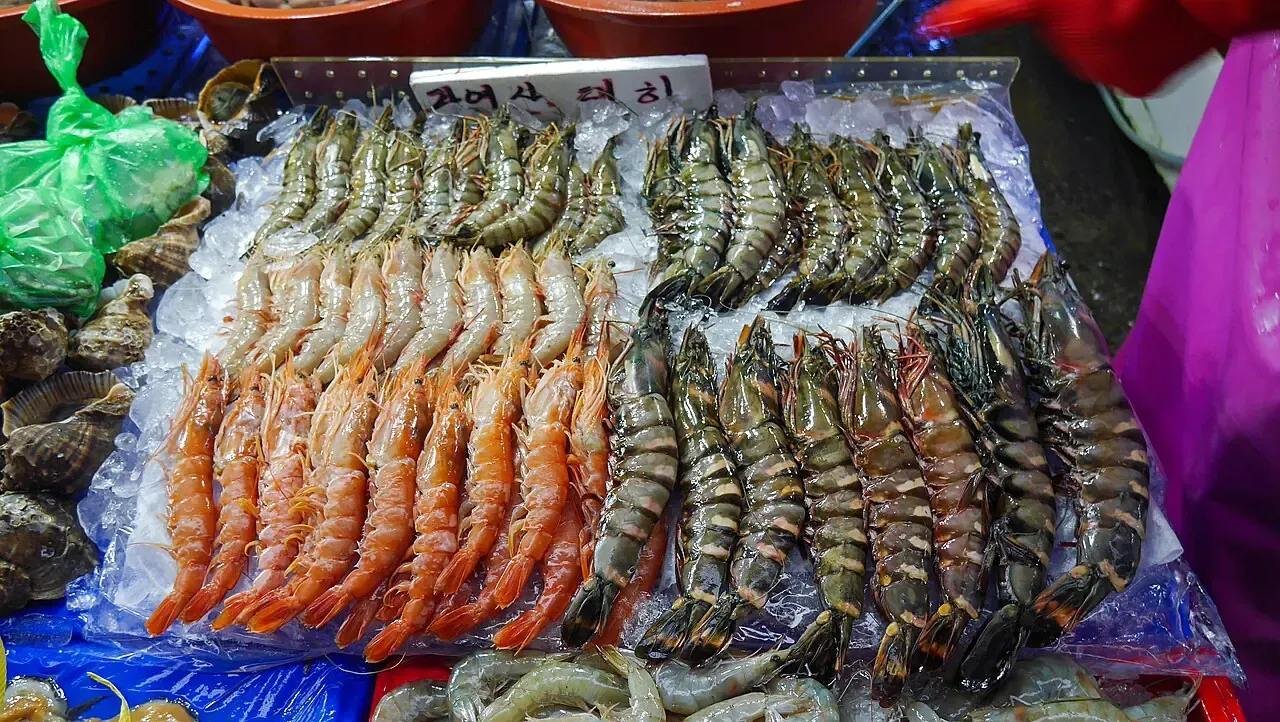
Have a look along the aisle first
The first seller who speaks to you may be perfectly fair. You still do not need to stop at the first tank.
Walk past several stalls and look at what is actually available that day. Prices change with supply, species, size, origin, and season. The market's official website publishes daily auction-price information, which is useful for seeing the general direction of wholesale prices, but it is not a promise of the final retail price you will receive.
For an easier first meal, pick one main item rather than assembling a huge seafood platter. A whole flatfish for sashimi, a crab to steam, or shellfish to grill is easier to price and easier to track from the tank to the table.
If you want several items, decide which ones are essential before anyone starts scooping seafood into a basket. A fast-moving “assorted set” can become expensive because it is harder to remember the price and preparation method for every item.
Ask whether the price is per kilo or for the whole item
Do not ask only, “How much is this?” For seafood sold by weight, that question can produce a price per kilogram when you think you are hearing the total.
Confirm these five points:
What species is it?
Is the quoted number per kilogram, per item, or for the entire basket?
What is the measured weight?
What is the seafood total?
Does that amount include cleaning or sashimi preparation at the stall?
Useful Korean:
이거 얼마예요? (Igeo eolmayeyo?) — How much is this?
킬로당 얼마예요? (Killodang eolmayeyo?) — How much per kilogram?
몇 킬로예요? (Myeot killoyeyo?) — How many kilograms is it?
총 얼마예요? (Chong eolmayeyo?) — What is the total?
손질비 포함이에요? (Sonjilbi pohamieyo?) — Is the cleaning/preparation fee included?
If the number is hard to catch, ask the seller to type it into your phone calculator. It's an easy way to check that you're both talking about the same total.
Stay by the scale while it's weighed
When seafood is sold by weight, stand where you can see the scale. Check that it begins at zero or that the container has been tared, then look at the final weight before the seafood disappears behind the counter.
For crab, lobster, and large fish, even a small difference in weight can change the price noticeably. Repeat the math out loud or display it on your phone:
Unit price × measured weight = seafood total
If the seller adds another fish, shellfish, or “service” item, ask whether it is complimentary before accepting it. In Korean markets, 서비스 can mean a genuine free extra, but you should not assume every added item is free.
- 이거 서비스예요? (Igeo seobiseuyeyo?) — Is this complimentary?
- 추가 비용 없어요? (Chuga biyong eopseoyo?) — Is there no additional charge?
Tell the seller how you'd like it cooked
Tell the seller whether you are taking the seafood away or eating inside the market. Common choices include:
- 회 (hoe): sliced raw fish
- 찜 (jjim): steamed, often used for crab or shellfish
- 구이 (gui): grilled
- 매운탕 (maeuntang): spicy fish stew, often made with the remaining fish bones and head
- 포장 (pojang): packed to go
For raw fish, ask whether the stall will slice it or whether the restaurant will handle it. For steamed or grilled seafood, ask how the cooking fee will be calculated — by kilogram, by item, or by dish.
If you have allergies, this is not the place to rely on assumptions. Seafood, shellfish, sauces, and shared preparation surfaces are everywhere. Show a written Korean allergy card and confirm again at the restaurant.
Keep the seafood price on a slip
Before paying, ask the seller to write or type the details:
Seafood name
Weight
Unit price
Seafood total
Preparation included at the stall
Restaurant name or floor, if there is a handoff
You can say:
가격 먼저 적어 주세요. (Gagyeok meonjeo jeogeo juseyo.) — Please write the price first.
영수증 주세요. (Yeongsujeung juseyo.) — Please give me a receipt.
Take a quick photo of the slip and the stall number. It is helpful if the seafood is sent upstairs separately or if you need to ask a question later.
Read the restaurant menu before sitting down
This is the most important pause in the entire visit.
The official market guide lists restaurant areas on 2F and 5F. Some fishmongers will lead you directly to a restaurant they work with. Before the seafood goes into the kitchen, ask to see the restaurant's price board or menu.
The restaurant bill may include:
| Charge | How it may be calculated |
|---|---|
| Table-setting fee (상차림비) | Usually per person |
| Sashimi plating or preparation | Per fish, plate, or order |
| Steaming or grilling | Often by weight or item |
| Spicy fish stew | By pot size or number of people |
| Rice, noodles, fried rice | Per serving |
| Drinks and alcohol | Per bottle or glass |
| Extra side dishes | Varies by restaurant |
The English menu reproduced in SeoulKnows listed a ₩5,000 table charge per person, or ₩6,000 without fish stew, with separate prices for stew and cooking. Treat that as an example, not a market-wide rate. Each restaurant sets its own prices, and the board you read before sitting is the number that matters.
Ask:
- 상차림비는 1인당 얼마예요? (Sangcharimbineun irin-dang eolmayeyo?) — How much is the table fee per person?
- 조리비는 얼마예요? (Joribineun eolmayeyo?) — How much is the cooking fee?
- 매운탕은 별도예요? (Maeuntangeun byeoldoyeyo?) — Is the spicy fish stew separate?
- 여기까지 총 얼마예요? (Yeogikkaji chong eolmayeyo?) — What is the total up to this point?
If the answer remains vague, you can politely step away before the food is prepared.
What ends up on the bill?
Add the three parts of the meal:
Seafood purchase + restaurant service/cooking + extras = final meal cost
For example, imagine two people buy one fish for sashimi. Their final total could contain the fish price, two table-setting fees, a sashimi preparation charge, one pot of maeuntang, two bowls of rice, and drinks. Hearing only the fish price at the stall tells you very little about the total meal.
Compare the full meal cost before you choose. A lower fish price may come with higher cooking or table fees upstairs.
For the normal rhythm of water, banchan, call buttons, and paying at Korean restaurants, see our Korean restaurant guide.
A clear price matters more than bargaining
You don't have to be good at bargaining to eat here. Choose a seller who tells you the unit price, lets you see the scale, and writes down the total. Then ask the restaurant for its menu before anything goes into the kitchen.
If another item goes into the basket, check whether it's included or costs extra. 서비스 can mean a free extra, but it's still worth asking. If a number changes or you feel hurried, say 잠시만요 (Jamsimanyo, “one moment”) and ask again before paying or having the food prepared.
That small pause is usually more useful than trying to negotiate every last won.
Should you use the seller's restaurant?
It can be convenient. The seafood handoff is smoother, and the seller knows where to send your order. It is not your only option.
If you accept the recommendation, ask for the restaurant's table and cooking fees before the seafood leaves the stall. If you prefer to choose independently, check that the restaurant accepts seafood from your chosen vendor and confirm how it will receive the order.
The simplest first-timer strategy is not to hunt for the absolute lowest number. Choose a stall and restaurant that explain the process clearly. Saving a few thousand won is not worth spending the whole meal wondering what you agreed to.
Start with one main seafood item
For two people, one main seafood item plus one supporting dish is usually more manageable than a large mixed basket. Raw-fish lovers can choose a modest whole fish for hoe and add maeuntang afterward. If you prefer cooked seafood, select one crab or a small shellfish assortment and confirm the steaming or grilling charge by weight.
Ask the seller how much edible food the item will produce, but remember that shell weight is not the same as meat yield. Crab looks dramatic on the scale, yet much of that weight is shell. Ordering several large items at once is the fastest way to overspend and waste food.
There is no single “best” species all year. Availability and condition change. Look at what is moving quickly that day, compare a few tanks, and ask what is in season without letting that replace the price conversation.
Check how each business takes payment
Card acceptance can vary between independent vendors, so confirm before choosing expensive seafood. Carrying a physical payment card and some Korean won is safer than relying on one foreign mobile wallet.
Because the seafood stall and restaurant are separate, one may accept your card while the other asks for a different method. Request a receipt from both. If you need to split the bill with friends, photograph each bill before leaving.
If a charge doesn't look right
Start by comparing the written price, scale weight, order slip, and receipt. Ask the business to explain the disputed line item. Translation apps are useful here because a specific screenshot is easier to discuss than a general complaint.
For travel assistance in Korea, the Korea Tourism Organization's 1330 Korea Travel Helpline can help visitors with tourism information and communication support. It is not a replacement for emergency services or a guarantee of a refund, but it can help you understand what to do next. Call 112 for police emergencies and 119 for fire or medical emergencies.
An easy order for your first visit
If you want the experience without turning lunch into a negotiation exercise, use this order:
- Arrive around late morning or lunchtime.
- Walk one aisle without buying.
- Choose one main seafood item.
- Confirm unit price, weight, and seafood total.
- Ask what stall preparation is included.
- Photograph the slip and stall number.
- Read the restaurant fee board before sitting.
- Confirm table fee, cooking, stew, rice, and drinks separately.
- Keep both receipts until the meal is over.
That is enough. You do not need perfect Korean, a private guide, or expert knowledge of fish. You just need to slow the transaction down at the two moments when money changes hands.
Visiting alone?
Start with the smallest portion you can comfortably finish. Whole fish and crabs can be awkward for one person, and the restaurant's table fee still applies. Ask about the portion before buying; looking around the stalls is worthwhile even if you decide to eat somewhere else.
Keep the two receipts until you're finished
Before heading out, check that the seafood slip and restaurant bill match what you agreed to. Keep a photo of both. With the prices settled, you can enjoy the tanks, the stall displays, and the meal without doing mental arithmetic between bites.
Sources
- Noryangjin Fisheries Wholesale Market — Official Hours
- Noryangjin Fisheries Wholesale Market — Official Directions
- Noryangjin Fisheries Wholesale Market — Official Floor and Facility Guide
- Noryangjin Fisheries Wholesale Market — Daily Auction Price Information
- Visit Seoul — Noryangjin Fisheries Wholesale Market
- Korea Tourism Organization — 1330 Korea Travel Helpline
- SeoulKnows — Noryangjin Fish Market: How to Buy Seafood and Eat It There (August 21, 2026 posted-fee example)
- Wikimedia Commons — Noryangjin Fish Market media category
Photo credits
- Prawns at Noryangjin Fish Market — Punnatorn Thepsuwanworn, Wikimedia Commons, CC0 1.0.
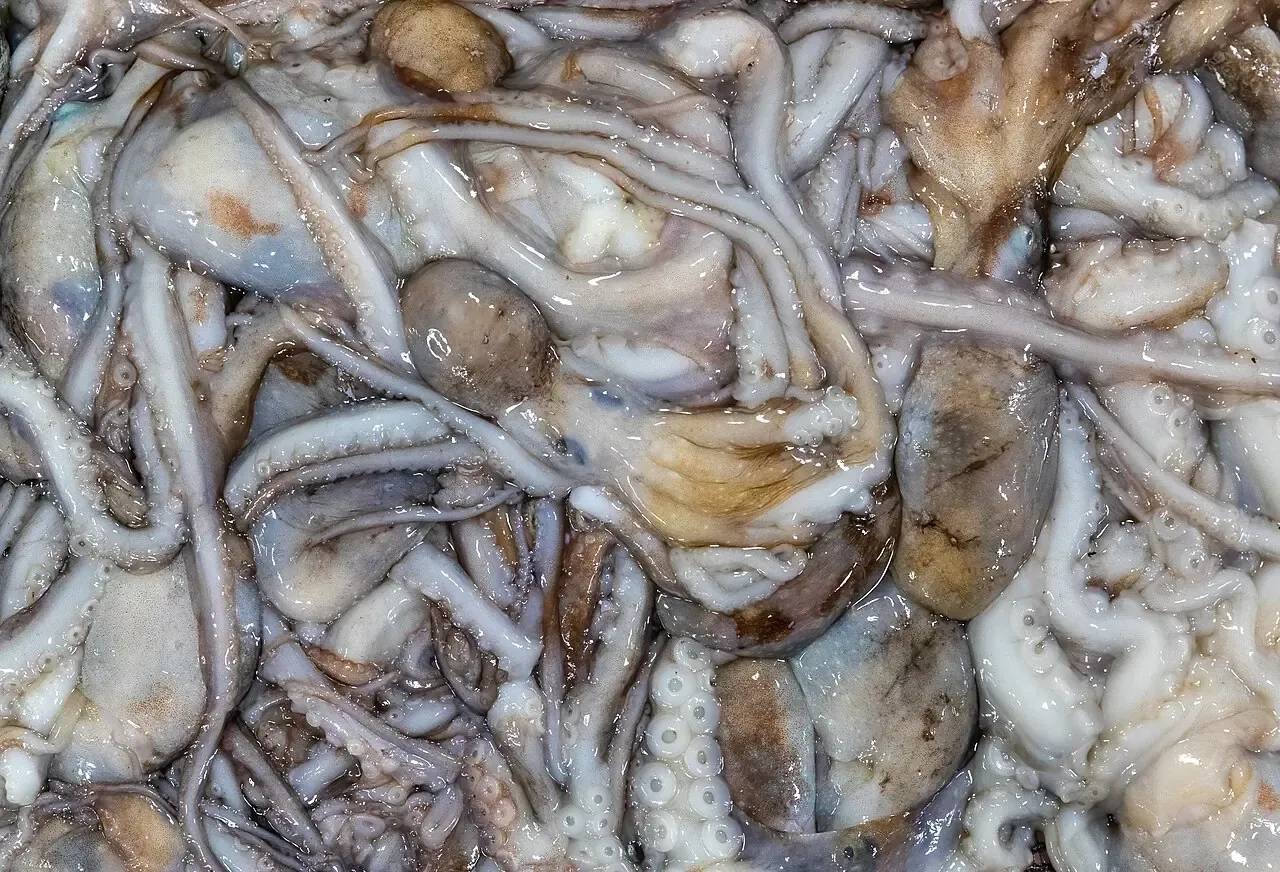
- Octopus at Noryangjin Fisheries Wholesale Market — Basile Morin, Wikimedia Commons, CC BY-SA 4.0. Converted to JPG and optimized for web; the image remains under the same license.
Official market hours, station directions, and restaurant-floor information checked October 11, 2026. Retail sections and individual restaurants keep different hours; check before an early, late, or holiday visit. The restaurant-fee example comes from SeoulKnows' August 21, 2026 article, not a current market-wide price list.