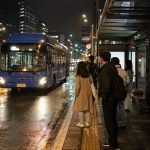
How to Ride Seoul City Buses 2026: Tapping, Tagging Off & Rules
Use a Seoul city bus when your destination is on a hill, far from a subway station, or easier to reach without a rail transfer. Buses are especially useful around Bukchon, Namsan, and residential neighborhoods. Check the route and destination in a navigation app, board at the correct stop, tap your transit card when you enter, and tag off when you leave.
Table of Contents
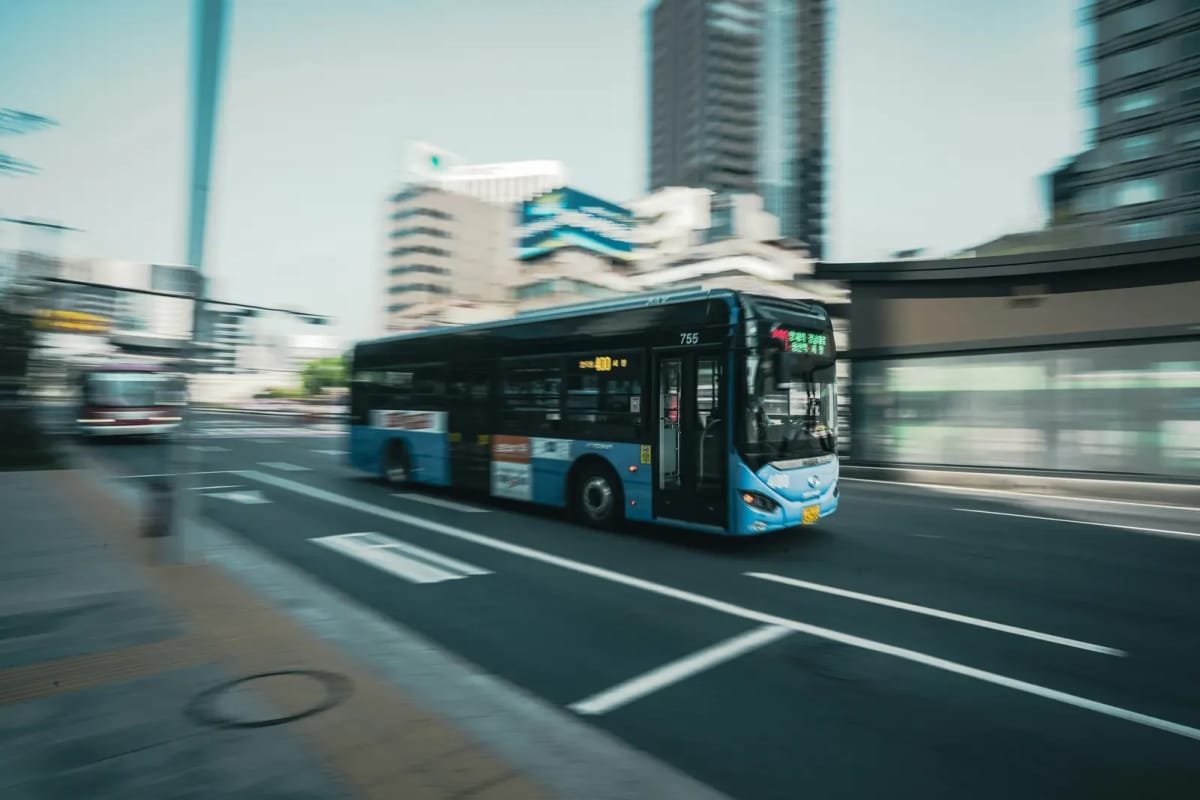
1. Seoul City Bus Guide: Colors and Fares
Seoul buses are grouped by the type of route they operate. The adult card fares below match the Seoul Metropolitan Government fare table dated August 12, 2023. Last verified: September 23, 2026.
| Bus Color | Bus Type | Main Use | Adult Card Fare |
|---|---|---|---|
| Blue | Trunk | Longer routes connecting outer districts with central Seoul | ₩1,500 |
| Green | Branch | Local routes connecting neighborhoods with subway stations and trunk buses | ₩1,500 |
| Green (small bus) | Village | Short neighborhood routes, including narrow or hilly streets | ₩1,200 |
| Red | Rapid / Metropolitan | Routes linking Seoul with the wider metropolitan area | ₩3,000 |
| Yellow | Circulation | Circulation routes within central or subcentral areas | ₩1,400 |
Owl buses use a ₩2,500 adult card fare, while a small number of special or differential-fare routes may use different fares. Check the route details before boarding if the bus is not a standard blue, green, or village bus.
2. Checking Routes and Live Arrivals
Naver Map and KakaoMap usually provide the most detailed bus information in Seoul. Both services use local transit data and show route options, stop locations, and estimated arrival times. For an English walkthrough, see our Naver Map guide for Korea.
- Arrival estimates: Open a bus stop or route to see how many minutes and stops remain. These are live estimates and can change with traffic.
- Congestion information: Some routes show labels such as Comfortable (여유), Moderate (보통), or Crowded (혼잡). This information is not available for every bus.
- Bus information terminals: Many major stops have electronic displays showing approaching buses, estimated arrival times, and low-floor bus information. English display availability varies by stop.
The Seoul Metropolitan Government public transportation guide also links to the city’s bus information system.
3. Tapping On, Tapping Off, and Transfers
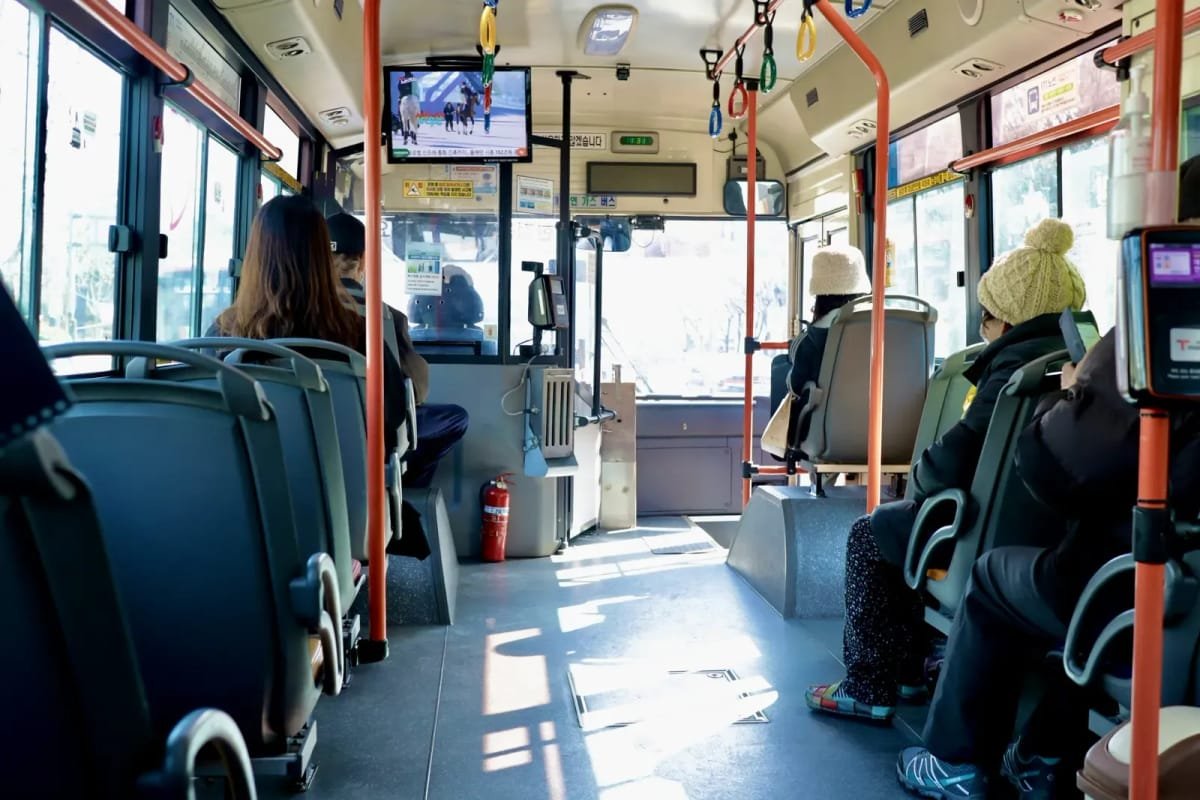
- Board through the front door: Tap your transportation card on the reader beside the driver.
- Exit through the rear door: Tap the card again on the exit reader before getting off.
- Tap off even when you are not transferring: It keeps the trip record complete and is required for transfer discounts. Climate Card users must also tap when getting off.
- Transfer window: Board the next eligible bus or subway within 30 minutes. From 9:00 p.m. to 7:00 a.m., the window is 60 minutes.
A transfer is not always completely free. The system applies the highest base fare among the services used, and an additional distance charge may apply after the included distance. Transfers are not discounted when you board the same bus route again.
A WOWPASS includes a T-money function, but the T-money balance is separate from the card’s payment balance. Load the transit balance before boarding. Our Korea transit card guide explains the differences between T-money, WOWPASS, and the Climate Card.
4. Food and Drink Rules
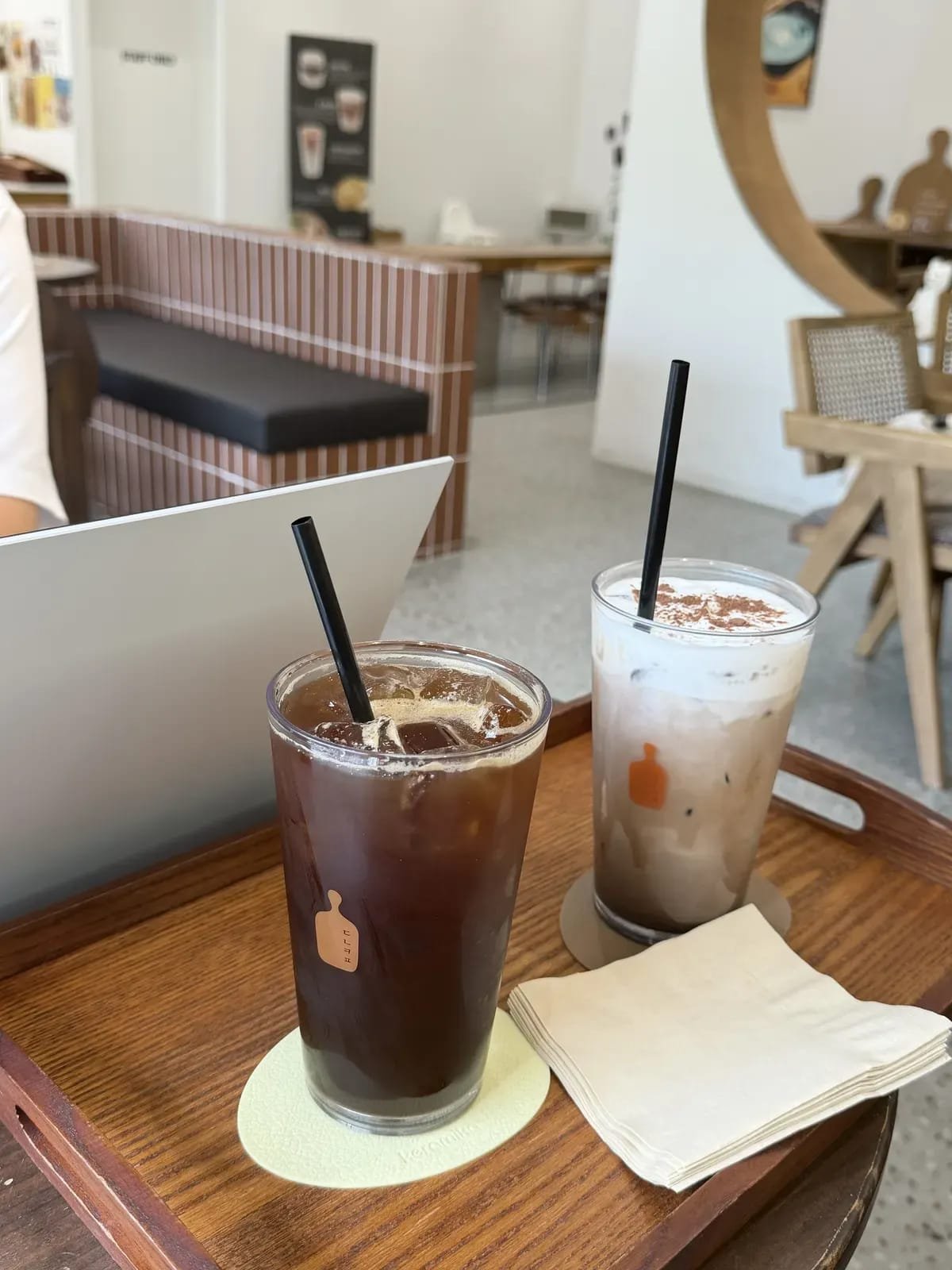
A driver may refuse boarding if a passenger is carrying food or a drink that could spill after a minor bump, or unpackaged food intended to be eaten on the bus.
- Do not bring: Takeout drinks in disposable cups, open cans with straws, or food in containers that can easily spill.
- Usually allowed: Drinks in securely closed plastic bottles, unopened cans, sealed tumblers, and food packed for transport in a closed box or bag.
- On the bus: Keep food packed away and avoid eating or drinking during the ride.
These rules are about whether the item can spill, not simply whether it is coffee or takeout food. If you are unsure, finish the drink before boarding.
5. Requesting Your Stop and Getting Off
- Follow your location in the map app: Bus announcements may include English at major stops, but not every stop is announced in English.
- Press the stop button: Press a red STOP button after the bus leaves the stop before yours, or as soon as your stop is announced.
- Move only when it is safe: If you need to approach the rear door before the bus stops, hold a rail and watch for sudden movement.
- Tap before exiting: Wait for the card reader to confirm the tap, then step down carefully. Check for bicycles or scooters if the stop is beside a bike lane.
When the Bus Is Easier
A bus is often more practical when your destination is uphill, inside a neighborhood, or several blocks from a subway station. Around Jongno, Bukchon, and Hannam, a short bus ride can save a long walk or an unnecessary rail transfer. Check the exact stop direction in your map app, because the return stop may be across a wide road or on a different street.
| Situation | Usually Easier | What to Check |
|---|---|---|
| Long cross-city trip | Subway | Whether both ends are near stations and the transfer is simple |
| Hills or narrow neighborhood streets | Bus | The correct stop direction and the walk from the final stop |
| Destination far from a station | Bus | Compare the bus stop location with the subway exit and walking distance |
| Large luggage | Whichever has fewer transfers | Station stairs, elevators, bus crowding, and space around your seat |
| Rain | Subway when entrances are close to both ends | A direct bus may still be easier if it stops near the door |
| Rush hour | Subway for more predictable timing | Both can be crowded; avoid a difficult transfer when possible |
| Late at night | Check live schedules | The last subway, last regular bus, and whether an Owl Bus serves the route |
If the trip crosses several districts or traffic makes the arrival time uncertain, compare it with our Seoul subway guide.
Frequently Asked Questions
Can I pay cash on a Seoul city bus?
Some routes still accept cash, but Seoul’s official January 2026 list identifies 183 cashless routes. Visitors should carry a T-money card or another compatible transportation card rather than depending on cash. Last verified: September 23, 2026.
Can two people use one transportation card on a bus?
On a regular bus, tell the driver the number of passengers before tapping. For two people, you can say “Du myeong-i-yo” (두 명이요). Bus-to-bus transfer discounts are possible only when the same number of passengers travel together and the other transfer conditions are met. A multi-passenger bus payment does not receive a subway transfer discount.
Does the Climate Card cover every Seoul bus?
No. It covers Seoul-licensed trunk, branch, village, circulation, and night buses, including those that travel outside the city boundary. It does not cover metropolitan or airport buses, or buses licensed by another local government.
The prepaid 30-day Climate Card could be recharged only through August 31, 2026. Existing physical cards can still be loaded with 1-, 2-, 3-, 5-, or 7-day short-term passes, which remain the relevant option for most short-term visitors. The Climate Pass launched on September 1, 2026 as a separate program for eligible Seoul residents. Last verified: September 23, 2026.
Related Travel Guides
- Seoul Subway Guide 2026
- Korea Transit Cards Guide 2026
- Naver Map English Guide 2026
- Seoul Night Bus (Owl Bus) Guide
Official travel information: