Power Plugs, Voltage & Travel Adapters for South Korea: Type C/F Compatibility
Before buying a South Korea travel adapter, check the “Input” label on each charger or appliance you plan to bring. Plug fit, voltage, grounding, and load rating all matter.
Quick Summary
- South Korea uses 220V at 60Hz. Plan for Type F sockets; Type C Europlug compatibility does not make every two-pin adapter suitable for every device.
- A plug adapter changes the connection, not the voltage. Confirm the device’s input range and the adapter’s grounding and load rating.
- Check hair dryers and styling tools separately from phone and laptop chargers; support can differ by model.
Table of Contents
Korea Tourism Organization and Electrical Safety First confirm the country’s electrical supply and plug guidance.
South Korea Travel Adapter: Your Pre-Trip Check
Use this table as a starting point, then follow your device manufacturer’s instructions. These are label examples, not a guarantee for a particular product.
| What the input label says | What it means for Korea | Your next step |
|---|---|---|
| 100–240V, 50/60Hz | The stated range includes Korea’s supply | Check plug fit, grounding and adapter ratings; a separate voltage converter is normally unnecessary |
| 110V or 120V only | Not suitable for a standard Korean outlet through a plug adapter alone | Leave it at home or obtain model-specific advice from the manufacturer |
| 220–240V, 50/60Hz | The stated voltage and frequency range includes Korea | Check the plug and the manufacturer’s overseas-use instructions |
| Dual-voltage appliance with a manual switch | A setting change may be required | Follow the manual and set it correctly before connecting power |
| No readable label, or an unclear rating | Compatibility is not confirmed | Look up the exact model; do not test it by plugging it in |
Check all your devices at home so you can leave incompatible items behind.
Type C or Type F: Which One Should You Pack?
For a Korea-only trip, look for an adapter explicitly listed for South Korea and Type F outlets, with an input socket that accepts your own plug. A compact country-specific adapter can be a simpler choice than a large all-in-one model, especially if you are carrying only one charger.
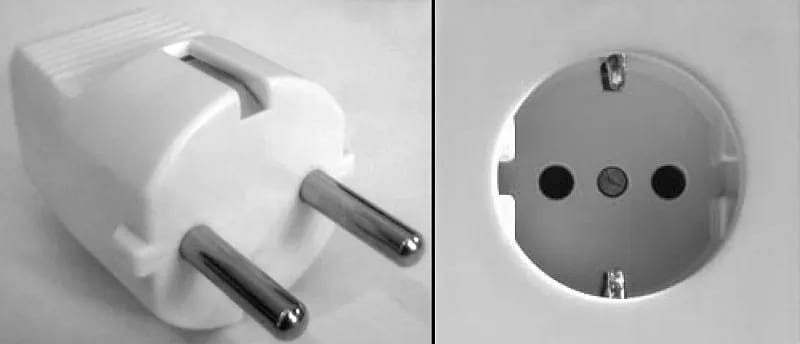
Type F is also called Schuko. Its grounding connection uses metal contacts at the sides rather than a third projecting round pin. In the reference photo above, you can see the contacts inside the recessed socket. Interpower’s plug-system guide explains this arrangement.
Type C, usually called the Europlug, is the slimmer, two-round-pin plug used for appropriate low-power, double-insulated equipment. It has no protective-earth connection. A genuine Europlug is physically compatible with the Type F socket pattern; that compatibility does not give it a grounding connection or a higher power rating. Interpower’s Europlug reference describes its intended use and limits.
If your device requires grounding, keep that connection all the way through the adapter. Do not choose an ungrounded two-pin adapter simply because it fits. Electrical Safety First’s adapter advice specifically distinguishes adapters suitable for earthed appliances from those intended only for double-insulated equipment.
One small naming trap: Type C wall plugs and USB-C are different things. USB-C describes the connector on a charging cable or device. It does not tell you whether the charger’s wall plug fits in Korea.
A Plug Adapter Does Not Change the Voltage
A travel plug adapter changes the physical connection. A voltage converter or transformer changes voltage. They solve different problems, even when an online listing uses the words loosely.
That is why a 120V-only hair tool does not become safe on 220V just because an adapter lets you plug it in. A basic adapter also does not change frequency; Korea’s 60Hz supply matters if the appliance is not rated for it. Check the whole input line, not just the first number. Electrical Safety First’s South Korea guidance covers these distinctions.
For chargers, look at the label on the charging brick. You may see several lines headed “Output,” with numbers such as 5V, 9V or 20V. Those describe power delivered to the device, not the wall electricity the charger accepts. The Input line is the one to check for the destination’s supply.
“Universal” is not a shortcut around this check. It may refer to supported plug shapes, while the connected appliance still needs a compatible input rating. SKROSS’s manufacturer FAQ explains why its travel adapters are not voltage converters and why the connected power supply’s label matters.
Phones, Cameras and Laptops: Start with the Chargers You Own
Before buying a new charging kit, check your existing one. Apple, for example, specifies 100–240V AC and 50–60Hz for its USB power adapters. That range includes Korea. A compatible plug connection may be all you need; you do not need a separate voltage converter solely because the charger came from the United States. Apple’s USB power adapter guide gives the specifications.
For other brands, check the exact charger rather than assuming the same range. Include the less obvious pieces: a camera battery charger, an electric toothbrush base, a smartwatch charger with its own wall supply, or a spare laptop brick borrowed from someone else.
Count the devices you need to charge at the same time, then choose enough compatible ports and cables. A phone and camera battery may need a different setup from a laptop, tablet, and two phones.
Keep your charger, adapter, and cables together in your carry-on so they are available on arrival.
This is also a good moment to sort out mobile data. Charging and connectivity are separate jobs, and both are easier to arrange before departure. See Korea eSIM vs. Physical SIM Card: Which Is Better for Travelers? (2026 Guide).
Hair Dryers and Styling Tools Need Their Own Check
Do not use your phone charger’s compatibility as a guide to your hair tools. Read each appliance’s rating and overseas-use instructions separately, including any restrictions on adapters or converters.
If a hair tool is marked 120V only, the simpler option is to leave it at home. Ask whether your accommodation supplies a dryer, or bring a model whose manufacturer supports Korea’s supply and your planned adapter.
Check the exact model rather than relying on the brand. Dyson’s Supersonic Travel, for example, supports automatic 110–240V operation, but other Dyson hair tools may not. Its manufacturer also specifies adapter requirements, so follow the instructions for that model rather than applying its voltage range to another product.
For a manually switched dual-voltage appliance, follow its instructions before connecting it. A “travel” label on the box is not a substitute for checking the voltage setting and permitted use.
If You Need an Adapter After Arriving
Start with your hotel reception. The Korea Tourism Organization suggests asking about borrowing or purchasing an adapter and lists airport retail, major duty-free stores and convenience stores as possible places to buy one. Availability varies, so treat these as places to check rather than guaranteed stock. KTO’s electricity guide.
Take your charger or a clear photo of its plug and input label with you. “I need a travel adapter” leaves room for confusion: you need one that accepts your foreign plug and connects to a Korean outlet, not an adapter intended for someone taking a Korean appliance abroad.
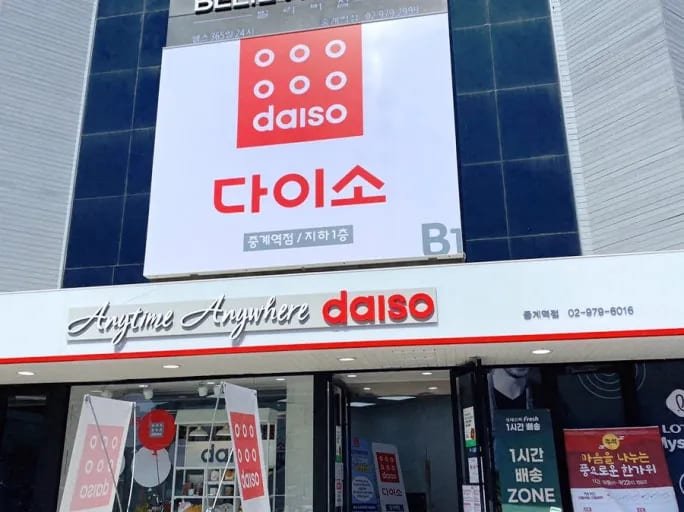
If you check a store such as Daiso, look for an adapter that accepts your foreign plug and fits a Korean outlet. Stock varies by branch. Check the electrical ratings and instructions before buying.
A useful phrase to show staff is: “이 플러그를 한국 콘센트에 쓸 수 있는 어댑터가 있나요?” — “Do you have an adapter that lets me use this plug in a Korean outlet?” Showing the plug alongside the sentence is more useful than trying to describe its shape from memory.
For finding nearby shops and checking the route from your accommodation, use Naver Map English guide. Save the shop location before heading out, particularly if your phone is already running low.
Make the Hotel Charging Setup Simple
Choose a clear, dry spot where the charger can sit without being covered by clothes or bedding. Follow its ventilation instructions, and do not use damaged cables, cracked adapters or loose connections. Apple’s safety guidance also warns against charging when moisture is present. Apple’s adapter and cable safety guide.
If something does not fit properly, stop and ask the accommodation for help. Do not force the plug, improvise a repair or keep adjusting a damaged connection until the charging icon appears.
Before bed, put tomorrow’s phone, camera battery and any other essentials in one visible place. Before checkout, check that same spot and count the small adapter separately—it is easy to leave attached to the wall when you pull out the charger.
For essential medical equipment, arrange a model-specific power plan with the manufacturer or equipment provider before traveling. A general travel article cannot confirm that setup for you.
Frequently Asked Questions
Do I need a voltage converter for my iPhone in Korea?
Not when you are using a suitable charger whose input range includes 220V and 60Hz, such as the Apple USB adapters described above. You may still need the correct travel plug adapter. Check a third-party charger’s own label rather than relying on the phone model.
Will a European adapter work in South Korea?
A compatible Type F adapter, or an appropriate Type C Europlug connection for equipment that does not require grounding, can work. “European” alone is too vague: check the actual plug pattern, electrical ratings and device requirements.
Can I rely on USB ports in my hotel room?
Ask your accommodation what USB ports are available. Bring your own compatible charger and cable if you need a setup you can rely on.
Is a small adapter enough for a hair dryer?
Its size does not answer the important questions. The dryer must support the local supply, and the connection must meet the manufacturer’s requirements and load rating. If those details are unclear, do not use it.
What is the simplest setup to pack?
Pack a compatible charger, the cables your devices use, and a suitable Korea-compatible adapter if needed. Add other equipment only for a specific device or charging need.
Sources and Further Reading
- Korea Tourism Organization — Electricity & Communications
- Electrical Safety First — South Korea
- Electrical Safety First — Travel Adaptors
- Interpower — Europlug
- Interpower — CEE 7 Plug and Socket Systems
- SKROSS — Frequently Asked Questions
- Apple — USB Power Adapters
- Apple — Power Adapter and Cable Safety
- Dyson — Supersonic Travel Product FAQ
Image credits
- Schuko plug and socket — images by Chameleon, bran, and plugwash; retouch by AlMare. Public domain.