Seoul Traditional Markets Compared: Gwangjang vs. Mangwon vs. Tongin Market
For a mung-bean pancake at a busy food counter, go to Gwangjang. For snacks to take away and a look at an everyday neighborhood market, choose Mangwon. Tongin is smaller: its brass-coin lunchbox lets you pick little portions from participating stalls, and it fits neatly into a Seochon or Gyeongbokgung day.
Seoul traditional markets: food and travel time
The table starts at City Hall Station Exit 5 (Seoul Plaza) at 11:30 a.m. on a Wednesday. Allow for walking, waiting for trains and making transfers. The times are estimates to the market entrance, before any food queue.
| Market | Subway + walk | Lunch for one |
|---|---|---|
| Gwangjang | Subway + walk13–23 min | Lunch for one₩7,000 Hand-cut noodles |
| Mangwon | Subway + walk25–40 min | Lunch for one₩5,000 Hand-cut noodles |
| Tongin | Subway + walk24–40 min | Lunch for oneAbout ₩10,000 Coin lunchbox |
Take Line 1 for Gwangjang, change from Line 2 to Line 6 at Hapjeong for Mangwon, or change from Line 1 to Line 3 at Jongno 3-ga for Tongin. The estimates use Seoul Metro run times, transfer times, and the market approaches below.
The noodle prices are for one bowl at Gohyang Kalguksu and Hongdukkae Son Kalguksu. The Tongin lunchbox budget depends on what you pick. Prices exclude transit fares, drinks, and extras. Routes and prices checked November 22, 2026.
| Detail | Gwangjang | Mangwon | Tongin |
|---|---|---|---|
| Go for | GwangjangMung-bean pancakes, small seaweed rice rolls, and seasoned raw beef | MangwonCroquettes, fried chicken, takeaway snacks, and grocery stalls | TonginThe brass-coin lunchbox and oil-fried rice cakes |
| What else to browse | GwangjangHanbok and vintage clothing shops | MangwonFruit, vegetables, seafood, and everyday groceries | TonginA small market alongside a Seochon walk |
| Subway | GwangjangLine 1, Jongno 5-ga Exit 8; about 62 m | MangwonLine 6, Mangwon Exit 2; about 351 m | TonginLine 3, Gyeongbokgung Exit 2; about 515 m |
| Address | Gwangjang88 Changgyeonggung-ro, Jongno-gu | Mangwon27 Poeun-ro 6-gil, Mapo-gu | Tongin18 Jahamun-ro 15-gil, Jongno-gu |
| Time to allow | GwangjangPlan 1.5–2.5 hours | MangwonPlan 1–2 hours | TonginPlan 45–90 minutes |
| Browsing and food | GwangjangBrowse freely; pay each vendor for food | MangwonBrowse freely; pay each vendor for food | TonginBrowse freely; buy tokens for the lunchbox or food normally |
| Main thing to plan for | GwangjangBusy counters and shared portions | MangwonTakeaway food and the walk to the river | TonginThe lunchbox counter’s shorter hours and closing day |
The visit lengths above are planning estimates. Listed opening hours are below; individual stalls may keep different hours.
| Market or activity | Listed hours | Closures or exceptions |
|---|---|---|
| Gwangjang general market | 9 a.m.–6 p.m. | Closed Sundays |
| Gwangjang food alley | 9 a.m.–11 p.m. | Open year-round. Stall hours vary. |
| Mangwon Market | 10 a.m.–9 p.m. | Daily. Shop hours vary. |
| Tongin coin sales | Tue–Fri, 11 a.m.–3 p.m. Sat–Sun, 11 a.m.–4 p.m. | No sales on Mondays or the third Sunday of each month. |
Tongin’s hours above are for buying coins. The market’s regular schedule lists the sales cutoffs. The renovation notice gives the temporary counter and outdoor seating. Notices checked November 22, 2026.
Gwangjang: pancakes and busy food counters
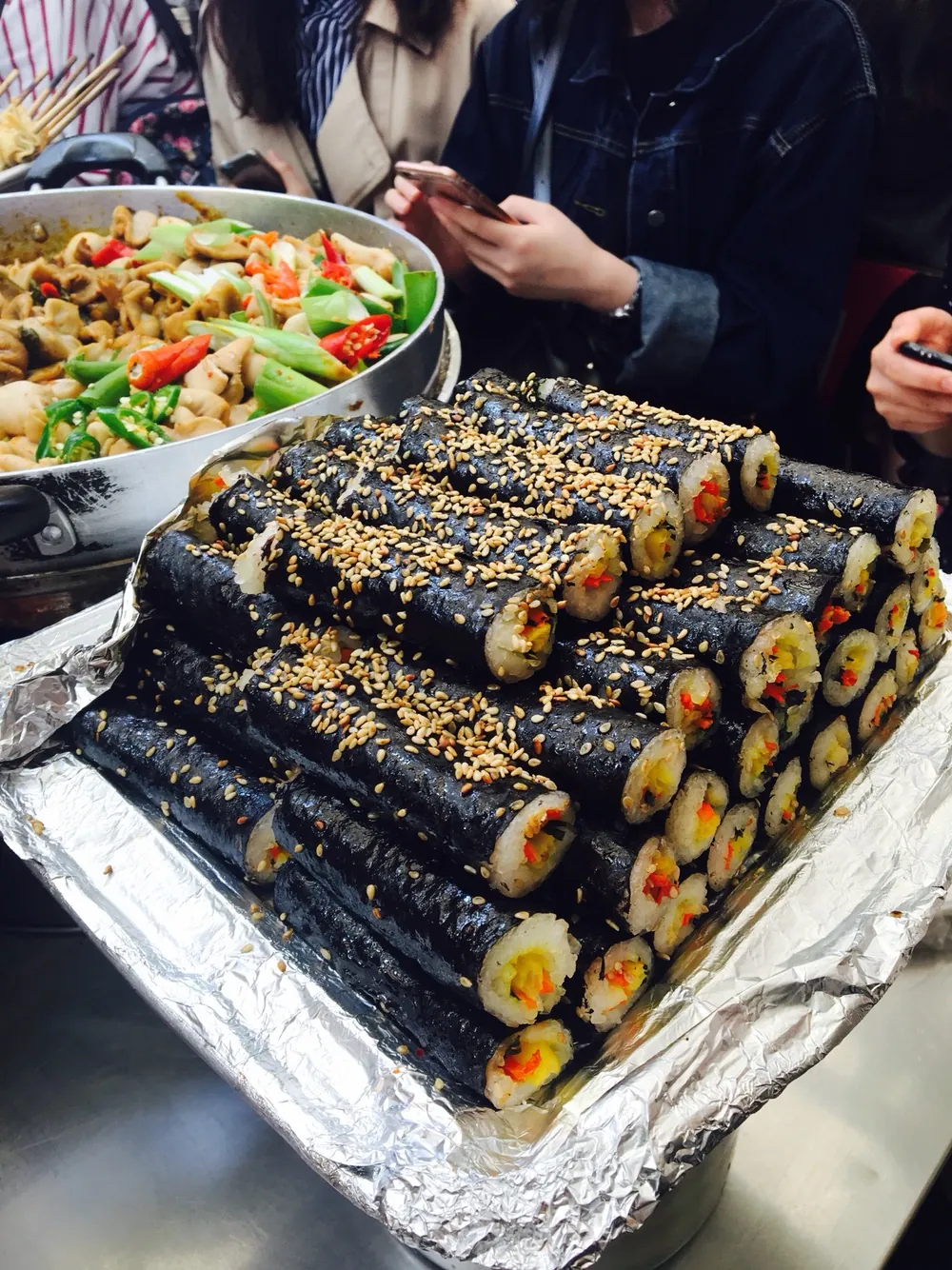
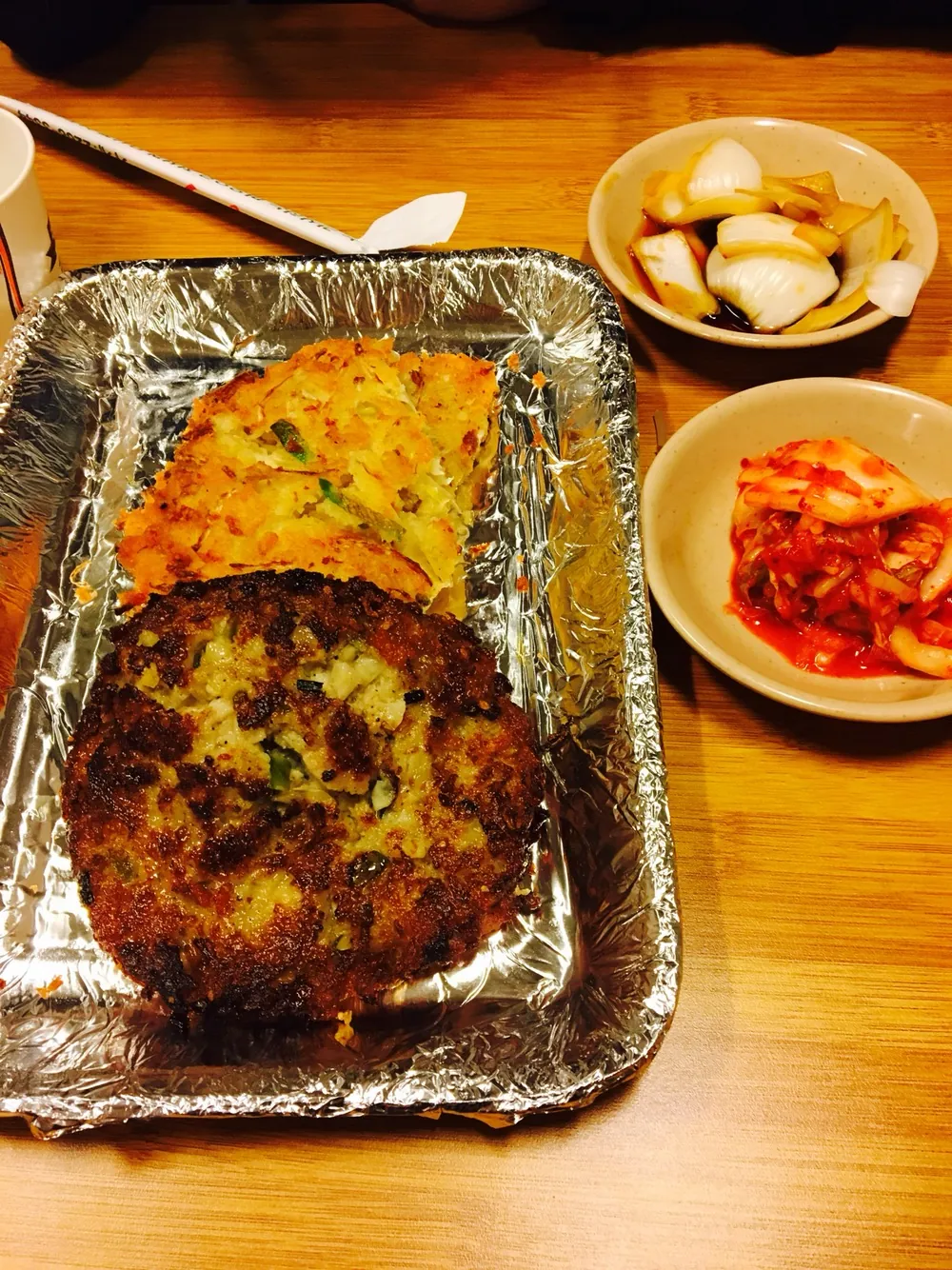
Food counters line the central alleys at Gwangjang, where you can watch pancakes cooking on griddles and eat beside other customers.
The food area is known for bindaetteok (mung-bean pancakes), mayak gimbap (small seaweed rice rolls), yukhoe (seasoned raw beef), noodles, dumplings, and assorted jeon. One pancake can be filling, and many stalls serve portions meant to share.
Crowds and ordering
The central food alleys get busy at lunch, in the evening, and on weekends. A famous stall may have a queue while a nearby counter serving a similar dish has seats.
Menus may list prices without making portion sizes or add-ons clear. Ask before ordering raw beef, seafood, combination plates, or food sold by weight.
The food alley stays open later than the general market, but vendors keep their own hours. If you are visiting late, confirm that the stall you want is open.
Share larger dishes if you are with friends, and avoid peak mealtimes if crowded counters are tiring. Leave large bags at your hotel or in a locker.
Getting there: Jongno 5-ga Station on Line 1 is the closest simple approach. Euljiro 4-ga Station can also work, depending on which entrance you want.
Mangwon: snacks to take away, then a walk nearby
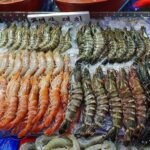
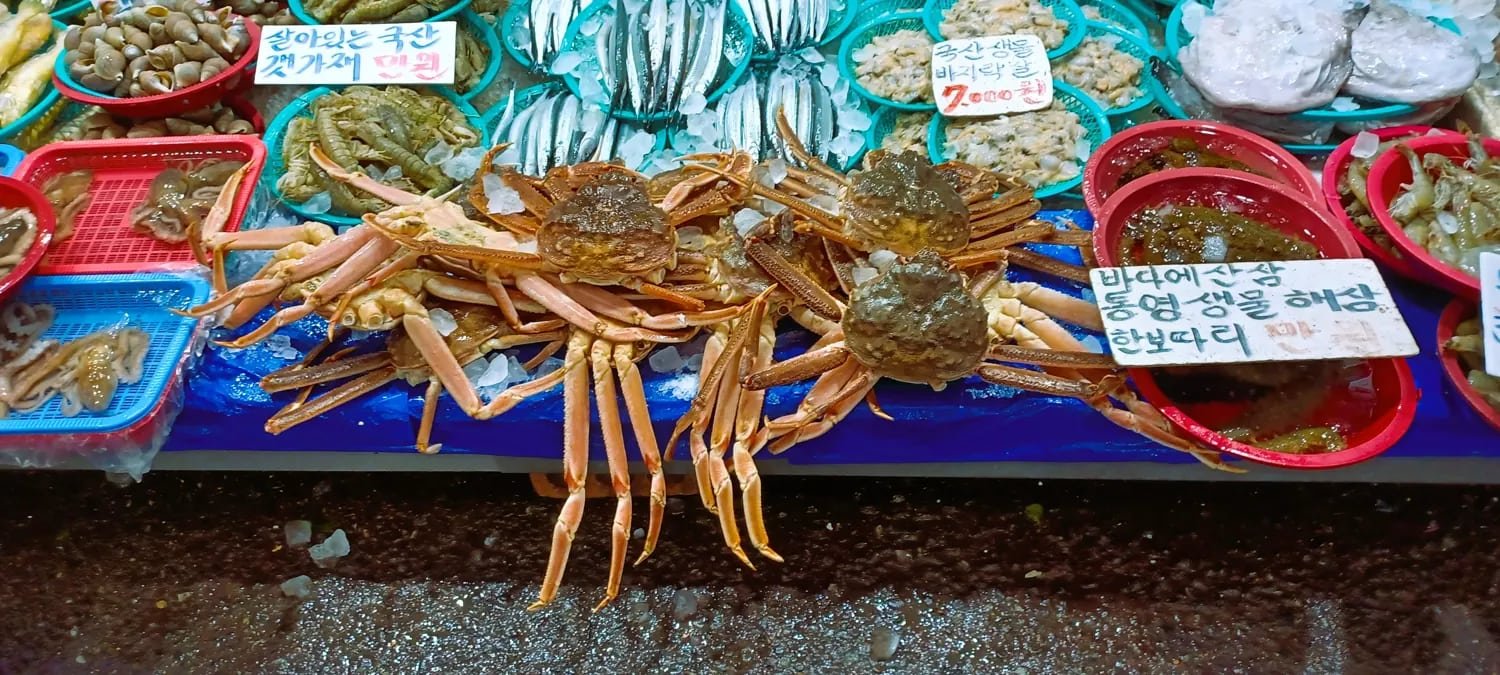
At Mangwon, snack stalls sit alongside the fruit, vegetables, seafood, and side dishes residents buy for dinner. You can pick up a croquette or some fried chicken, then browse the grocery displays as you walk.
Croquettes, fried chicken, tteokbokki, hotteok, doughnuts, gimbap, and meat patties are among the snacks to look for. Menus and availability vary by stall.
Nearby cafés and the river
The market is small enough for a short browse, with independent cafés, bakeries, and shops nearby. In good weather, you can buy food and continue to Mangwon Hangang Park.
Use Naver Map in English to check the walk to Mangwon Hangang Park before buying hot food to carry there, especially in summer.
Visit Seoul lists Mangwon Market as generally open daily from 10:00 a.m. to 9:00 p.m., with hours varying by store. Morning is better for groceries and a calmer walk; lunchtime and weekends bring more snack-focused visitors.
Mangwon fits well into a day around Hongdae, Yeonnam, Hapjeong, or Mapo. In rain, stay around the covered market and a nearby café.
Getting there: Take Line 6 to Mangwon Station and walk from Exit 2. The official Seoul guide puts the market a few hundred meters from the station.
Tongin: fill a lunchbox after the palace
Tongin is the smallest of the three and works well as a lunch stop after Gyeongbokgung Palace or a walk through Seochon.
At Tongin, the yeopjeon dosirak program lets you put together a lunchbox from participating stalls. The lunchbox café keeps shorter hours than the market.

How the Tongin lunchbox works
Temporary token counter: During renovations, buy coins at the pop-up store in the delivery center across from the old customer center, along the passage toward Gyeongbokgung Station. You can eat at the outdoor tables near the traditional pavilion. The market’s relocation notice lists September 29, 2026 to January 30, 2027 as the planned work period.
First exchange: Allow ₩10,000 for 20 coins. An October visitor report lists this as the minimum at the temporary counter. The location notice and coin price sources were checked November 22, 2026.
- Buy yeopjeon tokens and collect an empty lunchbox tray at the token counter.
- Look for participating stalls displaying the lunchbox-program sign.
- Exchange tokens for small portions.
Gireum tteokbokki is Tongin’s best-known snack: rice cakes cooked in oil. Other options can include jeon, japchae, gimbap, meat patties, fried foods, and side dishes; menus and participation vary.
When to buy coins: The market’s April 27 schedule notice lists sales from 11 a.m. to 3 p.m. Tuesday through Friday and from 11 a.m. to 4 p.m. on weekends, with no sales on Mondays or the third Sunday of each month. Those are the cutoffs for buying coins. The October 1 relocation notice gives directions to the pop-up and outdoor tables. Check the market’s latest notices for holiday or temporary changes. Both notices were checked November 22, 2026.
If the lunchbox counter is closed, you can still browse and buy food normally. Expect a smaller market with less variety than Gwangjang.
Getting there: Take Line 3 to Gyeongbokgung Station and walk from Exit 2.
How to keep the food bill manageable
At Mangwon, buying individual snacks makes it easy to compare prices. Tongin’s token purchase helps set a lunchbox budget. At Gwangjang, full plates, raw beef, seafood, drinks, and extra dishes can add up, especially if you are eating alone.
Prices depend on the vendor, portion, ingredients, and season. Before ordering:
- Check whether the number on the sign is for one piece, one plate, or a weight-based portion.
- Ask the price before accepting an unpriced recommendation.
- Confirm whether a combination plate costs more than the single dish you pointed to.
- Decide whether your group is sharing or ordering one serving per person.
Bring some won for the small stalls
Many established stalls accept Korean cards, but small vendors may prefer cash, bank transfer, or a local payment method. Foreign cards can also fail even when the terminal accepts Korean cards. Carry some Korean won and smaller bills rather than relying on one payment method.
At Tongin, the lunchbox program uses its own tokens at participating stalls. Other purchases follow each vendor’s normal payment policy.
Our cash vs. card guide for Korea explains why an international card sometimes fails and how much backup cash is practical. T-money works on transport and at participating merchants, but do not assume a market stall accepts it. Check with the vendor and see the Korea transit card comparison before loading extra money onto it.
At the counter
Keep the narrow aisle clear while choosing food or taking photos, and ask before photographing a vendor up close. At a counter, check the portions before occupying several seats. Return trays where staff ask and use the proper bins for takeaway containers.
For allergies or strict dietary needs, ask about ingredients before ordering. Stocks, sauces, and shared oil or utensils may matter even when the dish looks suitable. A busy market can be harder to check than a restaurant with a written ingredient list.
Keep the market near the rest of your day
Choose a market near the sights you already plan to visit:
| Your day’s main area | Market stop | What to do afterward |
|---|---|---|
| Gyeongbokgung and Seochon | Tongin for lunch, if the counter is open | Keep walking through Seochon’s streets |
| Jongno, Jongmyo, or Euljiro | Gwangjang for a meal at a food counter | Walk along Cheonggyecheon |
| Hongdae, Yeonnam, or Mapo | Mangwon for snacks | Choose a nearby café or walk to Mangwon Hangang Park in good weather |
Tongin at lunch and Gwangjang in the evening can work if you want two market meals. Leave time for travel between them.
Visiting a market alone
Counter seats and takeaway snacks suit a solo visit. At Gwangjang, ask about portions before ordering a full pancake or mixed plate. At Mangwon, you can buy one snack at a time.
Pick one market and keep the rest of the day nearby
For a first visit, choose one market near the rest of your route. If Tongin’s lunchbox is the reason for going, confirm that it is operating before you set out.
Sources
- Visit Seoul: Gwangjang Market
- Visit Seoul: Mangwon Market
- Visit Seoul: Tongin Market
- Visit Seoul: A Journey Through Time in Tongin Market
- Korea Tourism Organization: Transportation Cards
Image credits
- Gwangjang Market gimbap and pancakes — Photo: OOMPHY collection.
- Mangwon Market seafood stall — Enamoradadecorea, Wikimedia Commons, CC0 1.0.
- Tongin Market entrance — ChoiSojeong, Wikimedia Commons, CC BY-SA 4.0. Resized and converted to WebP in the source and to JPG for this article; the image remains under the same license.
Market addresses, station approaches, and listed hours were rechecked against Visit Seoul on November 1, 2026. Tongin’s regular coin-sale schedule and temporary relocation were checked against the market’s notices on November 22, 2026. Visit lengths are estimates, and individual vendors set their own hours and food prices.